

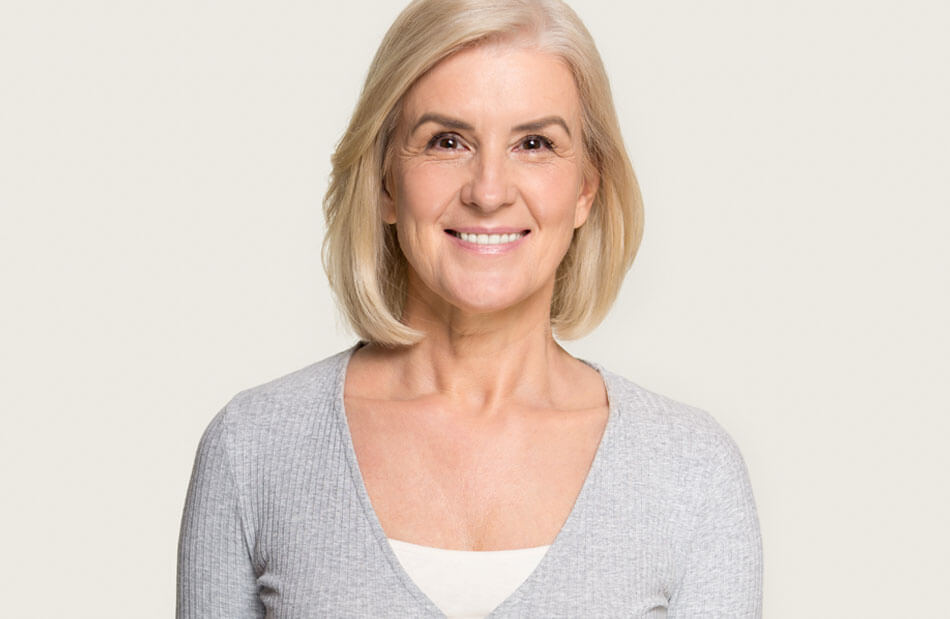
Facelift
in Austin, TX
Profound Impact, Natural Appearance
The human face is a person’s virtual passport to a world of social interaction and interpersonal experiences. Our minds are programmed to instantaneously recognize, analyze, and judge the appearance of a face. To a large extent, the character of our relationships with one another, whether social, business, or romantic in nature, is influenced by this automatic process. It is for this reason that the appearance of our face holds significant importance in our life, and in many ways, is the visual keystone of our identity.
Table of Contents
Reasons for a Facelift
Real Patients, Real Stories: Patient Testimonials
What Is a Facelift?
Deep Plane Facelift
TriMax Deep Plane Facelift
Key Points
Dr. Weinfeld’s Notes on Mini Facelifts
Most Facelifts Are Performed with Neck Lifts
What Procedures Can Be Combined With a Facelift?
Recovery After a Facelift
Reasons for a Facelift
As a person ages, the skin and soft tissues loosen and sag, including the malar fat pad, an important triangular collection of soft tissue overlying the cheek and providing volume and contour to the central face. With aging, that fat pad and overlying skin descend from the upper cheekbone due to the loosening of its attachments to the underlying structure. As it falls, it literally comes to rest over the jawbone and forms the unappealing appearance of jowls, and creates a square appearance to the lower face.
In addition to the sagging of tissues, over time, the face loses volume in a process known as fat atrophy. This combination of tissue descent and volume depletion accentuates the formation of facial creases and folds. Furthermore, the skin is naturally depleted of collagen in response to intrinsic “wear and tear.” Fine wrinkles develop in numerous locations due to the decrease in the skin’s collagen content, compounded by sun damage and other environmental factors.
Real Patients, Real Stories: Patient Testimonials
“Grateful and Happy! I Look So Much Better! Thank you to Dr. Weinfeld. He took 20 years off my face. I don’t have that turkey neck anymore. Everybody at work has been telling me that I look very young. They asked me if I went to California, Mexico, or Colombia. I told them everything is done here in Austin with Dr. Weinfeld.”

What Is a Facelift?
A rhytidectomy, or facelift, that is well-planned and well-executed, is designed to reverse and correct a multitude of problems that are seen as your face ages. The procedure addresses the tissue that lies between the lower eyelids and the jawline (known as the mid-face). While a facelift does not directly address the lower eyelids, a facelift repositions malar (cheek) fat pads to a position just below the lower eyelid, helping to blend the lid-cheek junction. In an indirect fashion, this does improve the appearance of the lower periorbital region and the lower eyelids. A well-executed facelift also elevates the lower portion of the malar fat pad off the jawline and thus directly treats the formation of jowls by relocating that important fat triangle onto the central and upper cheek, where it anatomically sits when the patient is younger.
At the same time, the elevation of the malar fat pad inherent to the facelift procedure also softens the nasolabial fold, making it less deep. Many patients spend a significant amount of money on repeat injections of hyaluronic acid fillers to soften the nasolabial fold. But a facelift procedure can provide a more enduring response to this vexing problem. Finally, it should also be noted that the corners of the mouth can also be repositioned in a superior orientation in order to reduce the downward frowning appearance that can occur with age.
Additionally, excess fat in the area just inferior to the chin and the jawline is sculpted away precisely and under direct vision to enhance and define the form. I generally do not rely on liposuction to do this task as I find artful sculpting under direct vision to be a more elegant and precise approach.
The facelift helps reverse the downward descent of soft tissues, including fat and skin, that occur with age, thus reversing the sagging effect and restoring normal anatomic positions. However, this procedure does not address the issue of volume depletion and atrophy that occur with age. It is for that reason that the facelift procedure is often enhanced with fat grafting techniques that are specifically designed to restore volume in facial soft tissue. The precise practice of micro-droplet autologous fat grafting to the face provides significant and subtle volume restoration to specific regions of the face without creating unnatural fullness or a bloated appearance. These target areas include the temples, tear trough, nasolabial folds, lips (sparingly to avoid a duckbill appearance), labiomental groove, cheeks, and even under the eyebrows. Careful and measured soft tissue restoration to these areas can help create natural volume and contours without resulting in soft tissue distortions and an unnatural appearance.
The fat is prepared into two different portions. One is called microfat and is used for structural support and volume enhancement. The other is called nanofat. Nanofat, composed of smaller particles and cells, is believed to have a biostimulatory effect. Nanofat is targeted just under the skin and into the dermis itself in an attempt to increase collagen and elastin production. This restores a more youthful microarchitecture to the skin.
Deep Plane Facelift
A deep plane facelift is an advanced facial rejuvenation technique designed to address the deeper structural layers of the face—not just the skin—to create natural-looking, long-lasting results. Unlike traditional facelifts, which only lift and tighten the skin and superficial tissues, a deep plane facelift works beneath the superficial musculoaponeurotic system (SMAS). Aging causes the SMAS to loosen and sag, contributing to the formation of jowls, loss of volume in the midface, and deep nasolabial folds.
A deep plane facelift releases the tethered facial ligaments that pull the face downward, allowing Dr. Weinfeld to lift the deeper layers of fat, muscle, and connective tissue as one unit, giving you a more natural appearance. By repositioning the deeper tissues rather than pulling the skin tighter, this technique restores youthful contours without the “over-tightened” look often associated with traditional facelifts.
During your deep plane facelift procedure, small incisions are hidden in your hairline and around your ears. Dr. Weinfeld carefully releases key ligaments, allowing him to elevate the facial muscles and fat pads as a single unit. Because the lift is performed at a deeper level, there is less tension on the skin when it is redraped, resulting in a smoother, more natural appearance. A deep plane facelift is an excellent way to achieve a rejuvenated, refreshed appearance with improved definition along the jawline, softened facial creases and folds, and restored cheek volume that can last for many years.
TriMax Deep Plane Facelift
Dr. Weinfeld is also an expert in a technique he calls the TriMax Facelift. A TriMax Facelift uses the deep plane technique, but goes further—it doesn’t just lift; it shapes. It uses a deep plane technique to give you both a more youthful appearance and more attractive facial definition.
Triangle maxing (TriMax) is a facelift technique that focuses on creating subtle yet noticeable definition in the triangle created by the malar, gonial, and genial regions of your face.
Malar Region: The cheekbone
Gonial Angle: The back third of the jawline
Genial Region: The chin, or the anterior third of the jawline
These three areas together are called the “MGG triangle.”
How a TriMax Facelift Is Performed
Malar Region
The cheekbone, or malar region, is an area that is often a target for injectable fillers due to the natural loss of volume that occurs with age. The TriMax Facelift elevates the sagging tissue by lifting the deep plane vertically toward the cheekbone, creating contour enhancement and natural fullness.
Strategic fat grafting can be added to your TriMax Facelift, if necessary, to add or enhance malar fullness.
Gonial Angle
The gonial angle is the posterior third of the jawline, and is the area that creates definition between the neck and the face. When addressing the gonial area in a TriMax Facelift, Dr. Weinfeld lifts the tissues that extend from the malar region down under the platysma (the muscle that connects your jaw to your chest). He elevates the tissue from the platysma up to an area just behind the ear (posterior auricular) and anchors it to the very strong mastoid fascia, which is a layer of tissue that covers your mastoid bone. Lifting the tissue this way adds subtle fullness at the gonial angle, creating natural-looking yet visible jawline definition.
If a bit more volume is needed to define the jaw properly, fat grafting can be used to maximize the prominence of the gonial angle.
Genial Region
The genial region, or chin, is a vital element of not only the MGG triangle but also your facial balance overall. A TriMax Facelift enhances the chin, giving it definition and providing strong support for the neck tissues that are elevated during a neck lift. If you need to augment the shape or size of your chin, Dr. Weinfeld will either cut the bone and bring it forward or add a chin implant.
How Is a TriMax Facelift Performed?
The TriMax Facelift uses four primary sutures to lift and shape your face:
- Suture one is in the malar region, elevating the tissue in a vertical or vertical oblique direction, and anchoring it to the temporal fascia.
- Suture two anchors the SMAS to the temporal fascia. This suture helps restore definition to the ogee curve in the midface, the soft, double “S” shape that starts at the brow, curves outward to highlight cheekbone fullness, and then curves inward towards the mouth.
- Suture three is the postauricular (behind the ear) suture that anchors the platysma to the mastoid fascia for better jawline definition.
- Suture four is placed mid-platysma and anchored at the very back of the mastoid, smoothing the neck and creating a beautiful cervicomental crease, which is the transition between the jaw and the neck.
Once the shaping and lifting are complete, Dr. Weinfeld places a fifth suture under the surface, known as the “safety, security, smoothing suture,” to tie everything together.
By lifting the deep plane and adding subtle fullness at the three points of the MGG triangle, the TriMax Facelift maximizes the aesthetically pleasing definition that everyone associates with an attractive appearance.
Most Facelifts Are Performed with Neck Lifts
It is my opinion that a facelift and neck lift should always be discussed together, as almost every patient who would benefit from a facelift would also benefit from a neck lift. In terms of results, a facelift and neck lift are synergistic. They each enhance one another, and they need one another to bring about balance and harmony in facial appearance. It is my contention that the facelift and a neck lift together are essentially one procedure, not two.
A neck lift addresses the neck and therefore enhances the appearance of the jawline. Some patients only require skin redraping to reduce sagging neck skin. Most patients, however, require work done at a deeper anatomic layer. This layer involves the thin neck muscle that lies beneath the skin, called the platysma, and structures deep to the platysma. When the dissection is performed beneath the platysma, the neck lift is called a deep plane neck lift. I have special training and significant experience working in the deep plane. I have even written a book chapter in a medical textbook on the topic.
A deep plane neck lift can be performed via a lateral entry point through incisions behind the ears. The deep plane can also be addressed centrally via a small incision beneath the chin. Often, the deep plane is addressed both laterally and centrally. The most involved deep plane neck lift includes reduction of subplatysmal fat, the anterior belly of the digastric muscle, and the submandibular glands. The combination of careful reduction of these three structures can create impressive contours in the neck. The platysma is also tightened laterally or centrally, or in both locations.

What Procedures Can Be Combined With a Facelift?
The facelift procedure is also combined frequently with rejuvenating procedures of the eyelids (blepharoplasty) and eyebrows (brow lift). In particular, upper and lower lid blepharoplasty and endoscopic or temporal brow lifts are often combined with a facelift. Recall that the facelift addresses the mid-face and does not directly address the upper third of the face, containing the very important periorbital region. The combination of upper and lower blepharoplasty and endoscopic brow lifts addresses this area and can be thought of as a facelift for the upper third of the face.
Thus, the facelift in combination with fat micro-droplet fat grafting, upper/lower blepharoplasty, and brow lift constitutes comprehensive facial rejuvenation. I often perform these procedures together, and sometimes I stage the procedures in two different sessions. Either way, the individual components of this composite of procedures complement one another.
Additionally, the combination provides balance to the face. In some individuals, for example, performing a facelift without the blepharoplasty and brow lift can create the perception of an unnatural appearance when comparing the younger-looking lower two-thirds of the face and the older-looking, “untouched,” upper third of the face. In addition, in some individuals, performing a facelift because of its power in lifting and repositioning soft tissues to a more elevated location can create subtle and sometimes overt drapery-like ripples or bunching in the temple region on the side of the eye. The brow lift, with its effectiveness in elevating the tissues in the upper third of the face (especially in the temple region), helps elevate the face in one contiguous unit, thus avoiding these contour irregularities.
Recovery After a Facelift
In general, minimal discomfort is experienced after a facelift. The perception of discomfort is a phenomenon that has individual variations. Most patients report that the discomfort associated with a facelift, and facial surgery in general, is often much less than expected prior to the procedures. Most patients report using pain medication for only the first day or two after surgery.
The facelift is performed precisely with attention to detail and with maneuvers and recovery techniques designed to minimize swelling and bruising. A return to social activities and work can occur as early as seven days after surgery. A special diet, which I believe reduces bruising and swelling, is recommended to all patients. Many patients have also seen favorable effects on their weight. A return to strenuous physical activity and sexual intimacy can occur at three weeks.
Learn More About Facelift Surgery in Austin
Cosmetic surgery designed to modify and improve the appearance of the face must be well-planned and well executed, as well as precise and safe. Dr. Adam Weinfeld is an expert in facial rejuvenation and emphasizes the necessary balance between your natural features and proportions when enhancing your appearance. To schedule a consultation with Dr. Weinfeld, call today at (512) 253-2845.
Get In Touch
Patients respond to Dr. Weinfeld's expertise and caring patient focused approach. If you have any questions about a procedure or are ready to schedule a consultation, please call or fill out the form below.
Office
Phone: 512-559-1376
Office & Surgery Center
Phone: 512-559-1376
This facility is only for cosmetic and non-insurance based procedures. If you seek insurance based treatments or reconstructive procedures, please search for Dr. Weinfeld in his other facility.
*Please verify the location of your appointment.
Connect with us