
Lip Lift Surgery with Facelift: Types, Fat Grafting, and Recovery
March 22, 2026 | Facelift, Uncategorized
People undergoing facelifts often combine the procedure with other treatments to maximize their aesthetic result. A lip lift is one of the most powerful procedures to pair with a facelift — and particularly with a deep plane facelift — because of its central location and because of the unique aging that occurs in the oral region. While a deep plane facelift and neck lift address the mid-face, jawline, and neck in a comprehensive and long-lasting way, the lips occupy such a prominent central position on the face that they benefit from their own dedicated rejuvenation.
Table of Contents
- The Anatomy of the Lip
- The Special Aging That Occurs in the Lip
- The Two Types of Lip Lifts
- The Role of Fat Grafting in Rejuvenating the Lip
- Dermal Fat Grafting
- Recovery from Lip Lifts and Fat Grafting
- The Role of Laser in Maximizing Results
- Frequently Asked Questions
The Special Aging That Occurs in the Lip
The aging process affects the entirety of the face. Because the lips are a highly mobile structure comprised of a variety of different tissue types, they experience a unique pattern of aging. The surface skin develops multiple vertical wrinkles associated with talking and pursing the lips — the motion used when drinking from a straw. These may be referred to as smoker’s lines, though they occur in non-smokers as well.
Another hallmark change we observe is elongation of the upper lip. As the upper lip lengthens with age, it ultimately covers more of the upper teeth. This longer appearance — and the inability to see the upper teeth without smiling — creates an aged look that is synonymous with growing older. There is also a deflation effect that makes the vermilion, or the red portion of the lip, progressively thinner over time. Thinner lips are generally considered less attractive and less youthful.
The Two Types of Lip Lifts
There are two primary types of lip lifts.
The Central Bullhorn Lip Lift
The first is the central bullhorn lip lift, which is performed at the junction of the cutaneous (skin) portion of the upper lip and the base of the nose. It is called a bullhorn lip lift because, in order to conceal the incision well, it is placed just beneath the alar base on the right and left sides — sometimes extending into the nasal sill depending on the anatomy — and along the columella. When a patient has very pronounced nasal sills, the incisions are extended along the junction of the nasal sill and the cutaneous lip, with a more shallow incision within the nasal sill region, to hide it within that portion of the nasal base. This type of lift elevates the central two-thirds of the upper lip.
In some instances, the bullhorn lift can also create some elevation of the outer corners of the lip — called the commissures — contributing to an overall rejuvenated effect. This is particularly complementary in patients also undergoing a facelift or deep plane facelift, where the mid-face and lower face are being simultaneously addressed.
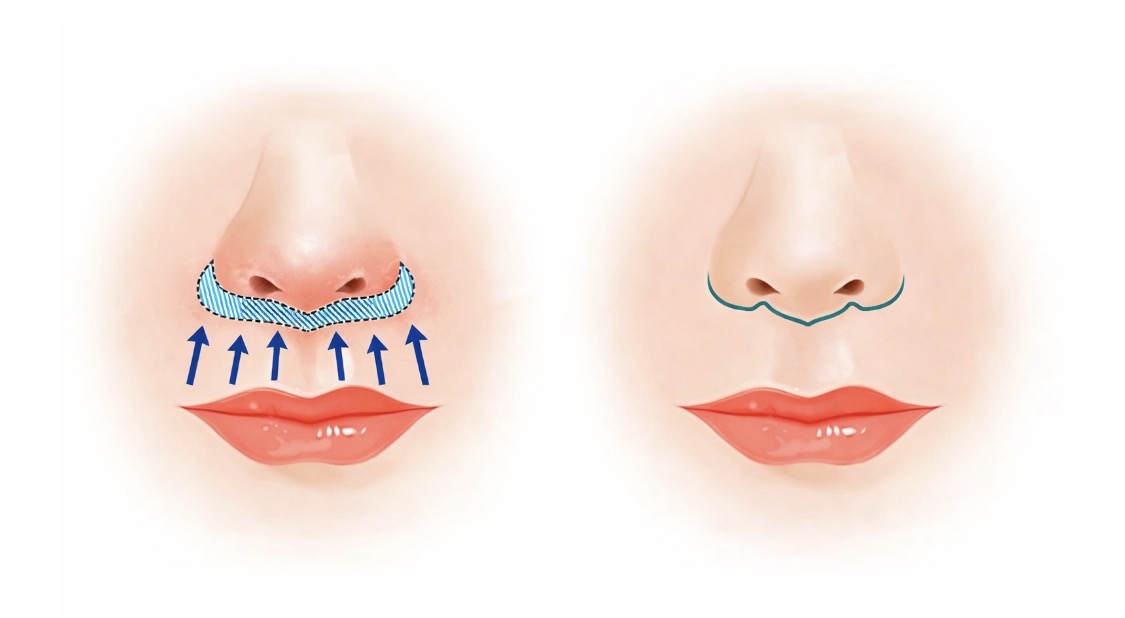
The bullhorn lip lift shortens the upper lip that has elongated with age and increases vermilion show for a more youthful appearance. It is an excellent complement to the facelift and is often combined with lip fat grafting to maximize the overall impact.
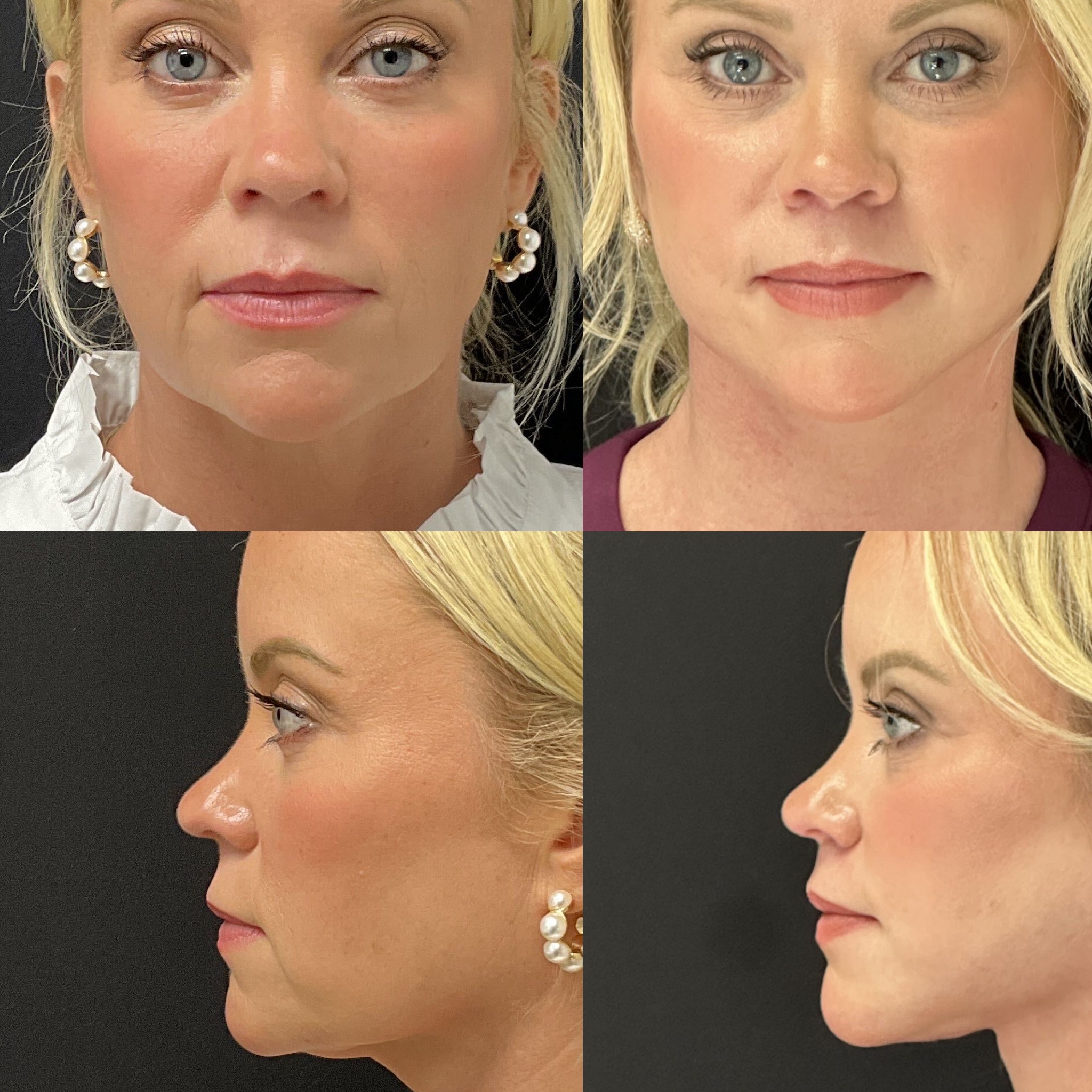
Before and after photos of a patient who underwent a central bullhorn lip lift combined with a facelift.
The Lateral Commissure Lift
The second type is the lateral commissure lift, also called the corner lip lift or triangle lift. This procedure is appropriate for two categories of patients: those who are younger with minimal aging but desire elevation of the corners of the mouth, and those undergoing a facelift in whom the corners of the mouth have been lifted vertically by the facelift procedure. In some individuals — whether or not they are having a facelift — the degree of aging at the commissures requires additional elevation. This is accomplished with a triangle lift, in which a small triangle of tissue is removed just above each commissure on either side.
It is important to understand that there are scars associated with both types of lip lifts. The scars from the bullhorn lift are quite difficult to see due to their placement along the natural shadow of the nasal base. The scars from the triangle lift have a greater potential to be visible. This is more likely in younger patients, patients with darker skin tones, and patients with more reactive healing. In patients with lighter skin and more aged skin texture, scars are less likely to be noticeable and can often be concealed with makeup. Most individuals who are good candidates for the commissure lift recognize the benefit of the procedure and are not concerned with the fine scars it produces.

The lateral commissure triangle lift elevates the outer corners of the lip that are not addressed by the central bullhorn lip lift. The incisions heal to very fine scars that are particularly difficult to see in lighter-skinned individuals.
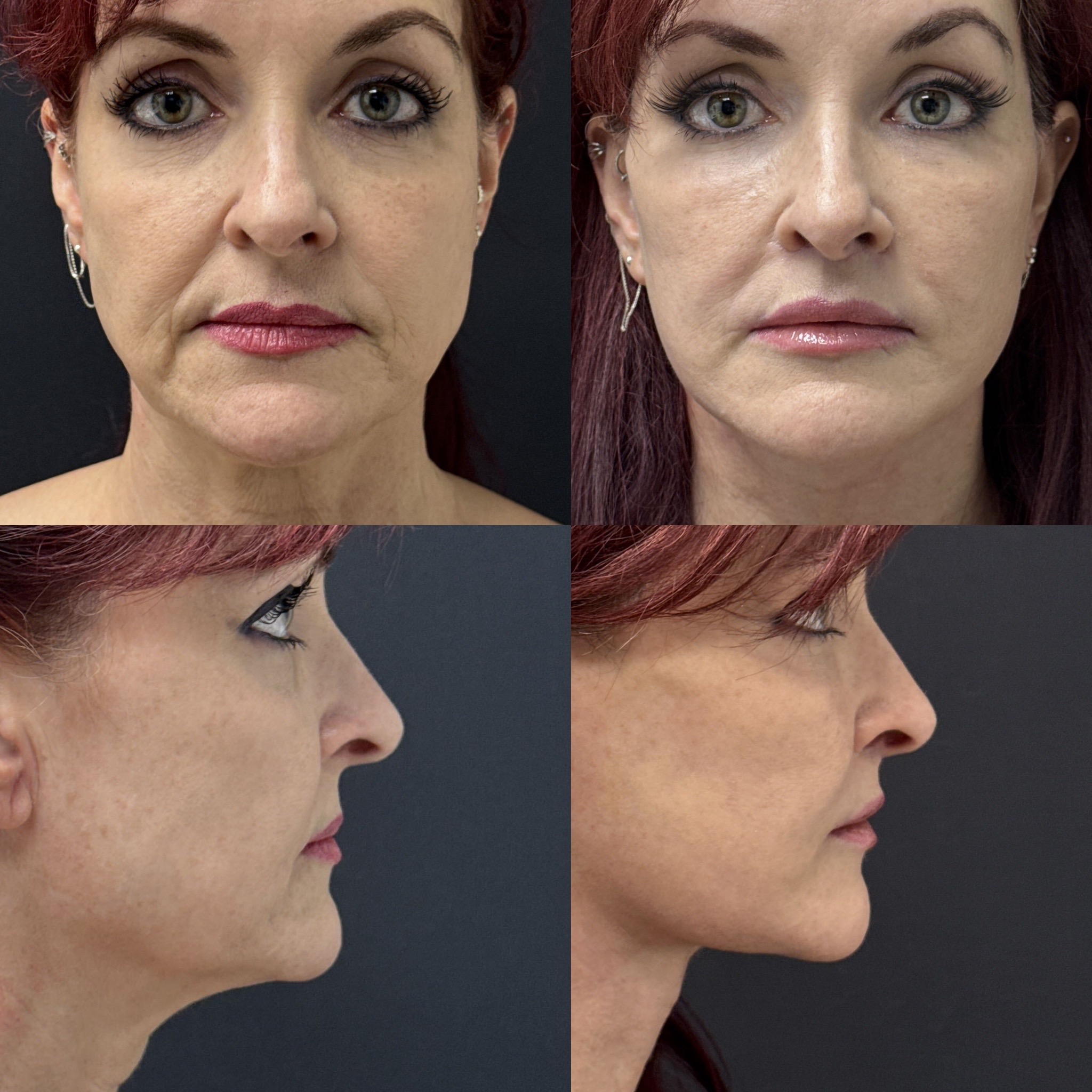
Before and after photos of a patient who underwent a bullhorn lip lift combined with a lateral commissure triangle lift, providing comprehensive rejuvenation of both the central and outer lip.
Goals of the Lip Lift
The goals of the lip lift are to anatomically shorten the length of the upper lip, to increase the show of the vermilion, and to achieve a natural resting position in which the lips are slightly parted at rest — revealing approximately 2 mm of the central upper teeth without a smile — and in which a full smile shows the upper teeth without excessive gum show.
The Anatomy of the Lip
The lip has a cutaneous (skin) portion that extends from the base of the nose down to the vermilion, which is the red part of the lip. There are two central prominences called the philtral columns. The junction between the cutaneous and vermilion portions of the upper lip is called the Cupid’s bow — named for its resemblance to the bow in a bow-and-arrow. Running along this junction is a fine white ridge called the white roll. The red portion of the lip is the vermilion. With age, the cutaneous upper lip elongates, the Cupid’s bow flattens, the vermilion loses definition, and the lip becomes thin and deflated.
An overview of lip lift surgery, including the two types of lip lifts, the role of fat grafting, and how lip lifts complement facelift procedures.
The Role of Fat Grafting in Rejuvenating the Lip
While a lip lift addresses length and position, it does not fully reverse all of the changes associated with lip aging. One of those changes is volume deflation. Fat grafting — using fat harvested from the patient’s own body and injecting it into the lips — can produce a very natural result. Some patients are initially apprehensive about this approach, fearful that it might create an overfilled or exaggerated appearance associated with hyaluronic acid fillers. I encourage patients to recognize that fat grafting to the lips is often extremely natural in appearance. In my experience, most women do not find the result overdone — in fact, many wish they had chosen slightly more fullness. The bottom line is that most women feel very comfortable proceeding with this approach once they understand what to expect.
Dermal Fat Grafting
Another method of restoring volume with natural tissue is the dermal fat graft. With this technique, a tissue graft is taken from elsewhere on the patient’s body. The graft includes a small amount of dermis — the tissue just beneath the surface of the skin — along with the associated fat. This graft is then precisely placed through a tunnel created within the upper and lower lips as needed. Fat grafting and dermal fat grafting can both be performed under local anesthesia, though when performed in conjunction with a facelift or deep plane facelift they are typically done under general anesthesia. Lip lifts themselves can also be performed under either local or general anesthesia depending on patient preference and the overall surgical plan.
A detailed look at the surgical technique for dermal fat grafting, a natural method of restoring volume to the lips using the patient’s own tissue.
Recovery from Lip Lifts and Fat Grafting
When a lip lift and/or fat grafting is performed in combination with a facelift, deep plane facelift, or neck lift, the recovery process is largely dictated by the facelift recovery. Please refer to our facelift recovery page for a full overview of what to expect.
When the lip lift is performed as an isolated procedure, recovery is generally mild. There is some swelling and minor discomfort with smiling and speaking in the early days, but these are temporary. There are no limitations on the types of food that can be eaten.
For recovery from a standalone lip lift, the general guidelines are as follows: avoid strenuous exercise for one week; gently cleanse the incisions and shower approximately two days after surgery; return for suture removal at one week; apply sunscreen consistently once healed; and use silicone gel at night for up to three months to help minimize scar visibility.
The Role of Laser in Maximizing Results
Laser treatment can be a valuable complement to lip lift surgery, particularly for improving the quality of the skin in the cutaneous portion of the upper lip. Lasers are capable of working at two distinct levels. At a deeper level, they stimulate collagen production and promote collagen remodeling within the dermis. At a more superficial level, they create a resurfacing effect — smoothing the skin surface and producing a more even color and texture.
The laser we use in our practice operates in both a deep and a superficial resurfacing mode, making it a highly versatile tool. We have found it to be a meaningful addition to our facelift and deep plane facelift procedures, including lip lifts, helping patients achieve a more comprehensive and refined result.
Frequently Asked Questions
What is a lip lift?
A lip lift is a surgical procedure that shortens the length of the upper lip, increases the show of the vermilion, and creates a more youthful resting position of the mouth. The goal is a natural appearance in which the lips are slightly parted at rest, revealing approximately 2 mm of the central upper teeth, and in which a full smile shows the upper teeth without excessive gum show.
What is the difference between a bullhorn lip lift and a lateral commissure lift?
The bullhorn lip lift elevates the central two-thirds of the upper lip. The incisions are placed just beneath the alar base on either side and along the columella, hiding them within the natural shadow of the nasal base. The lateral commissure lift, also called the triangle lift, addresses the outer corners of the mouth — the portions of the lip that are not lifted by the bullhorn technique. The two procedures can be performed together for comprehensive lip rejuvenation.
Am I a good candidate for a lip lift?
Good candidates are individuals who have noticed that their upper lip has lengthened with age, that they can no longer see their upper teeth without smiling, or that the corners of their mouth have begun to turn downward. Younger individuals who simply desire more elevation of the outer corners of the mouth may also be good candidates for the commissure lift specifically.
Can a lip lift be combined with a facelift or deep plane facelift?
Yes — and it is one of the most powerful combinations in facial rejuvenation. A deep plane facelift and neck lift address the mid-face, jawline, and neck, but the lips occupy such a central position on the face that they benefit from their own dedicated procedure. Adding a lip lift to a facelift significantly enhances the overall result.
Will a lip lift leave visible scars?
The scars from a bullhorn lip lift are quite difficult to see because of their placement along the natural shadow of the nasal base. The scars from the lateral commissure triangle lift have a greater potential to be visible, particularly in younger patients and those with darker skin tones. In patients with lighter or more aged skin, the scars are less likely to be noticeable and can generally be concealed with makeup. Most individuals who are good candidates for the procedure are not concerned with the scars because they are so fine.
What is the difference between lip fat grafting and a dermal fat graft?
Fat grafting involves harvesting fat from elsewhere on the patient’s body and injecting it into the lips to restore volume. A dermal fat graft is a small tissue graft that includes both dermis and the fat associated with it. Rather than being injected, the dermal fat graft is precisely placed through a tunnel created within the upper and lower lips. Both use the patient’s own natural tissue and can produce very natural-looking results.
Will lip fat grafting make my lips look overdone or unnatural?
This is one of the most common concerns I hear, and in my experience it is largely unfounded. Fat grafting to the lips is often extremely natural in appearance. Most women do not find the result overdone — in fact, many wish they had chosen slightly more fullness. It does not produce the overfilled or exaggerated appearance that can sometimes be associated with hyaluronic acid fillers.
Can a lip lift be performed under local anesthesia?
Yes. A lip lift can be performed under local anesthesia, with sedation, or under general anesthesia. When performed in conjunction with a facelift or deep plane facelift, it is typically done under general anesthesia as part of the combined procedure.
What is the recovery like after a lip lift?
When performed as a standalone procedure, recovery is generally mild. There is some swelling and minor discomfort with smiling and speaking, but there are no limitations on the types of food that can be eaten. General guidelines include avoiding strenuous exercise for one week, showering and gently cleansing the incisions about two days after surgery, returning for suture removal at one week, and applying sunscreen consistently once healed. Silicone gel at night for up to three months can help minimize scar visibility. When performed with a facelift, the recovery is largely dictated by the facelift recovery.
How does laser treatment complement a lip lift?
Laser treatment is particularly helpful for improving the quality of the skin in the cutaneous portion of the upper lip. At a deeper level, the laser stimulates collagen production and remodeling. At a more superficial level, it creates a resurfacing effect that smooths the skin and produces a more even color and texture. We have found it to be a meaningful addition to our lip lift and facelift procedures, helping patients achieve a more comprehensive and refined result.
Special Procedure Notes: The Anchoring Technique
In my 17 years of experience with this procedure, I recognize that one of the most important maneuvers that creates success in the bullhorn lip lift is not just to excise skin and to close it. Instead, after excising the skin, I perform a precise surgical dissection to elevate beneath the skin and anchor those soft tissues to the periosteum in the area of the nasal sill.
Anchoring the soft tissues to these firmer tissues is vital; it prevents distortion of the nose when the anchoring sutures are placed and tightened. This technique actually helps support the nose, preventing a downward drag on the tissues that could create distortions. By significantly reducing the tension on the closure in this way, I am able to create scars that are exceptionally fine and very difficult to see.