
What Medications Are Prescribed for Facelift and Rhinoplasty Surgery — Before, During, and After?
March 29, 2026 | Facelift, Revision Rhinoplasty, Rhinoplasty
Patients often want to know exactly what medications they’ll be taking surrounding surgery — and more importantly, why. That curiosity fits into a broader understanding of perioperative care. In my experience, patients who understand the reasoning behind their prescriptions follow instructions more carefully and recover more smoothly.
An important distinction up front: these medications are not all simply “post-op” prescriptions. Several — including Celebrex, Tylenol (acetaminophen), Neurontin (gabapentin), Journavx, and Emend — are started before surgery so that therapeutic levels are already active when the procedure concludes. The Transderm Scōp patch (scopolamine) is placed at the time of surgery. Others are continued after surgery for defined periods. This before-during-after framework is central to the strategy: prevention is far more effective than chasing symptoms after they’ve already started.
This post addresses pain management, nausea prevention, and swelling control for two of the most common procedures I perform: facial rejuvenation surgery (including facelifts, neck lifts, brow lifts, and blepharoplasties) and rhinoplasty, both primary and revision.
Facial tissues have distinct properties compared to other parts of the body. Bruising is immediately visible. Swelling can be dramatic. The difference between a challenging recovery and a pleasant one often comes down to how proactively these issues are managed — and pharmacologic strategy plays a major role.
In this video, I walk through the complete medication protocol I use for facial surgery — covering all three categories: pain management, nausea prevention, and swelling and inflammation control. I explain not just what each medication is, but where in the body it acts and why that matters for your recovery. Several of these medications are started before surgery, not after — a distinction that reflects the prevention-first philosophy behind the entire protocol. Whether you are preparing for a facelift, neck lift, brow lift, blepharoplasty, or rhinoplasty, understanding these medications in advance makes a meaningful difference in how well patients follow through and how smoothly they recover.
Pain, Nausea, and Swelling: Their Impact on Facial Surgery Recovery
Pain
The amount of discomfort patients experience after a facelift is actually quite variable. The most common response I hear is that patients took only one or two narcotic pain medications the night of surgery, and many report very little pain at all. That said, some patients do have more discomfort — and interestingly, in my observation, this tends to occur more in patients who are healthcare professionals. I don’t have a satisfying explanation for that.
Adding a brow lift often creates a dull headache for one to two days. Upper lid blepharoplasties generally cause minimal discomfort. Lower lid blepharoplasties create more eye irritation than frank pain. Overall, patients more often describe feeling tight and stiff rather than actually being in significant pain.
Rhinoplasty patients similarly report more pressure than pain — a central facial fullness, particularly in the nasal cavity — even in cases where we’ve performed osteotomies, which are precise bone cuts used to reposition the nasal bones and reshape the upper third of the nose.
It’s worth noting that my comments here reflect what I observe in my own patients, for whom we prescribe the medications discussed in this post. Pain management done well changes the experience substantially.
There’s also a physiologic reason to control pain beyond comfort: pain elevates blood pressure. Elevated blood pressure increases bruising and swelling, and if it gets too high, it raises the risk of a postoperative bleed. Pain management is both a comfort issue and a safety consideration.
Nausea
Nausea matters first because it dramatically reduces the quality of the recovery experience. But it also matters because nausea can progress to vomiting. Vomiting causes an abrupt increase in venous pressure in the face, neck, and head — a phenomenon called Valsalva-induced venous hypertension — which increases bruising, swelling, and the risk of bleeding.
The primary driver of nausea after facelift and rhinoplasty surgery is anesthesia, specifically volatile anesthetic gases, which have a well-known triggering effect on the brain’s nausea centers. Narcotics administered during surgery to control intraoperative pain are a secondary contributor.
Swelling and Inflammation
Inflammation is the body’s natural response to trauma. Facial surgery is controlled, intentional trauma — we are deliberately changing the structure of tissues to create a more attractive appearance — so some inflammation is expected and unavoidable. What we want to control is its extent.
Inflammation drives swelling. Swelling is the period during which patients feel they can’t be seen in public, which is what most people are actually asking about when they ask about recovery time. In extreme cases, swelling can also interfere with proper healing. Controlling it is both an aesthetic and a medical priority.
Medications for Pain and Discomfort
The overall strategy here has two goals: reduce pain and discomfort, and reduce pain with minimal reliance on narcotic medications. Opioids cause nausea, constipation, and cognitive fog — none of which are pleasant during recovery. This approach is part of a broader Narcotic Reduction Protocol that has been central to how I manage surgical pain. Our approach is to optimize pain relief while minimizing narcotic exposure through a combination of scheduled preventive medications and reserved breakthrough agents.
Breakthrough Pain: Oxycodone and Tramadol
Breakthrough pain refers to pain that occurs even with preventive medications in place. For these situations, we prescribe two options.
Ultram (tramadol) is a relatively low-potency narcotic and is the first choice for breakthrough pain. I encourage patients to try Ultram before reaching for anything stronger.
Oxycodone is a stronger narcotic, reserved for cases where tramadol is insufficient. A clarification worth making: oxycodone is not the same as OxyContin. OxyContin carries a justified negative connotation because of its sustained-release formulation, which dramatically increases addiction potential. Oxycodone is an immediate-release medication with a short duration of action and a very different risk profile when used appropriately and short-term in the postoperative setting.
Preventive Pain Medications
The preventive category is where most of the work gets done. Patients begin these medications before surgery so that effective concentrations are already in the system when the procedure concludes.
Celebrex (Celecoxib) is an NSAID — a non-steroidal anti-inflammatory drug — in the same family as ibuprofen, but with a meaningfully better safety profile for this application. Ibuprofen carries higher risks of bleeding and gastric irritation. Celebrex works by interrupting the inflammatory cascade at the surgical site, reducing the chemical signals that produce pain. Patients start Celebrex before surgery and continue it afterward.
Acetaminophen, best known as Tylenol, is often underestimated as a pain medication. It works primarily at the level of the brain to reduce the perception of pain — not at the site of injury. It’s also a synergist: it makes other pain medications work better. Patients start taking it before surgery and continue afterward.
Neurontin (gabapentin) was originally developed for neuropathic pain but has been found effective for acute surgical pain as well. It works at the spinal cord level, decreasing the transmission of pain signals before they ever reach the brain. Patients start before surgery and continue for a defined period postoperatively.
Journavx (Suzetrigine) is a newer agent with a mechanism of action similar to injectable local anesthetics — it decreases peripheral nerve transmission of pain signals. The critical difference is that it is taken orally. Journavx works by modifying ion channel activity in pain-sensing nerve fibers, essentially reducing the electrical signal at the point of origin before it even enters the central nervous system. Patients take it before surgery and continue afterward.
Medications for Nausea
As with pain, the strategy here distinguishes between prevention and treatment. The goal is to prevent nausea from starting rather than chase it once it has begun.
Transderm Scōp (Scopolamine Patch)
The Transderm Scōp patch is an anticholinergic medication historically used for motion sickness. We place the patch at the surgery center just before the procedure and leave it in place for approximately three days. It works by blocking specific receptors in the brain’s nausea and vomiting centers, reducing their sensitivity to anesthetic triggers. Transderm Scōp functions both as a preventive agent and as a maintenance treatment once nausea has begun.
Emend (Aprepitant)
Emend was originally developed to manage nausea associated with chemotherapy and has since become an important tool in surgical anesthesia. Patients take it 30 to 90 minutes before surgery. It acts centrally in the brain to reduce the nausea response to volatile anesthetic agents. Its primary role is prevention.
Zofran (Ondansetron)
Zofran was also initially developed in the oncology setting. Like Emend, it works at the level of the brain to reduce nausea signaling. The distinction is in how we use it: while scopolamine and Emend are given to prevent nausea from starting, Zofran is the breakthrough nausea medication — it is used once nausea has been triggered, paralleling the role that oxycodone plays for breakthrough pain.
Medications for Swelling and Inflammation
Medrol Dosepack (Methylprednisolone)
The Medrol Dosepack is an oral corticosteroid that works at the cellular level to reduce the inflammatory response to surgery. It reduces swelling through two mechanisms. First, it decreases the release of the chemical mediators — cytokines and prostaglandins — that drive both the inflammatory response and the tissue signaling cascade that produces swelling. Second, it directly reduces capillary permeability: it tightens the microvasculature so that less fluid leaks out of blood vessels and into the surrounding tissues. Both effects work together to meaningfully reduce postoperative edema.
Dyazide (Triamterene-HCTZ)
Dyazide is a mild combination diuretic. Diuretics do not target inflammation directly — they target swelling through a different pathway. By increasing urine production, they lower the total fluid volume in the bloodstream. With less circulating fluid available, there is less fluid to escape into swollen tissues. Additionally, by reducing intravascular volume, fluid is actually drawn back out of the surrounding tissues into the bloodstream, further reducing edema.
This is a carefully balanced intervention. The goal is not to dehydrate the patient. The goal is to offset the natural fluid retention that occurs from intravenous fluids administered during surgery, combined with the excess fluid produced by the inflammatory process itself. We use low doses for a limited period of time with this specific balance in mind.
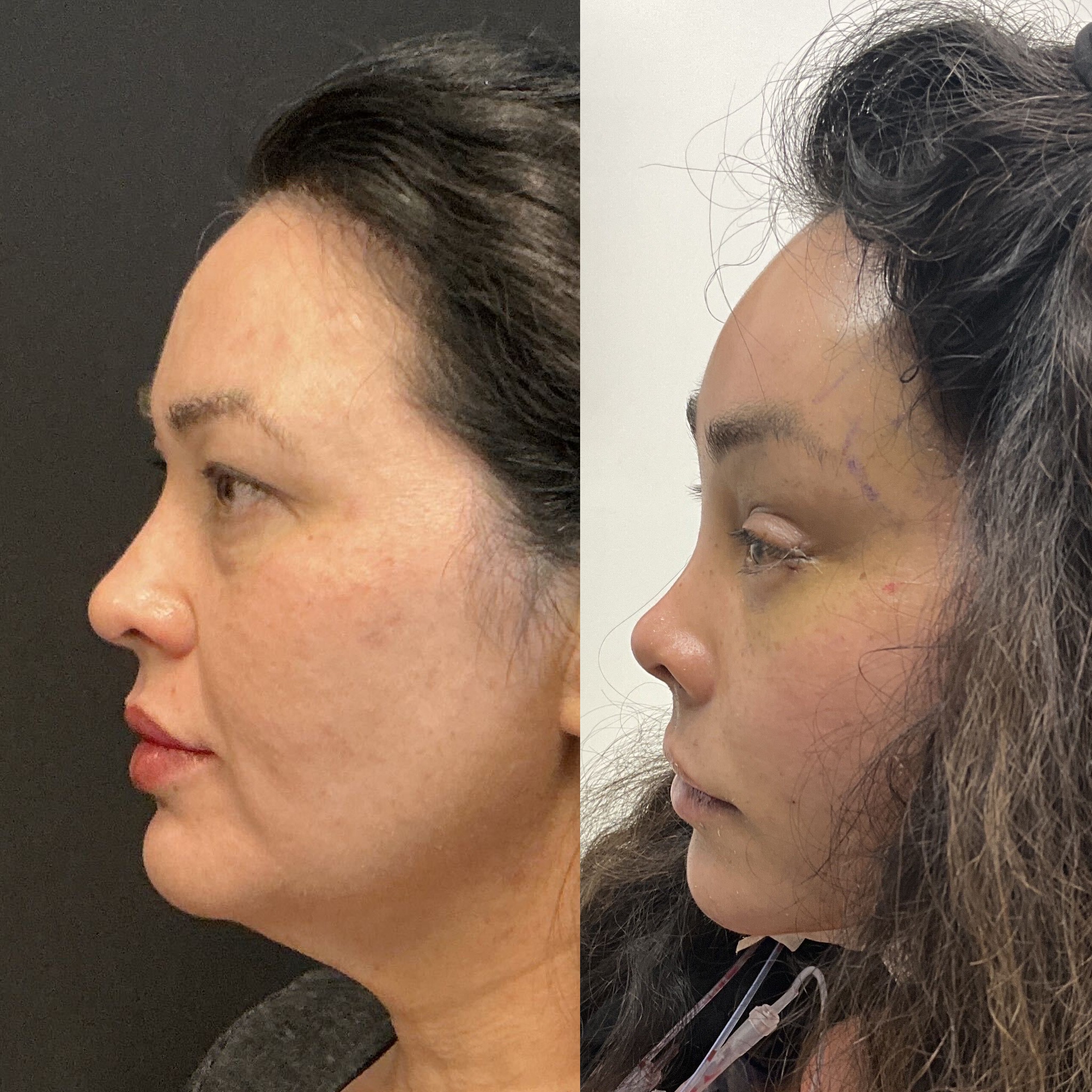
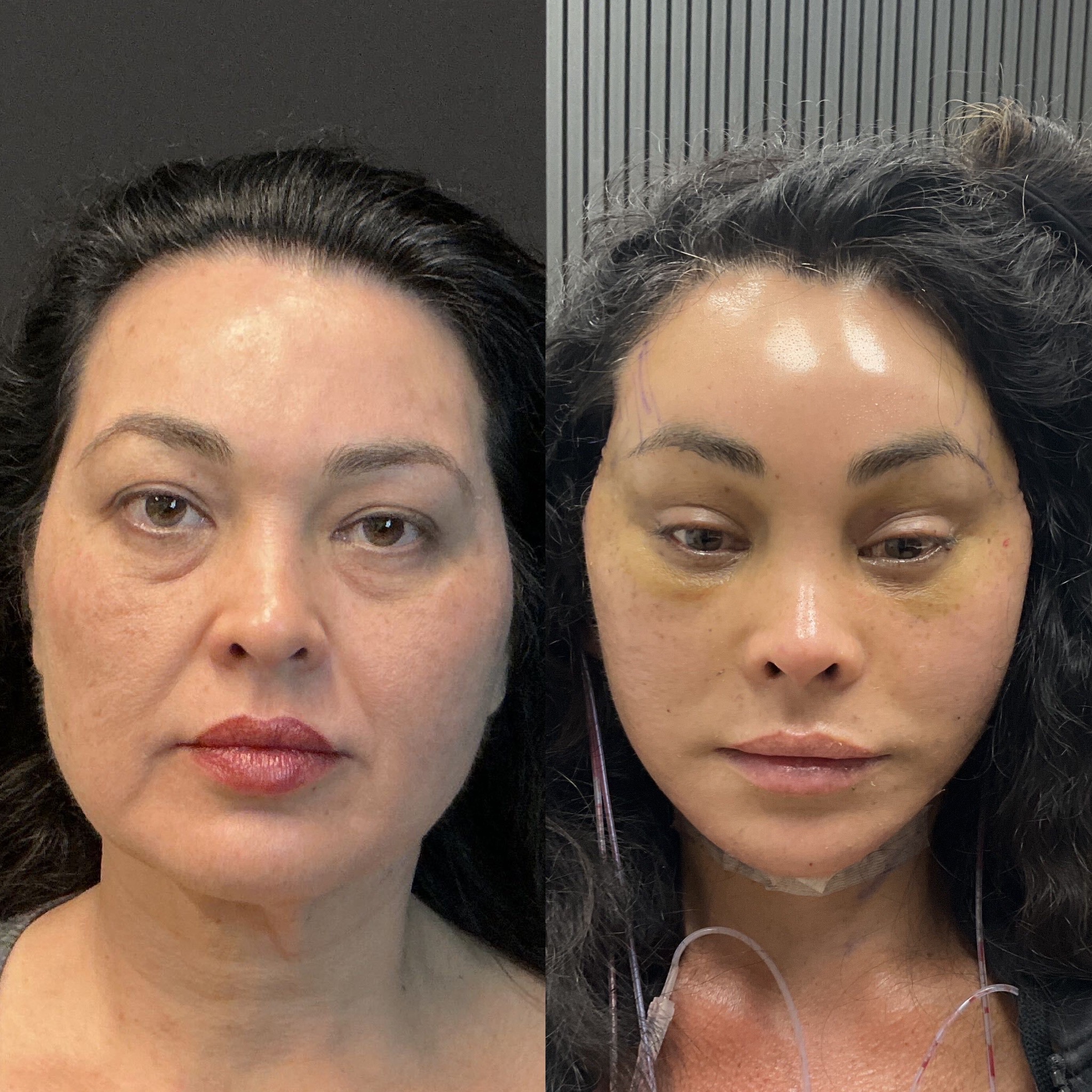
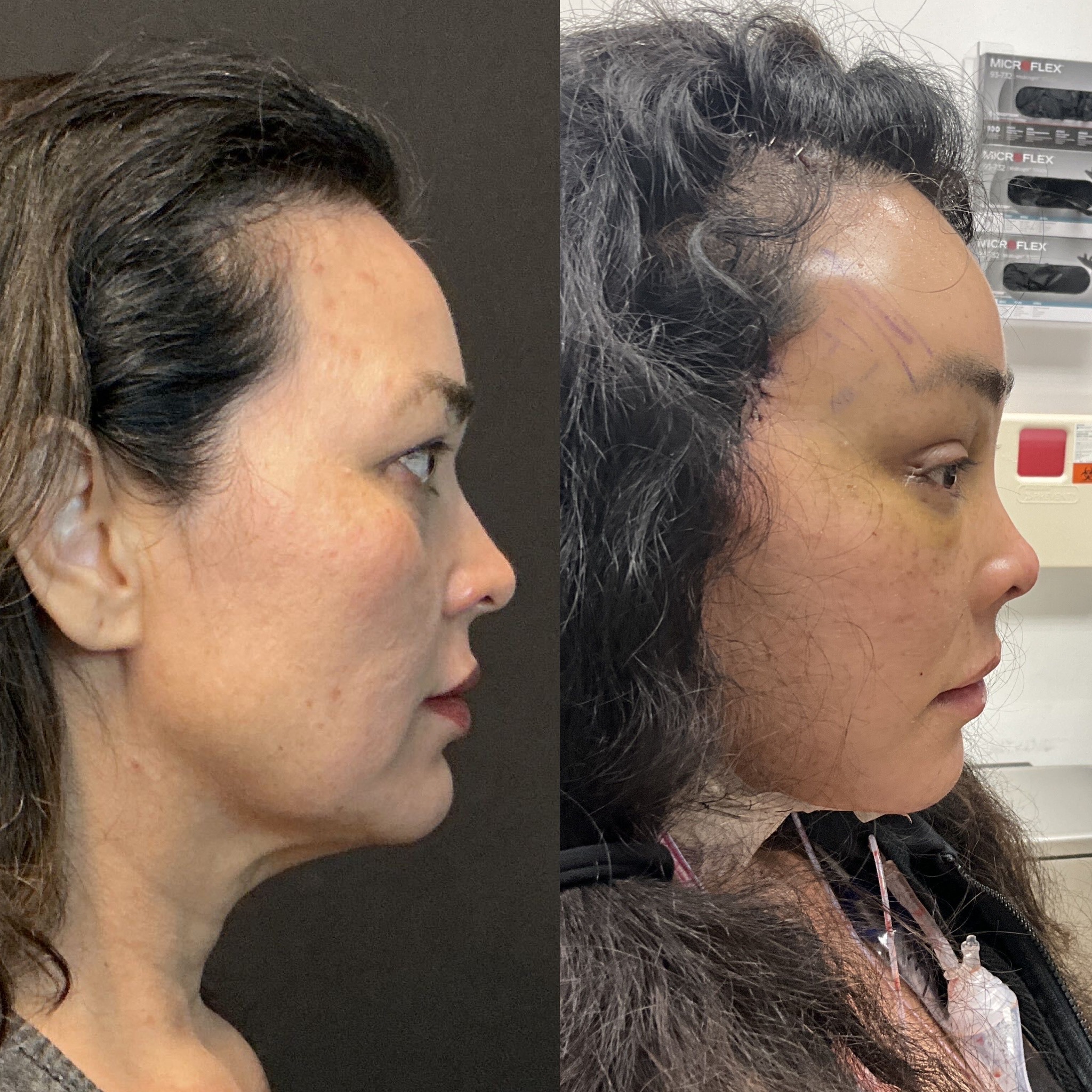
The following photographs show a patient at just three days following Dr. Weinfeld’s TriMax deep plane facelift, deep plane neck lift, endoscopic brow lift, fat grafting to the temples, cheeks, and lips, and micro liposuction to the nasolabial folds and jowls. They are included here to demonstrate what early recovery can realistically look like when the full medication protocol described in this post is followed as prescribed — not as a representation of the final result, but as an illustration of what optimized perioperative pharmacology looks like in practice.
“`
“`
Over-the-Counter Medications to Have Before Surgery
There are two important over-the-counter categories patients should have ready before their procedure:
Tylenol (acetaminophen) — as discussed above, this is part of our scheduled pain management protocol and should be on hand before surgery day.
Pepcid (famotidine) or Prilosec (omeprazole) — a proton pump inhibitor or H2 blocker is important when patients are taking both a steroid (the Medrol Dosepack) and an NSAID (Celebrex). Both of these medications can reduce the stomach lining’s mucus production, which increases the risk of gastric irritation — gastritis — or, in some cases, a small superficial ulcer. A PPI temporarily reduces stomach acid, protecting the stomach lining from irritation while these medications are on board.
Complete Medication Reference Chart
The following chart consolidates every medication discussed in this post — including dose, timing, and key notes. Patients scheduled for surgery receive this list in advance. Bring all medications to the surgery center on the day of your procedure.
| Pain Medications | |||
|---|---|---|---|
| Medication | Dose & Route | Timing | Notes |
| Celebrex celecoxib |
200 mg PO once daily | Day Prior — 1× daily × 7 days | Day before: take TWO capsules. Day of: first dose at surgery center. After: one capsule/day. |
| Tylenol acetaminophen |
2 × 500 mg PO q8h PRN | After Surgery — × 7 days | As needed for pain, up to three times a day. |
| Neurontin gabapentin |
100 mg PO q8h | Day Prior — 3× daily × 14 days | Day before: one capsule q8h. Day of: first dose at surgery center. After: one capsule q8h. |
| Journavx suzetrigine |
50 mg PO q12h | After Surgery | As directed. |
| Oxycodone | 5 mg PO q6h PRN | After Surgery | For breakthrough pain. Take with food. If nauseated, take Zofran ~30 min before. |
| Ultram tramadol |
50 mg PO q6h PRN | After Surgery | For breakthrough pain as needed. |
| Nausea Medications | |||
|---|---|---|---|
| Medication | Dose & Route | Timing | Notes |
| Transderm Scōp scopolamine patch |
1 mg transdermal patch | Day of Procedure | Applied at surgery center. Remove 3 days later — do not touch with bare hands. |
| Emend aprepitant |
40 mg PO once | Day of Procedure | Taken at surgery center before surgery. |
| Zofran ondansetron |
4 mg dissolving tablet SL q6h PRN | After Surgery | Place under tongue as needed for nausea/vomiting. |
| Inflammation & Swelling | |||
|---|---|---|---|
| Medication | Dose & Route | Timing | Notes |
| Medrol Dosepack methylprednisolone |
Per package instructions | After Surgery | Follow pharmacy package directions exactly. |
| Dyazide triamterene-HCTZ |
1 tablet PO daily | After Surgery — × 5 days | Diuretic to reduce swelling. |
| Over-the-Counter — To Prevent Stomach Upset | |||
|---|---|---|---|
| Medication | Dose & Route | Timing | Notes |
|
Pepcid famotidine — or — Prilosec omeprazole |
20 mg PO once daily | After Surgery — × 14 days | Use either one to protect the stomach from irritation caused by Celebrex and the Medrol Dosepack. Take before meals. |
Summary of Strategy
Whether the concern is pain, nausea, or swelling, the overarching strategy is the same: prevention first, treatment second. For pain and nausea, we build a foundation of scheduled preventive medications that are already working at the time surgery concludes, and we reserve breakthrough agents for situations where that foundation isn’t sufficient. For swelling and inflammation, we use a steroid to control the cellular cascade and a diuretic to counterbalance the fluid dynamics. The goal across all three categories is a recovery that is as smooth and comfortable as possible — not because it eliminates all discomfort, but because each potential problem has been anticipated and addressed before it starts.
Frequently Asked Questions
How much pain should I expect after a facelift?
In my experience, most patients report surprisingly little pain after a facelift. The most common response is feeling tight and stiff rather than experiencing significant pain. Many patients only use one or two narcotic pain pills the night of surgery, and some use none at all. That said, some patients do experience more discomfort — which is exactly why we prescribe the full medication protocol rather than waiting to see how someone feels. For more on what to expect, see my post on common facelift questions.
Why do you prescribe so many pain medications at once?
The approach is called multimodal analgesia — using several medications that work through different mechanisms simultaneously. This allows us to achieve better pain control at lower doses of each individual drug, which means fewer side effects overall and, critically, less reliance on narcotic opioids. The preventive medications — Celebrex, Tylenol (acetaminophen), Neurontin (gabapentin), and Journavx — each attack pain through a different pathway, so they complement rather than duplicate each other. This philosophy is described in more detail on the safety page.
Why does nausea matter so much after facial surgery?
Nausea matters for comfort, but it matters even more because vomiting causes a sudden, forceful increase in venous blood pressure in the face and neck. That pressure spike increases bruising, worsens swelling, and can even cause a postoperative bleed. Controlling nausea is not just about feeling better — it is genuinely important for the safety and quality of the surgical result.
What is Journavx and why haven’t I heard of it?
Journavx (suzetrigine) was recently approved by the FDA and represents a new class of pain medication. It targets pain at the peripheral nerve level by modifying ion channels in pain-sensing nerve fibers, effectively reducing the pain signal before it even enters the spinal cord. It works similarly to injectable local anesthetics like lidocaine, but is taken orally. It is a meaningful addition to our pain management toolkit.
Is oxycodone the same as OxyContin? Should I be concerned about taking it?
They are not the same. OxyContin is a sustained-release formulation that delivers oxycodone slowly over many hours, which significantly increases its addiction potential and is the basis for its troubled history. The oxycodone we prescribe is an immediate-release formulation with a short window of activity. When used appropriately — short-term, for actual breakthrough pain — in the postoperative setting, it is a safe and effective tool.
Why do some of these medications need to be taken before surgery, not just after?
Prevention is far more effective than treatment once a problem has started. For nausea, the anesthetic agents that trigger it begin working the moment surgery starts — by the time nausea develops, there is already an active stimulus to overcome. For pain and swelling, having therapeutic medication levels in the tissues at the moment surgery concludes significantly blunts the initial inflammatory response. Getting ahead of these problems is the entire strategy. Celebrex, Tylenol (acetaminophen), Neurontin (gabapentin), Journavx, and Emend are all started before surgery for exactly this reason.
Why do I need a proton pump inhibitor if I’m just having facial surgery?
The combination of a steroid (Medrol) and an NSAID (Celebrex) — both of which I prescribe for swelling and pain — can reduce the stomach lining’s protective mucus production. Without that protection, stomach acid can cause irritation, gastritis, or in some cases a small superficial ulcer. A proton pump inhibitor like Pepcid (famotidine) or Prilosec (omeprazole) temporarily reduces acid production while these medications are being used, keeping the stomach lining protected.
Do rhinoplasty patients need the same medications as facelift patients?
Largely yes, because the goals are the same: control pain, prevent nausea, and limit swelling. Rhinoplasty patients often describe more pressure than pain — particularly in the center of the face and nasal cavity — even when we’ve performed osteotomies (bone cuts). The medication protocol addresses both the discomfort and the swelling that affects how quickly the final result becomes visible.
How long is recovery from a facelift?
Recovery length varies depending on the procedures combined and each patient’s individual healing. The medications described in this post are designed specifically to compress the most difficult phase of recovery. For a full breakdown of what to expect, see my post on how long a facelift takes and the common facelift questions post.