
Nasal Splints vs. Packing After Rhinoplasty: Why I Use Soft Splints
November 02, 2026 | Rhinoplasty
By Adam Bryce Weinfeld, MD · Board-certified plastic surgeon · Austin, Texas · Updated November 2, 2026
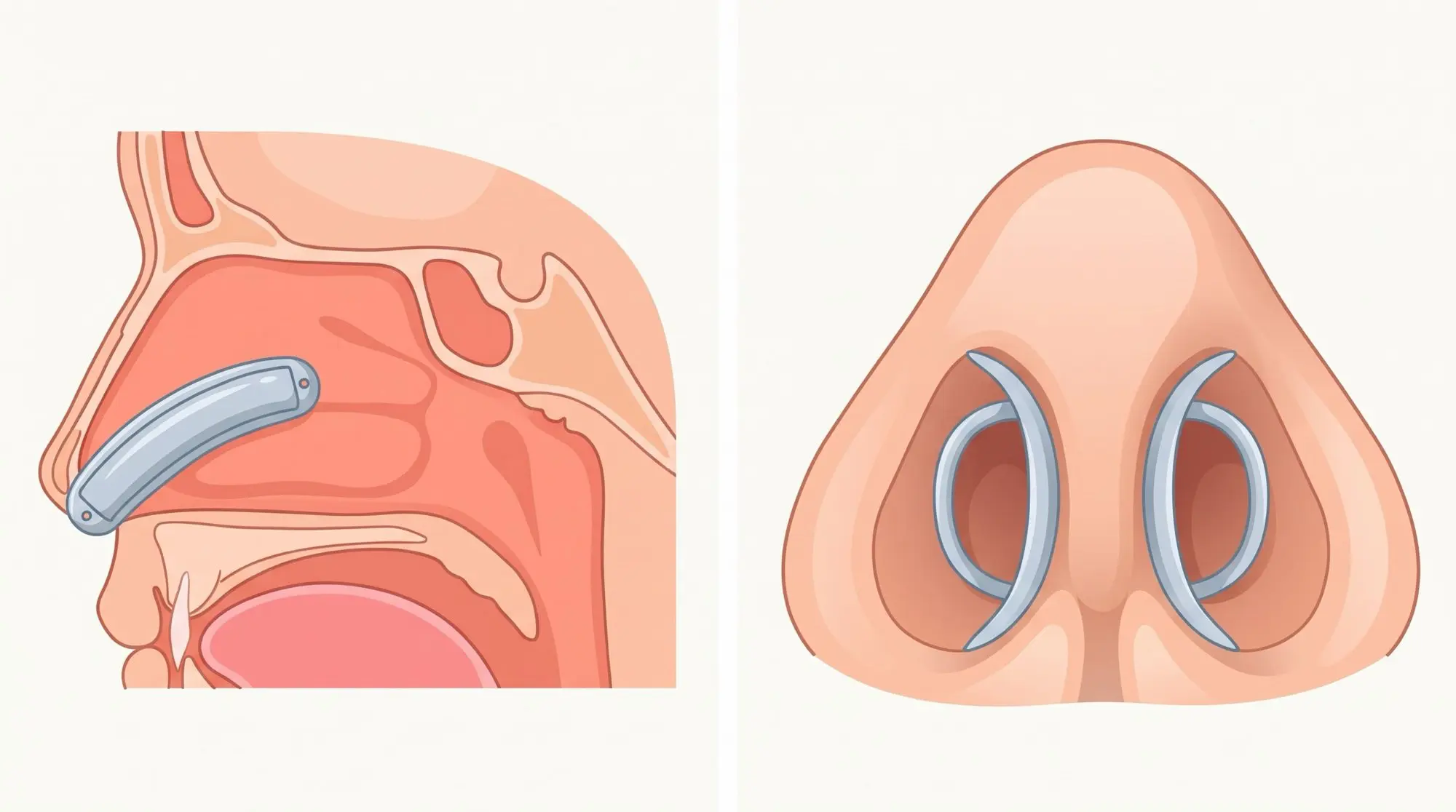
Do you need nasal packing after rhinoplasty? In my practice, no. I’ve never done it. Instead of gauze packing, I use soft silicone plastic splints that rest inside the nose and cradle the septum on either side after a septoplasty. They have channels you can breathe through, and when it’s time to remove them, they’re out in a minute.
In this video
- 0:00 Why soft splints instead of nasal packing?
- 1:21 Why was nasal packing used in the past?
- 2:58 Do nasal splints keep the septum straight?
- 3:47 What are the risks of nasal packing?
- 4:27 Nasal packing vs. splints: what’s different?
- 5:24 Can you breathe after rhinoplasty?
- 6:51 How do you clean your nose with splints in?
- 7:27 Bleeding after rhinoplasty: when to call?
- 8:21 What does nasal splint removal feel like?
- 9:41 Should packing keep you from rhinoplasty?
Key takeaways
- I don’t use nasal packing. Soft silicone splints gently support the septum and the soft tissues as they heal.
- Splints have channels on either side, so in the best of circumstances you can breathe through your nose right after surgery.
- Rinse through the splints with nasal saline as early as day one to keep the channels clear.
- A little bleeding from around the splints is extremely common for the first three days.
- Removal is a little tug and some pressure, and it’s over in a minute.
Why don’t I use nasal packing after rhinoplasty?
Because there’s a modern alternative that makes rhinoplasty recovery so much more comfortable. The absolute worst horror story people hear about rhinoplasties in the past was feet of bloody gauze being pulled out of the nose after the procedure. Fortunately, we don’t do that anymore. I don’t do that. I’ve never done that.
The reason that old gauze was so uncomfortable: it was packed dense, you couldn’t breathe through it, and when it was pulled out it acted like sandpaper brushing across sensitive tissues. The modern silicone splints are smooth and slick. They don’t stick to the internal tissues. Sometimes there’s one little suture that we have to cut, if that’s what I’m using to hold them in place, and then we pull them out, and that’s the end of it.
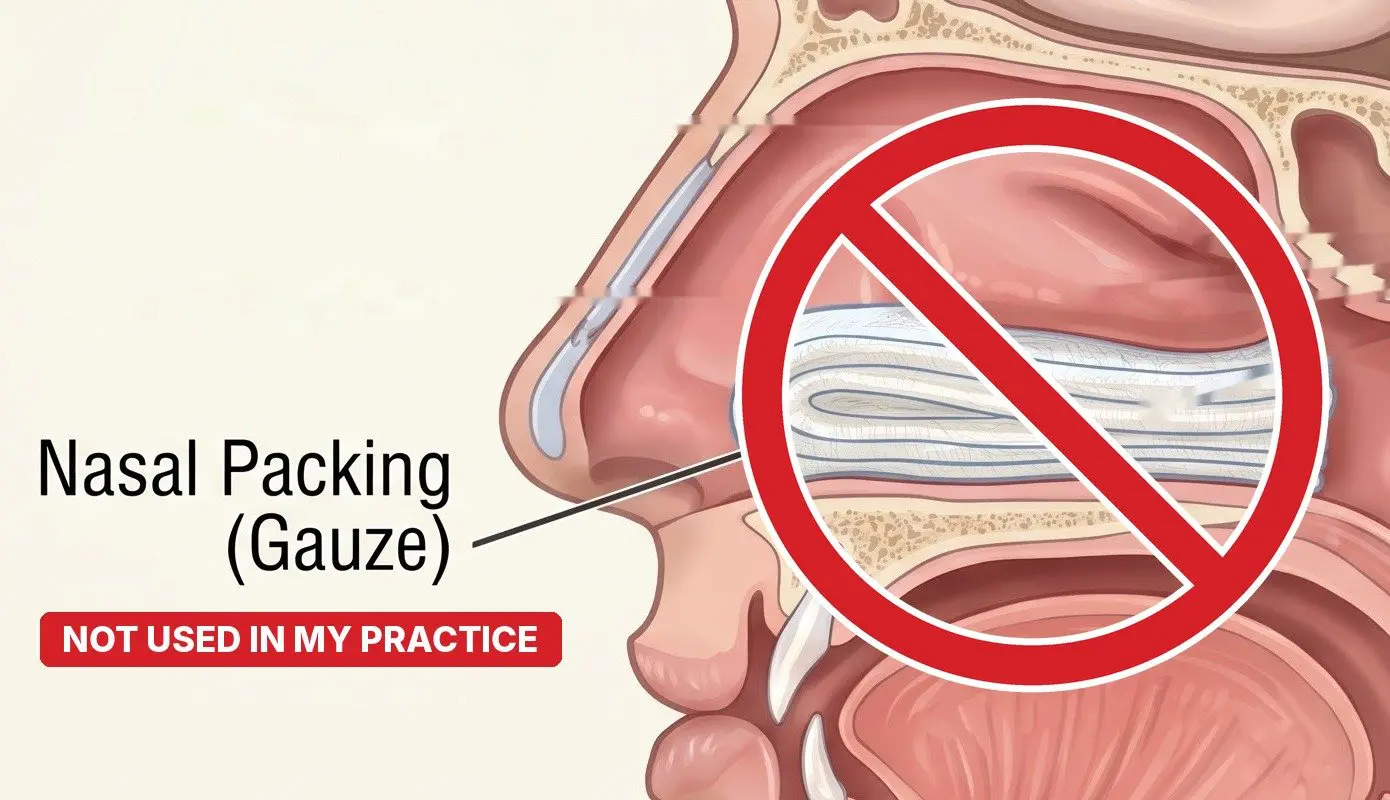
If the thought of an uncomfortable recovery, especially on day seven when something needs to be removed from the inside of your nose, is what’s keeping you away from a rhinoplasty, let me reassure you: the horror stories you heard in the past have no bearing on the reality of recovery from a modern rhinoplasty. Many patients forget they ever had splints at all.
For what the rest of recovery feels like, from pressure to getting back to social life, see rhinoplasty recovery: pressure, discomfort and being social, or learn more about rhinoplasty in Austin.
Why do you need splints after a septoplasty?
Every rhinoplasty, or almost every rhinoplasty, requires some degree of septoplasty. We have to harvest cartilage from the septum, and sometimes we have to straighten it. When we do that, we lift the mucosa, the wet skin on the inside of the nose, off either side of the bone and the cartilage.

When we bring it back together, those tissues need a little gentle support to heal together and not fill with blood. Blood that collects between the two leaves of the mucosa is called a septal hematoma, and it can lead to problems with healing, infection of the septum and even a septal perforation.

In the distant past, surgical techniques were different. There wasn’t as good use of bipolar electrocautery and hemostatic agents, so bleeding was more of a concern, and packing and pressure helped prevent it. With improvements in surgical technique and the use of soft silicone splints, there isn’t as much risk of bleeding as there used to be, and splints are sufficient to create the gentle pressure those tissues need to heal.
What’s the difference between nasal packing and splints?
Packing was placed with some degree of pressure. It created a lot of pressure on the inside of the face and truly packed the nasal airways, so you couldn’t breathe through your nose, only through your mouth. It could also create infections, which is why it was impregnated with antibiotic ointment and patients were put on antibiotics.
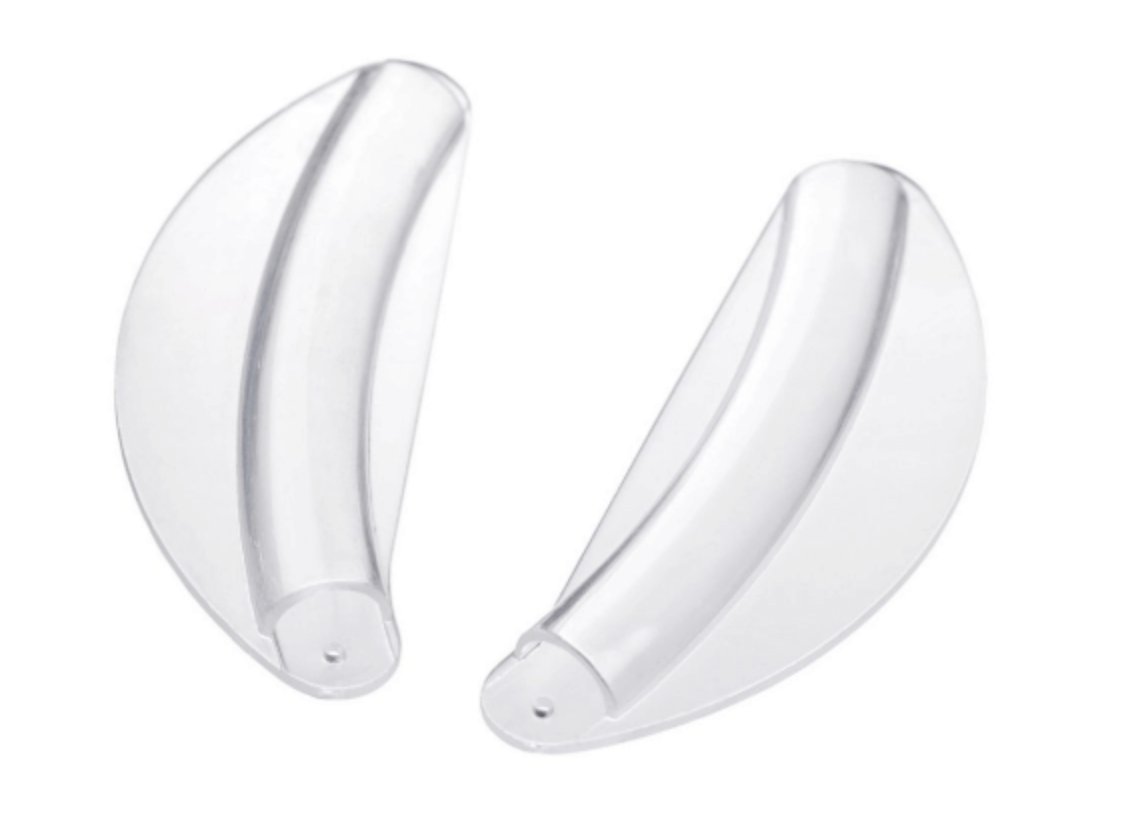
Modern splints have channels on either side, which in the best of circumstances stay clear so you can breathe through them during your recovery and don’t have to mouth breathe. They’re more comfortable, they tend to be safer, and they do the job we need: they gently support the internal mucosa and soft tissues so they can heal.
Can you breathe through your nose with splints in?
In the best of circumstances, you absolutely can. In fact, many patients wake up saying they breathe better immediately after surgery than they ever have before. There are probably two reasons. Almost all rhinoplasties involve some degree of septoplasty, so many patients now have a straighter septum. And the splint keeps the mucosa compressed and lets air flow freely through its channels.
What’s really amazing is when the splints come out and patients still feel like they’re breathing incredibly. It’s such a joy to hear people say they’ve never breathed that well through their nose.
Why can it feel stuffy again after the splints come out?
I often warn patients that it may feel like they’ve lost some of that breathing capacity in a day or two. That’s very natural. Once the splints are gone, the soft tissues swell again and create a little obstruction. Just like the swelling on the outside of the nose, there’s swelling on the inside, and it can peak at about a week or even two. It can take a full three months for 60% of that swelling to go away. That’s rare, though. Most people experience a significant improvement in breathing right away; some just need a little extra time.
How do you clean your nose with nasal splints?
With nasal saline, starting as early as day one. Splints can clog with blood, and that would make you a mouth breather, which increases discomfort during recovery. So don’t forget your saline spray.
- Lean back a little, or even lie down.
- Spray the saline into the nose and sniff it through the splint.
- It clears out mucus and blood and keeps the channels open.
You’re not going to tear the splints. They’re flexible, but the material has a high degree of integrity. They’re secured in place with a small suture up front, so a gentle tug or push on the splint pulls on the suture and can cause a little discomfort, but it’s very unlikely you’ll hurt yourself, the splint or the suture. A little ointment on the inside of the nostrils helps keep blood from collecting.
How much bleeding is normal after rhinoplasty?
A little bleeding from around the splint is extremely common. It’s very normal to have a little blood ooze from the nose for at least three days.
Here’s my rule of thumb. We give you gauze to keep taped under your nose. If you don’t have to change that gauze every 10 minutes, meaning it isn’t bleeding through and dripping down onto your lip every 10 minutes on the first day, it really is not a lot of blood. It may seem like a lot of blood, but it’s not.
I like all of my patients to have some Afrin, or generic Afrin, at home, because often a little spray on the inside of the nose can stop that bleeding. It’s very rare that we have to meet someone in the operating room or the emergency room to address bleeding after surgery. In fact, I’ve only had to do it three times in my entire career, with hundreds and hundreds, maybe thousands, of nasal surgeries.
Never stop a prescribed medication without your prescribing doctor, and use any medication, including over-the-counter sprays like Afrin, only as directed by your surgeon.
What does nasal splint removal feel like?
A little tug, some pressure, and then relief. There are two major types of splints I use.
The soft silicone splint
This one is secured through the septum with a small suture. To remove it, we snip that suture. Patients feel a little bit of a tug, and that’s probably the most uncomfortable part. Many patients don’t describe it as pain so much as a pinching. Then we gently remove one splint and the other. It happens very quickly. Yes, there’s a fair amount of pressure, but patients feel so relieved afterward. They love the way they breathe, and they forget about it in a minute or two.
The Bstent
The other type is an exciting newer splint developed by my mentor, Dr. Bahman Guyuron, called the Bstent. It has the traditional splints with the channels in the back, plus nostril supports up front, and the wonderful thing about it is that it doesn’t need to be sutured in place. It’s removed with a little bit of traction. In fact, some patients from out of state can even go home and remove it on their own.
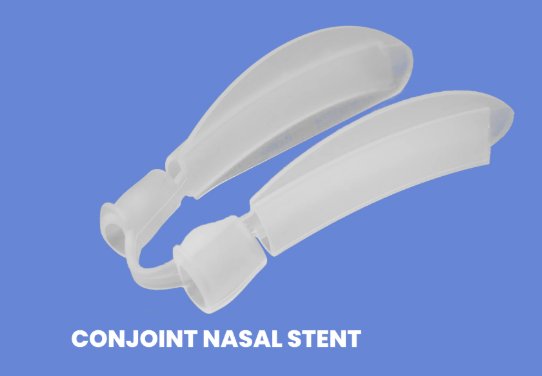
| Soft silicone splint | Bstent | |
|---|---|---|
| How it’s held | A small suture through the septum | No suture; nostril supports up front |
| Breathing | Channels on either side | Channels in the back |
| Removal | Snip the suture: a little tug, then out quickly | A little traction |
| How often I use it | Most of my patients | About a third of my patients |
I don’t use the Bstent for everyone; I use it for about a third of my patients. You’ll have to leave the judgment about using one over the other up to me, because they have different impacts on the way people heal and on people’s anatomy.
If you’re getting ready to meet with a surgeon, my guide to preparing for a rhinoplasty consultation and the rhinoplasty FAQs on form and airway are good next reads. Planning a second procedure? See revision rhinoplasty.
Frequently asked questions
Does having nasal packing removed really hurt as much as people say?
I actually have no idea, because I’ve never done it. I’m fortunate to have grown up in the era of modern rhinoplasty, where the soft silicone splint has become a mainstay for supporting the soft tissues as they heal. Removing splints creates a little pressure and a quick tug, but patients describe it as a pinch more than pain, and it’s over in a minute.
Do nasal splints prevent scar tissue and keep the septum straight?
For the most part, yes. For the first week after a septoplasty, splints help hold the mucosa, the fragile bones and the cartilage in place. They also prevent blood from collecting between the layers of mucosa, which could turn into an infection or into scar tissue that thickens the septum and blocks breathing. After the splints come out, healing depends on surgical technique and on how your body heals.
When do nasal splints come out after rhinoplasty?
In my practice, splints come out about a week after surgery, on day seven. Removing the sutured silicone splints means snipping one small suture, which feels like a tug or a pinch, and then sliding each splint out. It takes about a minute. Many patients feel so relieved afterward, because they love the way they breathe, that they forget about it almost immediately.
Can I remove my own nasal splints at home?
Sutured silicone splints come out in the office, because the small suture through the septum has to be snipped. The Bstent is different: it needs no suture and comes out with a little traction, so some of my patients who travel from out of state can go home and remove it on their own. Which splint you get is my decision, based on your anatomy and how you’re likely to heal.
Is nasal packing still used today?
Very few people do this anymore, so it’s mostly a historical question. Packing was used when bleeding was more of a concern, before the wide use of bipolar cautery and hemostatic agents. With better surgical techniques and soft silicone splints, the risks packing addressed are significantly reduced. That’s why I’ve never used it in my practice; splints do the job more comfortably.
About the author
Dr. Adam Weinfeld is a board-certified plastic surgeon in Austin, Texas, double fellowship-trained in facial aesthetic surgery and oculoplastic surgery, and Past President of The Rhinoplasty Society. In 19 years of practice he has performed hundreds and hundreds of nasal surgeries, and he is a Clinical Associate Professor at Dell Medical School with 33+ peer-reviewed publications.
Considering a rhinoplasty in Austin?
Book a consultation with Dr. Adam Weinfeld, board-certified plastic surgeon in Austin, Texas.
Request a consultation512-559-1376 · drweinfeld.com
This article is for education only and is not medical advice. Individual results vary. Written by Dr. Adam Weinfeld from his video; edited and formatted with AI assistance.
Full video transcript
Opening. The absolutely worst horror story that people hear about rhinoplasties in the past is feet of bloody gauze being pulled out of the nose after a rhinoplasty. Ugh, sounds so terrible. Fortunately, we don’t do that anymore. I don’t do that. I’ve never done that.
Why Splints, Not Packing. The reason is there’s a modern alternative. Soft silicone plastic splints that rest inside the nose and cradle the septum on either side, providing gentle support. Yes, removing them can create a little bit of pressure, but it’s so much more comfortable and with the modern versions, they’re soft, they’re flexible, and they’re out in a minute. The reason that ancient gauze was so uncomfortable, it was packed dense, you couldn’t breathe through it, and when it pulled out, it acted like sandpaper brushing across sensitive tissues. The modern version of the silicone splints are smooth and slick. They don’t stick to the internal tissues. Sometimes there’s one little simple suture that we have to cut, if that’s what I’m using to hold it in place, and we pull it out, and then that’s the end of it. So if the thought of having an uncomfortable post-operative recovery, especially on day seven, when something needs to be removed from the inside of your nose, if that’s what’s keeping you away from a rhinoplasty, let me reassure you that the horror stories that you heard in the past have no bearing on the reality of the recovery from a modern rhinoplasty. And many patients forget that they ever had them in the long run.
Why Packing Was Used. Many patients ask: does having packing removed from the inside of the nose really hurt as much as people say that it does? I actually have no idea because I’ve never done it. I am fortunate to have grown up in the era of modern rhinoplasty. Where the silicone splint has become a mainstay of providing important support to the soft tissues as they heal. A question one might ask is: why was packing used in the past and why do we use splints now? The reason for that is that every rhinoplasty, or almost every rhinoplasty, requires some degree of a septoplasty. We have to harvest cartilage from the septum. Sometimes we have to straighten the septum. When we do that, we remove the mucosa, the wet skin on the inside of the nose from either side of the bone and the cartilage. And then when we bring it back together, we need a little bit of gentle support to help those tissues heal together and not fill with blood. In the distant past, surgical techniques were different. There wasn’t as good use of bipolar electrocautery and hemostatic agents that could be used within the nose and within the bloodstream. And so bleeding was a little bit more of a concern. Packing and pressure was helpful to prevent bleeding post-operatively creating septal hematomas, which can create problems with healing and infection of the septum and even septal perforation. Fortunately, with improvements in medical techniques, surgical techniques and septoplasties, rhinoplasties, nasal surgery in general, and with the use of soft silicone splints, there’s not as much risk of bleeding as there used to be. Blood filling that space between the two leaves of the mucosa is much less likely to occur, and so splints really are sufficient to create the general pressure needed to allow those tissues to heal.
Keeping the Septum Straight. Do the modern internal splints prevent scar tissue and keep the septum straight? Well, the answer to that is for the most part yes. What they do is they help hold not just the mucosa, but the fragile bones and the cartilage in place so that we can have some degree of healing initially for the first week after the septoplasty. The remainder of the healing, however, occurs without the splints, and for that reason, it is dependent on the surgical technique and on the way your body heals. The splints themselves do help prevent scarring, important scarring, in fact. Blood can collect between the mucosa if there’s not gentle compression from the splints. And that blood can either turn into an infection, which fortunately is rare again because of the splints, or it could turn into scar tissue that could create a thicker septum and could create some obstruction that would hinder your ability to breathe as well as you could and benefit maximally from the surgery.
Risks of Nasal Packing. What are some of the medical risks of having packing inside the nose? Well, this is still pretty much a historical question because very few people do this anymore. One of the problems, of course, was that you couldn’t breathe through it. But another problem is that you can actually create infections with that. And that’s why it was impregnated with antibiotic ointments and patients were on antibiotics. Fortunately, those risks are significantly minimized, almost non-existent with the use of modern silicone splints. So they’re more comfortable, they tend to be safer, and they achieve the job we need to have achieved. They gently support the internal mucosa and soft tissues so they can heal in the course of a rhinoplasty.
Packing vs. Splints. Many patients ask what is the difference between the old-fashioned packing and the modern silicone splint that’s used in septoplasties and rhinoplasties? Well, first of all, packing was placed with some degree of pressure, so it created a lot of pressure on the inside of the face and it really truly packed the nasal airways. You couldn’t breathe through your nose, you could only breathe through your mouth. The current modern day splints have channels on either side, which in the best of circumstances remain clear and you can breathe through in your recovery, so you don’t have to mouth breathe. Now, sometimes they do clog with blood, and that’s why we encourage our patients to rinse through them with nasal saline to prevent the clogging of blood, which would make you a mouth breather, which can increase the discomfort during your recovery. One thing is to be comfortable, so don’t forget to use saline spray. You can start that within the splints, even as early as day one. And I tell my patients, with a saline spray, lean back a little bit, even lay down, spray it into the nose and sniff it through the splint. It’ll help clear out any mucus or blood and allow those channels to remain open.
Breathing After Rhinoplasty. Can you breathe through your nose right after surgery if you don’t have packing, if you have the modern nasal splints? Well, as I addressed before, in the best of circumstances, you absolutely can. In fact, many patients wake up saying they breathe better immediately after surgery than they ever had before. Well, there’s probably two reasons for that. One is, once again, almost all rhinoplasties involve some degree of a septoplasty. So many patients have made their septum straighter, and of course, they’re breathing better. Also, that splint really keeps the mucosa compressed and allows air to flow really freely through those channels. Now, what’s really amazing is when you take those splints out and patients still feel like they’re breathing incredibly. Ugh, it’s such a joy to see people say they’ve never felt like they’ve breathed that well through their nose. Now, I will say, and I often warn patients: it may feel like you’ve lost some of that breathing capacity in a day or two. That’s very natural. And the reason for that is once the splints are gone, the soft tissues swell again. And when they swell again, they create a little bit of obstruction. I tell patients, just like the swelling on the outside of the nose, there’s swelling on the inside of the nose. And that swelling can peak at about a week, or even two weeks, and it can take even a full three months for 60% of that swelling to go away. So, just like it is a little bit of a marathon to see the results unfold on the outside of the nose, so it can sometimes be true for the improvement in the breathing. That’s rare. Most people experience a significant, prolonged improvement in breathing right away, but there are some patients who need a little bit of extra time.
Cleaning Around Splints. How do you clean your nose and the nasal splints so you can breathe through them without damaging them? Well, the splints themselves have a high degree of material integrity. You’re not going to tear them. And they are secured and placed with a suture. Now, if you gently tug or push on the splint, it will tug or push on the suture and that cause a little bit of discomfort. But it’s very unlikely you’re going to hurt yourself, hurt the splint, or the suture. So feel free to put a little bit of ointment on the inside of the nose. That’ll prevent blood from collecting. And then also remember, I do want you to flush through that splint to help keeping it clear of mucus and blood. So that you’ll be able to breathe through the splints through the entirety of your recovery.
Bleeding: When to Call. When should you call me if you notice bleeding around your splint after rhinoplasty? Well, first of all, a little bit of bleeding from around the splint is extremely common. In fact, it’s very normal to have a little bit of blood ooze from the nose for at least three days. Now, here’s a rule of thumb: we’re going to give you gauze that you keep taped to your nose. If you don’t have to change that gauze every 10 minutes, meaning if it’s not bleeding through and dripping down on your lip every 10 minutes for the first day, then it really is not a lot of blood. It may seem like a lot of blood, but it’s not a lot of blood. But I like to have all of my patients to have some Afrin or generic Afrin at home because often we can stop that bleeding by having them spray a little bit of the Afrin on the inside of their nose. It is very rare that we have to meet someone in the operating room or in the emergency room to address bleeding after surgery. In fact, I’ve only had to do it three times in the entirety of my career, and that is with hundreds and hundreds, maybe thousands of nasal surgeries.
What Removal Feels Like. What does it actually feel like to have nasal splints removed from your nose after rhinoplasty? First of all, there are two major types. The one type is the soft silicone splint that needs to be secured through the septum with a small suture. In order to remove it, we have to snip that suture. Patients feel a little bit of a tug. That’s probably the most uncomfortable part of it. Many patients don’t describe it as pain so much as a pinching. And then we gently remove one splint and the other. It happens very quick. Yes, there’s a fair amount of pressure, but patients feel so relieved afterwards. They really love the way they breathe, and they forget that in a minute or two. The other type of splint is an exciting new splint actually developed by my mentor Bahman Guyuron called the Bstent. This is nice because it has the traditional splints with the channels in the back, but some nostril supports up front. I don’t use this for all patients. I probably use it for about a third of my patients. But the wonderful thing about it is you don’t need to suture it in place. Now, you’re gonna have to leave the judgment about using one over the other up to me. It’s not really something you can choose because they have different impacts on the way people heal and on people’s anatomy as well. And so, for that reason, you gotta leave that up to me. But it’s nice when I can use those Bstent ones because they’re nice, they’re soft, and they don’t need to be sutured in place. They’re just removed with a little bit of traction. In fact, some patients who are from out of state could even go home and remove them on their own.
The Takeaway. So I hope these questions were answered in a way that makes you feel more comfortable about having a rhinoplasty and a septoplasty. Soft silicone splints are far more comfortable. They’re not something you should be scared of the way people were scared of that old-fashioned packing that used to be used in the past. We don’t use it anymore. If you’re interested in learning about more topics about rhinoplasty, leave them in the comments. Please follow my YouTube channel. And if you’re interested in a consultation, go to drweinfeld.com and there’s a contact form there. It goes directly to my practice, but also I get to see emails. And sometimes when people give me detailed questions, I like to answer them directly. So we look forward to that. See you later. Bye.