
Ozempic Face Facelift: Why Fillers Fail After Rapid Weight Loss
November 05, 2026 | Facelift
By Adam Bryce Weinfeld, MD · Board-certified plastic surgeon · Austin, Texas · Updated November 5, 2026
Ozempic face is the hollowed-out, older look that can follow rapid weight loss on GLP-1 medications. The fat in the face deflates within its compartments, but the stretched retaining ligaments don't shrink, so they no longer support the skin and the skin sags. Fillers and skin tightening don't treat loose ligaments; a deep plane facelift and neck lift do.
In this video
- 0:00 What causes Ozempic face?
- 2:09 Can fillers or skin tightening treat it?
- 3:34 What needs to be lifted after weight loss?
- 5:03 What does a TriMax deep plane facelift add?
- 7:05 How do you lift the cheeks without pulling?
- 8:28 Do you need fat grafting after weight loss?
- 10:13 Why does the neck sag after weight loss?
- 12:29 When to book a consult after a GLP-1?
Key takeaways
- Facial fat sits in compartments separated by retaining ligaments. When that fat deflates, the stretched ligaments no longer support the skin, and the skin sags, even in patients in their 20s, 30s and 40s.
- Skin tightening tightens the skin, not the loose ligaments underneath it. Fillers fill, but you can't (and wouldn't want to) refill the face enough to make the skin taut again.
- An extended deep plane facelift releases the retaining ligaments all the way to the nasolabial fold and resuspends the tissue with sutures. My TriMax technique adds microliposuction, fat recycling and subcision.
- The neck often shows weight loss first, even after 10 or 15 pounds, so after major weight loss a facelift is very rarely done without a neck lift.
- Come in when you reach your goal weight. I like to operate three to six months later, once protein and labs have caught up, and I ask patients to pause their GLP-1 two weeks before surgery.
What causes Ozempic face, and why can it lead to a facelift at any age?
Rapid weight loss from Ozempic and other GLP-1 medications doesn’t just affect the body; it affects the face as well. We have fat in our face that we lose with those medications, and that fat is contained in special compartments separated by ligaments.
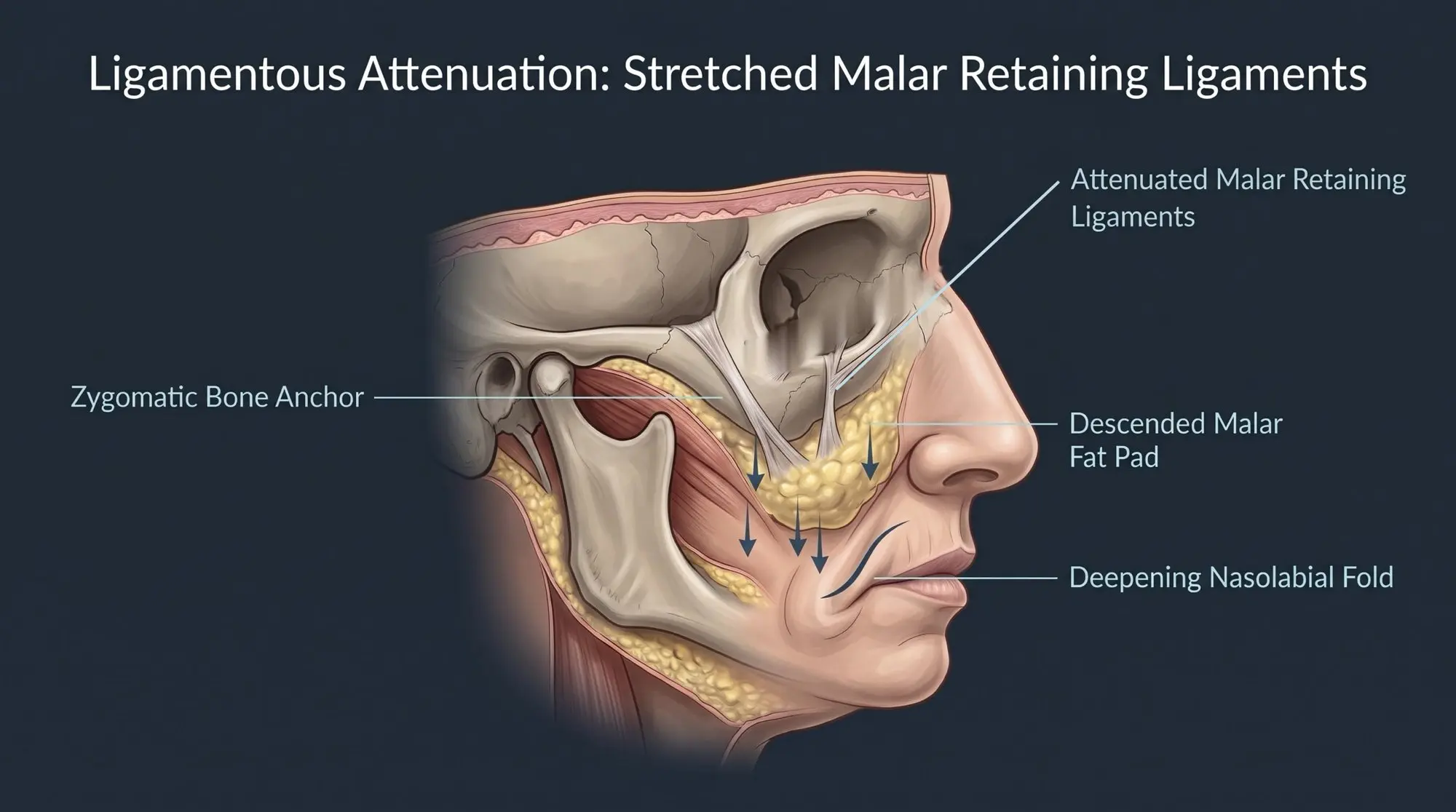
The ligaments and the fat create the facial shape that we see from the outside when we look at someone’s face. When we lose fat, that fat deflates within those compartments and it leaves loose ligaments. Those loose ligaments no longer support the skin, and the skin sags.
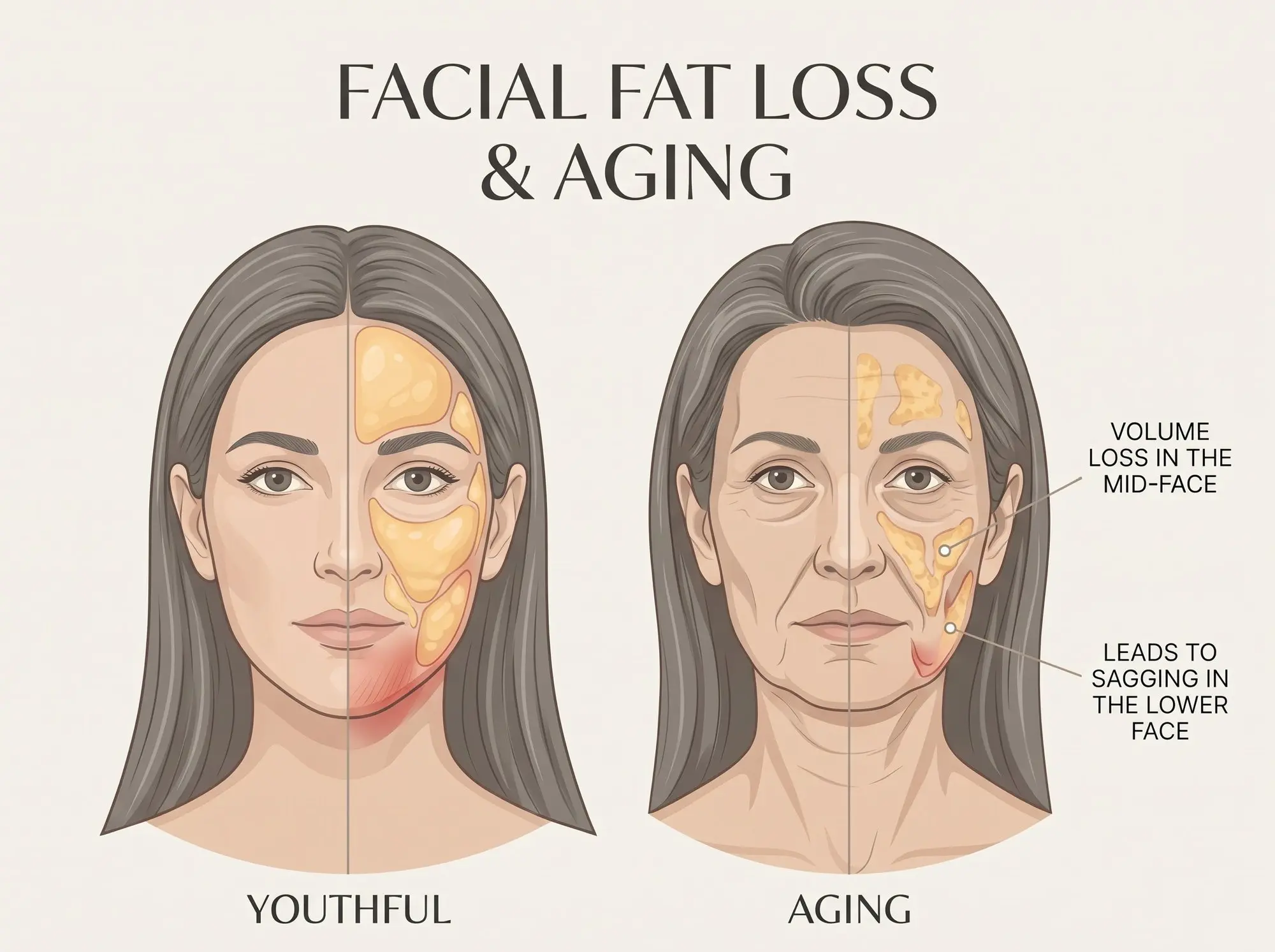
It happens in an exaggerated way in patients who have lost a lot of weight, especially rapidly, because those ligaments don’t shrink and because the overlying skin has been stretched beyond its mechanical properties. Therefore, we see very deep nasolabial creases, heavy nasolabial folds and excessive jowls, even in really young patients in their 20s, 30s and 40s.
We see features of aging in rapid weight loss patients that we don’t see in most patients until they reach their 50s, 60s and 70s. This is a true problem for patients who’ve lost a lot of weight. They’re feeling great, but when they look in the mirror, they see their grandmother. Nobody wants that. That’s why I say a facelift has nothing to do with age; it’s all about anatomy.
This isn’t rare in my practice. 20% of my patients have experienced significant weight loss while using GLP-1s, and 40% have used GLP-1s for moderate weight loss or weight maintenance.
How much weight loss causes Ozempic face?
It’s hard to say that there’s a cutoff or a threshold of weight loss where we start to see Ozempic face, because it’s really dependent on the patient: their age, the initial fullness of their face, whether they preferentially lose fat in their face first, and the thickness of their skin and the tightness of their ligaments in general.
Does weight loss from diet and exercise cause the same thing?
When you lose weight more gradually with diet and exercise, you may not have the same problem, because there is a little bit of tightening of the skin. But if you’ve lost a lot of weight through diet and exercise, you’re definitely going to see some of the same features, and what I describe here applies to you as well.
Why don't fillers or skin tightening solve Ozempic face?
Because those treatments don’t treat the actual problem. Skin tightening devices do exactly what they say: they tighten the skin. But tightening the skin is not the solution for loose ligaments underneath the skin.
Most people head straight to a med spa for fillers or skin tightening devices. I have nothing against med spas or med spa treatments. We have a med spa, and they’re extremely valuable. However, for people who have lost a lot of weight, even though they may add a little bit of value, it’s unlikely that med spa treatments will make them look in the mirror and feel as if they’ve reversed the excessive aging that can happen with significant weight loss.
Skin that has been stretched through years of being heavy, and has experienced the deflation effect of significant weight loss, is not ever going to be able to be tightened enough by modern-day skin tightening techniques.
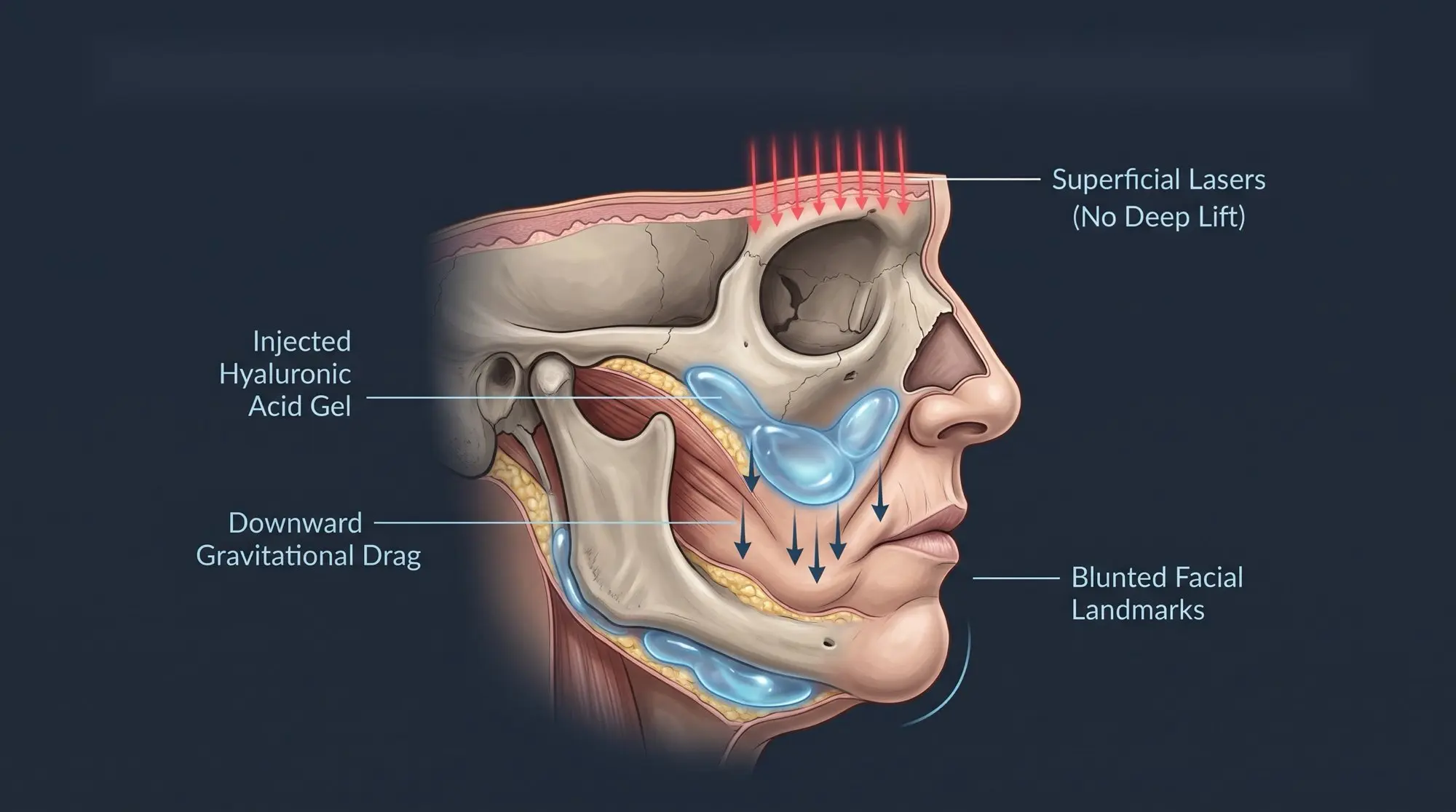
Another problem exists with fillers. Fillers do fill things, and yes, with weight loss, we’ve deflated the skin. The problem is you can’t, and you certainly wouldn’t want to, refill the skin enough to make it taut again.
It’s not that it doesn’t have value, and it’s not that if you’re doing it, it’s wrong. I just don’t think it’s going to solve the problem for many patients who’ve lost a significant amount of weight. Fortunately, there are other solutions.
What does a deep plane facelift do after weight loss?
It treats the layer that actually changed. The deflated skin is still suspended by lengthened, attenuated retaining ligaments, the ligaments that hold our soft tissues in place. When they’re stretched out, they’re not really holding much in place at all, and that’s why we see the heavy nasolabial folds and the heavy jowls.
For that reason, a surgical approach is the way, in my opinion and my experience, to give the most thorough reversal of the aging that we see with weight loss. The way I go about that is with my TriMax deep plane facelift: an extended deep plane facelift plus something more.
Releasing and resuspending the retaining ligaments
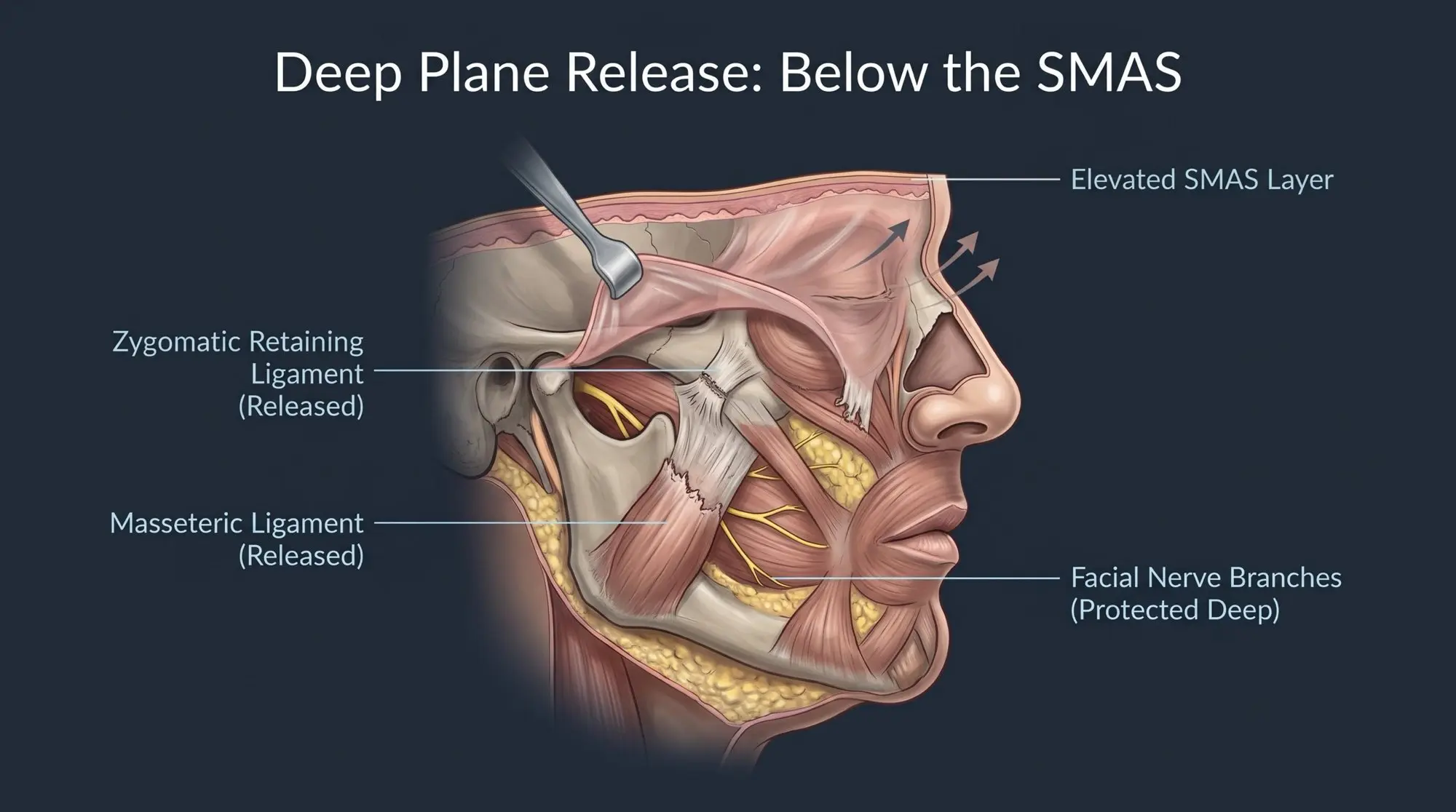
An extended deep plane facelift is so powerful for someone who has experienced weight loss because, from the incisions around the ear, we’re able to access the deep tissues where those retaining ligaments reside. We release them in key areas all the way down to the nasolabial fold. That’s the extended portion of it.
Then we resuspend those tissues, and we replace those ligaments with sutures designed to secure the soft tissues to the deeper tissues, such as the bone and the SMAS. All of those tissues are helpful in suspending the deep plane tissues.
What TriMax adds: subtracting the fold, adding to the crease
If we just stopped there, in my experience, I wouldn’t achieve everything I want to achieve. Patients who have lost a lot of weight still, unfortunately, have very stubborn fat in the area of the jowls and the nasolabial fold. That’s where my TriMax deep plane technique comes into play.
In those patients, I’ll do microliposuction in those two key areas. Yes, I’m removing a little bit of fat in a patient who may not even have enough fat in their face. But we’re going to re-inject that fat, and potentially borrow a little bit more from somewhere else, in areas that are really beneficial for someone who’s lost a lot of weight.
- The nasolabial crease: I like to do subcision, or dermal release, in the nasolabial crease and add a little bit of fat there. We’re subtracting the fold and adding to the crease. That creates a really smooth transition from the cheek down to the lip, something that, in my experience, you can’t achieve with an extended deep plane facelift alone.
- The jowl: the jowl is just the lower extension of the malar fat pad, an upside-down triangle of fat. We subtract that fat from the jowl, and then we recycle it. We upcycle it by injecting a little bit in the malar eminence.
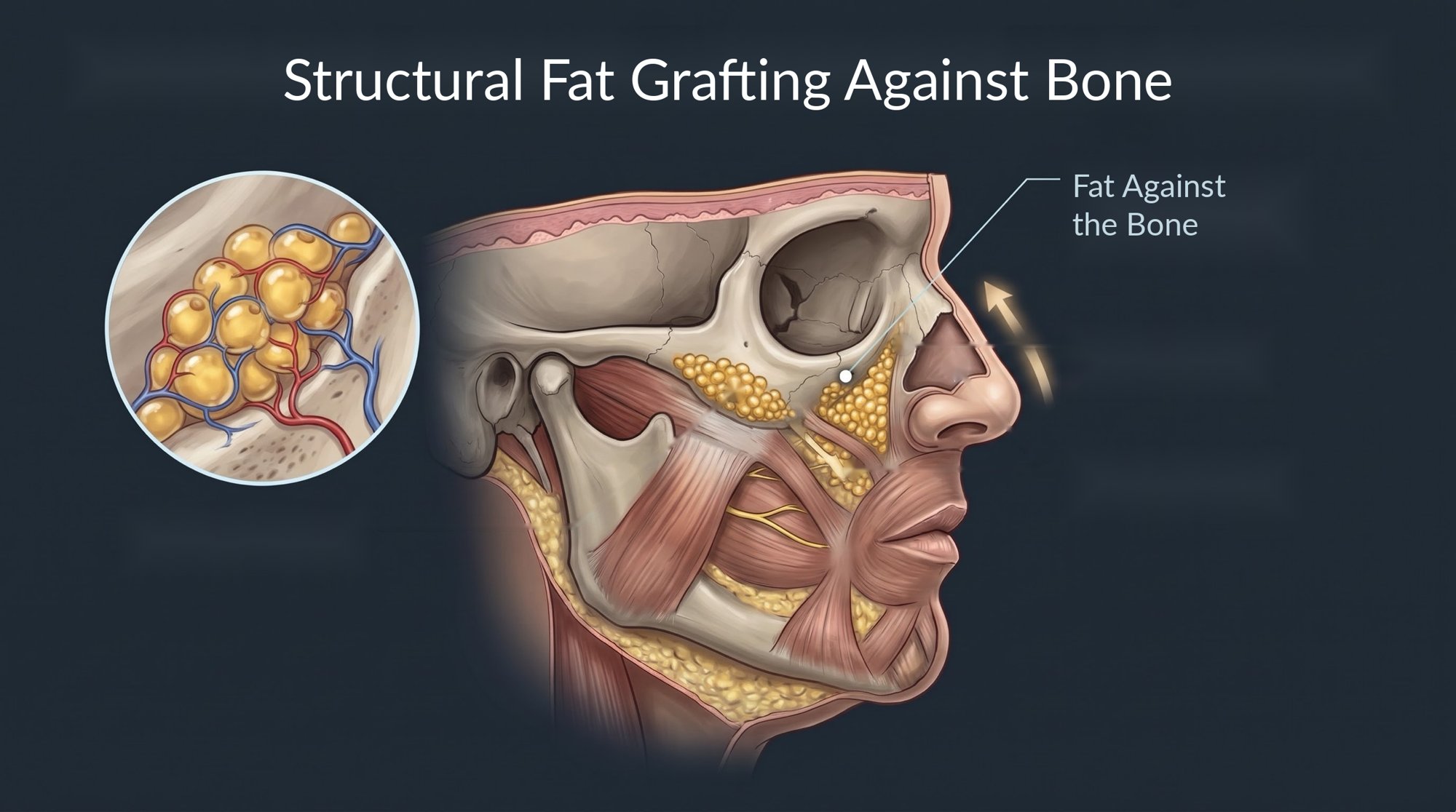
- Along the bone: that deeper fat injection along the bone provides the support patients lost when they lost all that weight, and it helps create the shape.
What about the buccal fat pad?
That is something that is individualized. Many patients who’ve lost a lot of weight don’t actually have a large buccal fat pad, so it’s rare that I’m doing a buccal fat pad reduction. Usually I’m leaving it in place.
In some patients who have a little fullness in the lower face and are very deficient in fat just beneath the cheekbone, I’ll free that fat up and secure it in the hypomalar area. It’s like an auto-augmentation without actually needing to do fat grafting: redistributing volume from where it may be a little in excess to where it’s a little deficient.
How do you lift the cheeks without a pulled look?
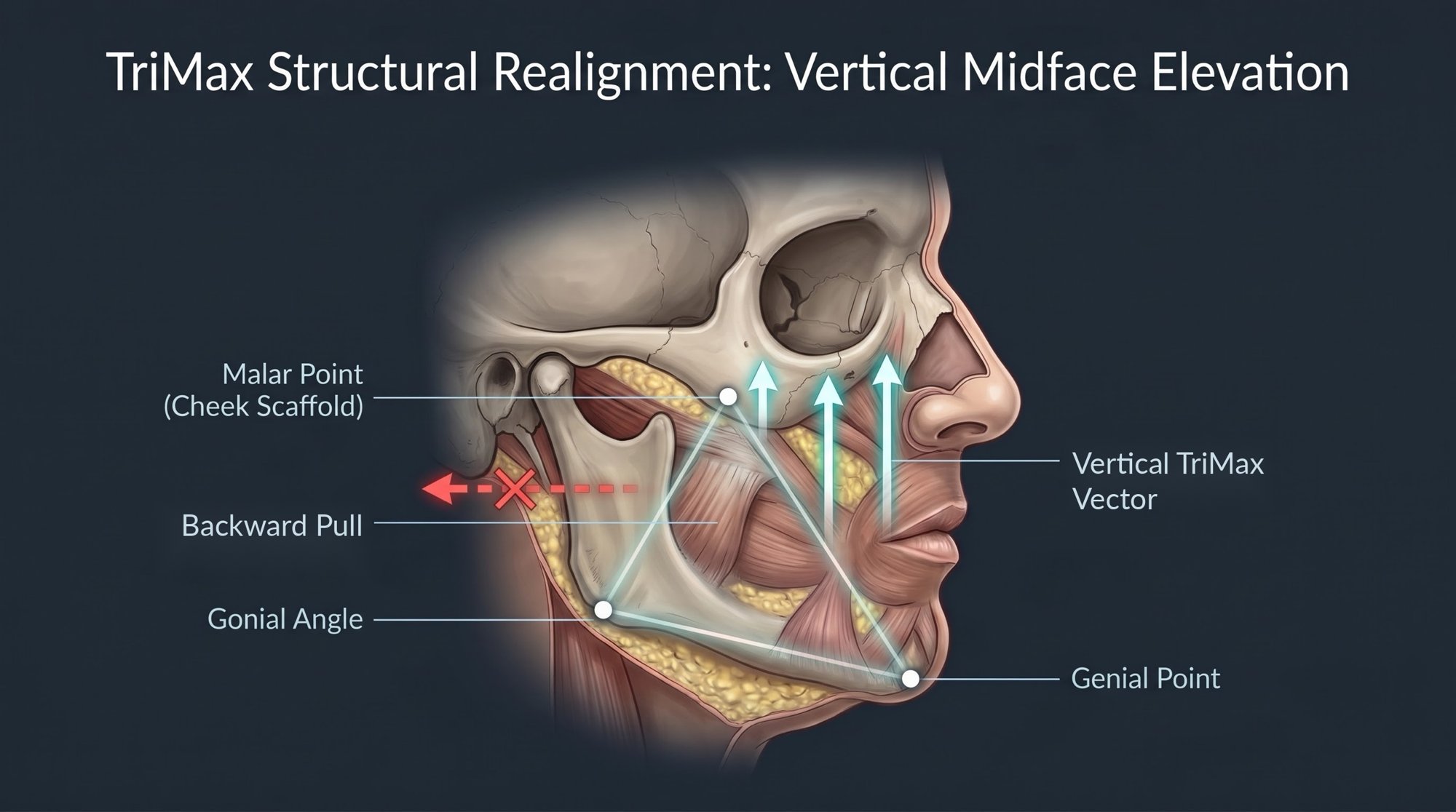
By choosing the right direction. This question is truly at the heart of what an extended deep plane facelift is and why it’s so powerful: the vector of relocation of tissue is not backwards. Pulling backwards can give you a windblown look, and it’s not really a natural appearance.
Aging occurs down and in a little bit. It’s like a rotation, so the rotation back should be up and out a little bit: a vertical-oblique vector. Sometimes it’s purely vertical, as a lot of people like to say, but it’s never truly back. The reason it’s so powerful is that it works perpendicular to those deep folds and the prejowl area, up and out slightly.
My five-suture technique
That’s a technique that has allowed me to provide very reliable results. For the most part, the vectors are the same, but the degree of tension I place on my SMAS 1, SMAS 2, platysma 1 and platysma 2 sutures is different in different patients, to really, truly shape the face. I start the suspension with the cheek, not the neck (the one exception is a midline platysmaplasty). You can read more about the suspension suture sequence.

When you hear SMAS, don’t think SMAS lift. That’s not what I’m talking about. The deep plane involves the SMAS, and that’s important to know so you don’t get confused. (For more, see deep plane vs. high SMAS facelift.)
Do you need fat grafting after weight loss?
In my experience, yes, in precise amounts in precise areas. It’s an important conversation to have, because many patients who have truly lost a lot of weight are a little fearful of adding fat back to their face. After a lifetime of having too full a face, they don’t want to look full again.
But we’re not talking about adding fat in a way that’s going to create a very full, puffy face. Not that at all. We’re adding precise amounts of fat in precise areas, for example in the malar area against the bone. In doing so, it provides a little more support for the deep tissues that are being elevated and suspended over them. Adding a little bit of support creates better shape. It’s like leverage.
Nanofat for thin, tired-looking skin
Patients who have lost a lot of weight also suffer some atrophy of their skin. Their skin was stretched out, then deflated, and the weight loss process sometimes robs it of the protein it needs to look young and vital. Fortunately, we have a solution for that in nanofat grafting.
In patients who have enough fat to give from elsewhere in their body, we turn that fat into nanofat, the finest mixture of fat you can create. It’s almost like a very thin filler. We inject it just beneath the dermis, and the belief is that it stimulates the deeper dermal cells to improve their metabolic function and create more protein, more elastin and more collagen, and in doing so, a more youthful and vital appearance to the skin.
Why does the neck look worse after weight loss?
Because the neck is one of the first areas where we see age when someone starts to lose weight, even 10 or 15 pounds, and the reason is purely anatomic.
Subcutaneous fat is the fat just beneath the surface of the skin. (The facial fat compartments I described earlier are actually deeper fat.) In the neck, the subcutaneous fat can be quite thick, and it’s some of the fat we lose first. In patients who are heavy, it may exist in a band, almost like a bucket handle, from ear to ear, beneath the chin, all the way down to the collarbone.
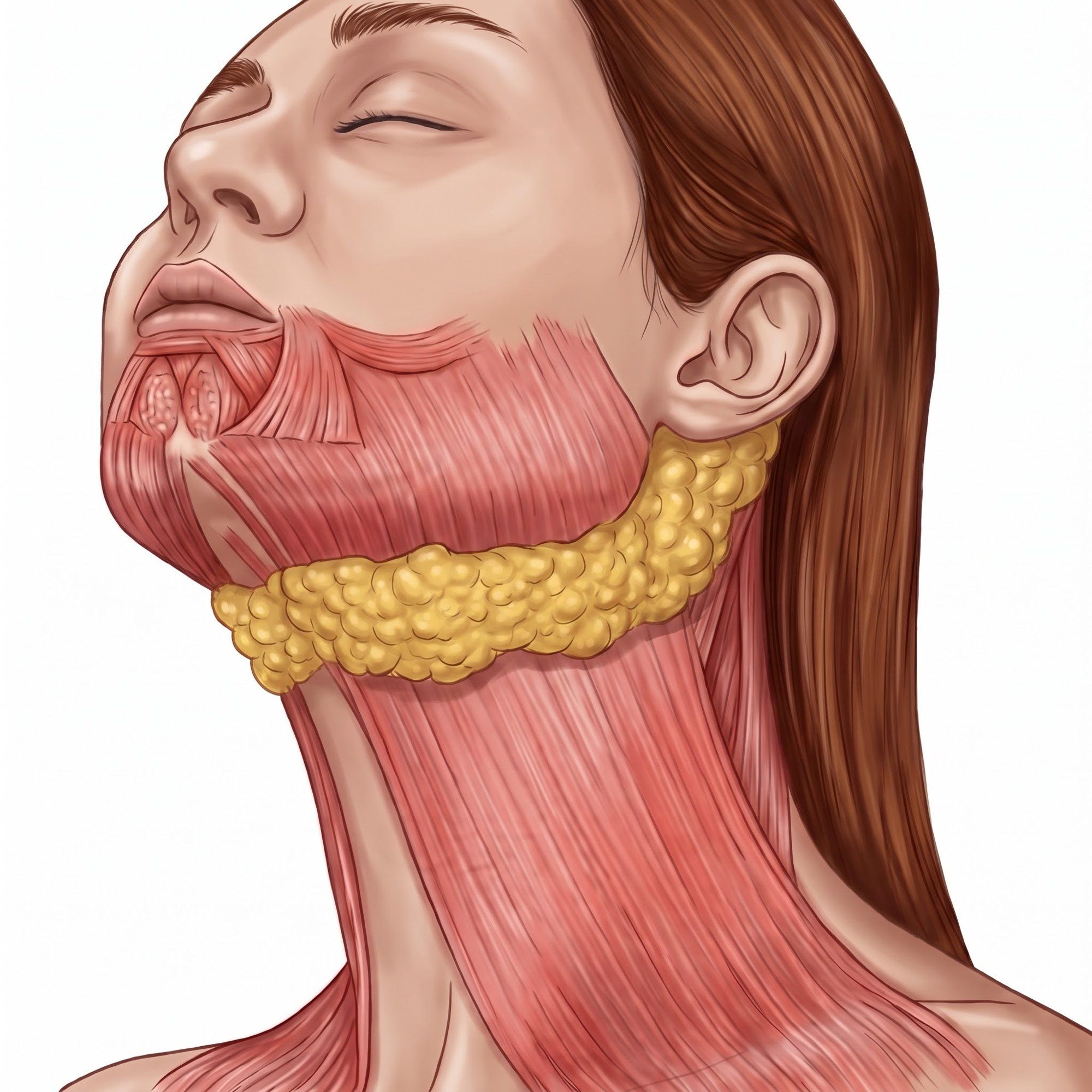
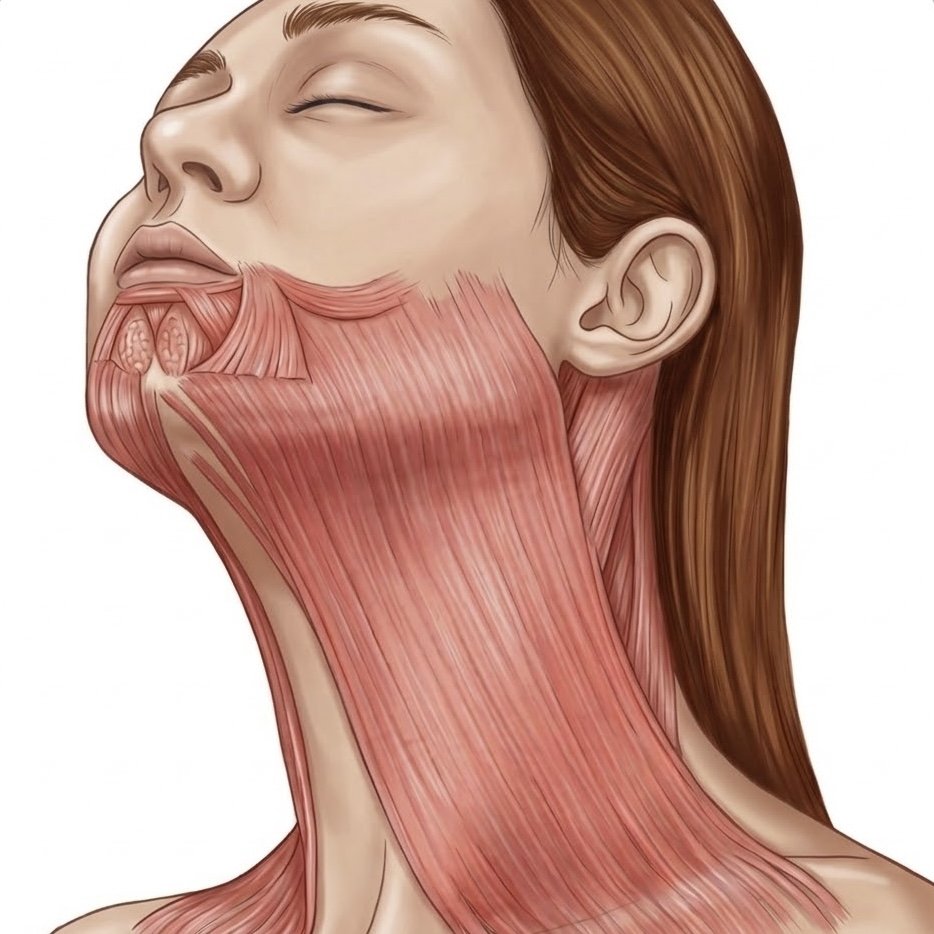
That fat overlies the muscles of the neck, especially the platysma, which may be stretched out by more fat beneath it. The stretching creates bands, but we don’t see them when we’re heavy because they’re covered by a blanket of subcutaneous fat. When we lose that blanket, we can see the bands, and we often see them earlier than we see aging in the rest of the face.
Why a double chin can appear after weight loss
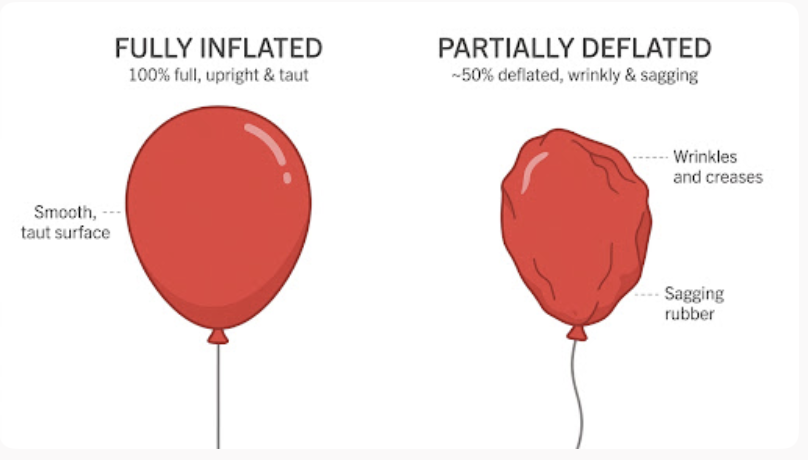
It goes back to the deflation effect: the balloon. When a balloon is full, it’s tense and it doesn’t sag. When you start to remove air, it starts to sink over and loosen. The same thing happens under the chin. When we lose a lot of subcutaneous fat, that skin loosens up and tugs on a ligament, and the little accumulation of skin is more evident because it’s not full anymore. It’s a paradox: there’s less, but it looks like there’s more.
The solution is a neck lift. Even if patients are young, in their late 20s, 30s and 40s, if they’ve lost a lot of weight and they’re considering a facelift, it is very unlikely that they’re going to have a facelift and not a neck lift. In fact, the neck lift might even be the more important part. They’re both important, but remember, the neck is where we see the aging first. (If you’re weighing your options, see neck liposuction vs. neck lift.)
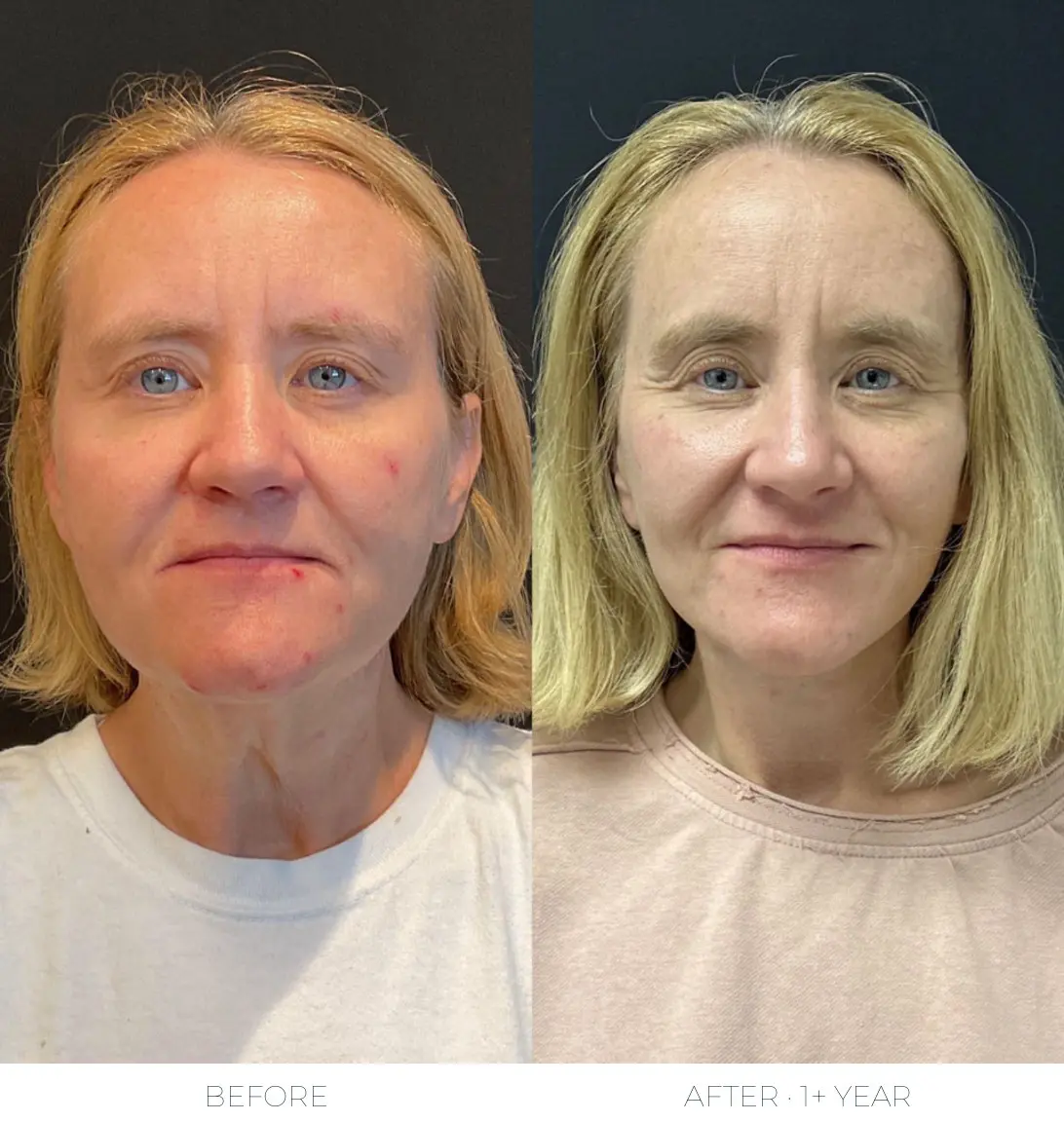
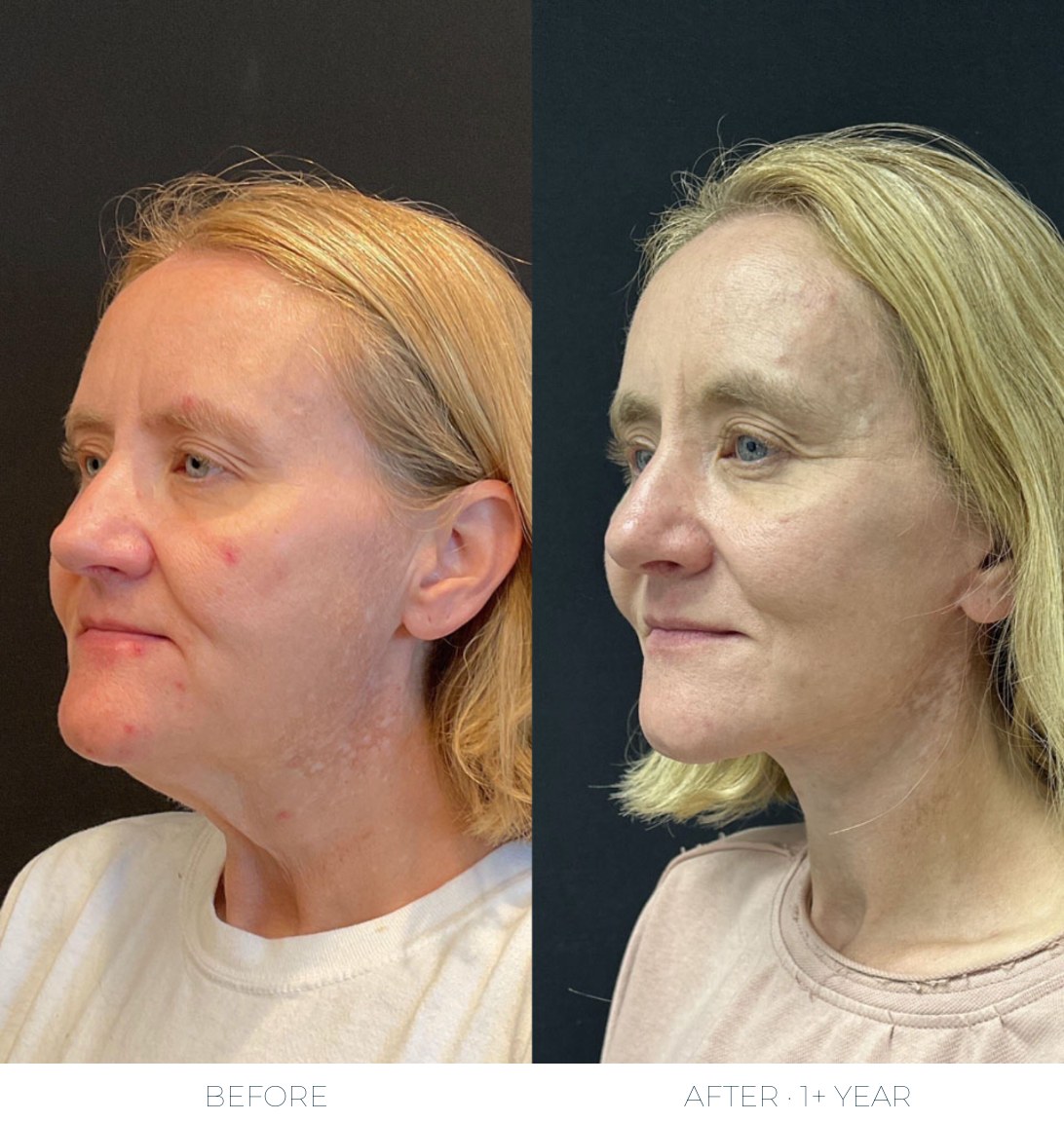
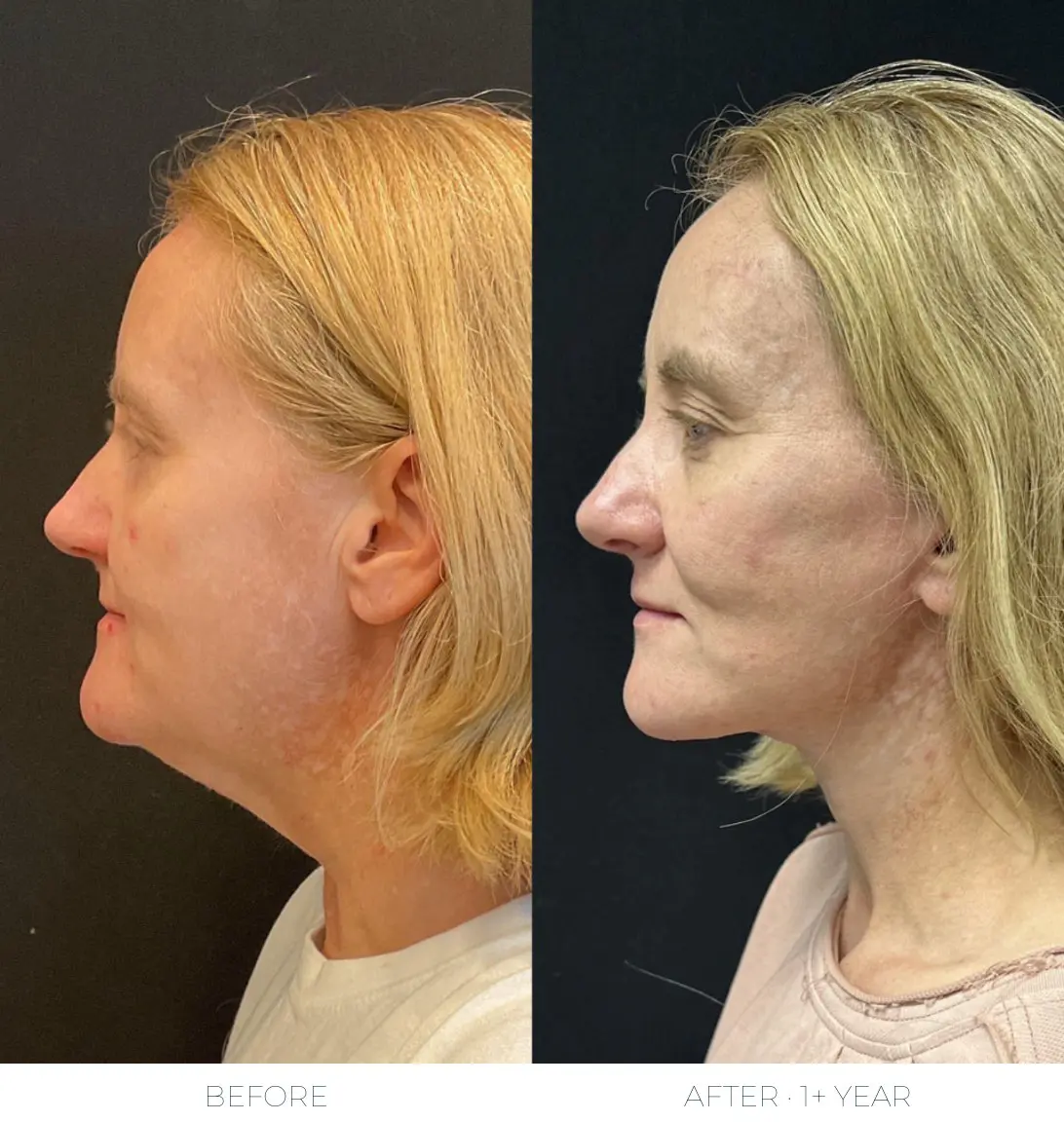
A facelift and neck lift patient
This patient had a facelift and neck lift. She is shown before surgery and more than one year after.
When should you book a facelift consultation after a GLP-1?
Come and meet me when you’ve reached your weight loss goal. I like to wait three to six months after a patient has reached their goal weight before we embark on their facelift and neck lift, and we’re usually not able to get you on the schedule for at least six months anyway (three months, if you’re lucky, or sooner if we have a cancellation). So come and see me when you’ve met your goal, and we can start to plan your surgery.
Why wait three to six months after goal weight?
The first reason is nutrition. Many patients, when they’re doing rapid weight loss, really aren’t eating enough protein. It’s hard to maintain proper nutrition. Fortunately, patients are able to catch up when they reach their weight loss goal and they’re in a maintenance phase.
We recommend 80 to 100 grams of protein a day, preferably, for a month leading up to surgery and for a month after surgery. And we do labs to see if patients have caught up; prealbumin is one of them, and there are others. Protein is very important for healing.
The other reason is that faces can continue to age even three months after the weight loss. The changes aren’t stable right when you hit your goal. They’re shifting, they’re settling, and you might pick up subtle signs you hadn’t noticed before. Don’t forget, we can customize a plan all the way up to the minute before surgery.
Should you pause your GLP-1 before surgery?
We ask patients to pause their GLP-1 two weeks before surgery. However, some patients need to take it for diabetes management, and that’s where a conversation with the patient’s primary care doctor can be helpful. If someone can only stop one week before, we ask that they have only clear liquids the day before surgery, so that they have very little residual food in their stomach and avoid the risk of aspiration with intubation.
Never stop a prescribed medication without your prescribing doctor.
Do weight loss patients recover differently from a facelift?
No. Weight loss patients don’t recover differently from facial surgery than patients who haven’t lost significant weight. (I specify facelift and facial surgery patients because body surgery, with its increased metabolic needs for recovery after large and multiple procedures, is a different story.) Nonetheless, we still recommend the protein above, and we highly recommend hyperbaric oxygen treatment.
At a glance: what changes after weight loss, and how I approach it
| What you notice | What's happening beneath the skin | What I use to address it |
|---|---|---|
| Deep nasolabial creases and heavy folds | Deflated fat compartments and stretched retaining ligaments | Extended deep plane facelift, plus subcision with a little fat in the crease (TriMax) |
| Jowls | Stubborn fat in the jowl, the lower extension of the malar fat pad | Microliposuction of the jowl, with the fat recycled to the malar eminence |
| Cheekbones that seem to have disappeared | Lost deep support along the bone | Precise fat grafting against the bone in the malar area |
| Thin, tired-looking skin | Skin atrophy after stretching and deflation | Nanofat injected just beneath the dermis |
| Neck bands and a new double chin | Lost subcutaneous fat blanket, stretched platysma and loosened skin | Neck lift, usually with the facelift |
Frequently asked questions
Am I too young for a facelift after weight loss?
A facelift has nothing to do with age; it's all about anatomy. After rapid weight loss, I see deep nasolabial creases, heavy folds and jowls in patients in their 20s, 30s and 40s that most people don't show until their 50s, 60s and 70s. What matters is what has happened to your retaining ligaments and skin, and that is something we evaluate together at a consultation.
Should buccal fat be removed after weight loss?
Usually not. It's individualized, but many patients who've lost a lot of weight don't actually have a large buccal fat pad, so it's rare that I do a buccal fat pad reduction. In some patients with a little lower-face fullness and a hollow just beneath the cheekbone, I free that fat up and secure it in the hypomalar area, like an auto-augmentation without fat grafting.
Will adding fat make my face look full again?
No. Many patients who've lost a lot of weight are a little fearful of adding fat back, because after a lifetime of a full face they don't want to look full again. We're not adding fat in a way that creates a very full, puffy face. We add precise amounts of fat in precise areas, such as the malar area against the bone, to support the lifted tissues and create better shape.
Is the SMAS in a deep plane facelift the same as a SMAS lift?
No. When you hear SMAS in a deep plane facelift, don't think SMAS lift. The deep plane involves the SMAS, the layer of tissue beneath the skin and fat, and the five sutures I use (SMAS 1, SMAS 2, platysma 1, platysma 2 and a securing suture) work through it. The tension on each suture differs from patient to patient to shape the face.
What happens if I keep losing weight after my facelift?
If people continue to lose weight after surgery, they will get some loosening of the skin, primarily in the neck area, and on rare occasions we have to tighten the skin again. Another thing that can happen is some deflation of volume in the upper outer cheeks, and fat grafting can be performed again to counter that. That's one more reason I like patients to reach their goal weight first.
What if my face keeps changing after I reach my goal weight?
That's one reason I like to wait three to six months after goal weight. The changes after weight loss aren't stable right when you hit your goal; they're shifting and settling, and you might pick up subtle signs you hadn't noticed before. Come in when you reach your goal so we can start planning, and remember that we can customize your plan all the way up to the minute before surgery.
About the author
Adam Bryce Weinfeld, MD, is a board-certified plastic surgeon in Austin, Texas, with 19 years in practice. He is double fellowship-trained in facial aesthetic surgery and oculoplastic surgery, a Clinical Associate Professor at Dell Medical School, and the author of 33+ peer-reviewed publications and multiple book chapters, and he gives international lectures on facelift technique. His practice is exclusively aesthetic, with an emphasis on the face.
Considering a facelift after weight loss in Austin?
Book a consultation with Dr. Adam Weinfeld, board-certified plastic surgeon in Austin, Texas.
Request a consultation512-559-1376 · drweinfeld.com
This article is for education only and is not medical advice. Individual results vary. Patient photos are shown with permission and are unretouched. Never stop a prescribed medication without your prescribing doctor. Written by Dr. Adam Weinfeld from his video; edited and formatted with AI assistance.
Full video transcript
What causes Ozempic face? Rapid weight loss from Ozempic and other GLP-1 medications doesn't just affect the body, it affects the face as well. We have fat in our body that we lose with those medications. We also have fat in our face that we lose with those medications. That fat in our face is contained in special compartments. Those compartments are separated by ligaments. The ligaments and the fat create the facial shape that we see from the outside when we're looking at someone's face. When we lose fat, that fat deflates within those compartments and it leaves loose ligaments. Those loose ligaments no longer support the skin and the skin sags. It happens in an exaggerated way in patients who have lost a lot of weight, especially rapidly because those ligaments don't shrink and because the skin overlying has been stretched beyond its mechanical properties. Therefore, we see very deep nasolabial creases, heavy nasolabial folds, excessive jowls, even in really young patients in their 20s and their 30s and their 40s. We see features of aging in rapid weight loss patients that we don't see in most patients until they reach their 50s, 60s, and 70s. This is a true problem for patients who've lost a lot of weight. They're feeling great, but when they look in the mirror, they see their grandmother. Nobody wants that. Now, when you lose weight more gradually doing diet and exercise, you may not have the same problem because there is a little bit of tightening of the skin. But if you've lost a lot of weight through diet and exercise, you definitely are going to see some of the same features. And if you do, what I'm going to tell you is going to apply to you as well.
Can fillers or skin tightening treat it? I have nothing against med spas or med spa treatments. We have a med spa and they're extremely valuable. However, for people who have lost a lot of weight, even though they may add a little bit of value, it is unlikely that they will have med spa treatments that are going to make them look in the mirror and feel as if they've reversed that excessive aging that can happen with significant weight loss. The reason for that is that those treatments don't treat the actual problem. Skin tightening devices do exactly what they say. They tighten the skin. But tightening the skin is not the solution for loose ligaments underneath the skin. Not only that, skin that has been stretched through years of being heavy and has experienced the deflation effect associated with significant weight loss is not going to ever be able to be tightened enough by modern day skin tightening techniques. Another problem exists with fillers. Fillers do fill things. And yes, with weight loss, we've deflated the skin. The problem is you can't, and you certainly wouldn't want to, refill the skin enough to make it taut again. It's not that it doesn't have value, and it's not that if you're doing it, it's wrong. I just don't think it's going to solve the problem for many patients who've lost significant amount of weight and they look in the mirror and they're thinking, gosh, I look as old as my grandmother. I just don't see that happening. I don't know how. You can tighten the skin enough to solve that problem or fill it enough to solve that problem. Fortunately, there are other solutions.
What needs to be lifted after weight loss? Skin shrinking, skin tightening devices can tighten the skin and fillers can fill, but they don't actually address the problem. The problem, as we discussed, is that the deflated skin is still suspended by lengthened, attenuated ligaments, retaining ligaments. Those are the ligaments that hold our soft tissues in place. When they're stretched out, they're not really holding much in place at all. And that's why we see the heavy nasolabial folds and the heavy jowls. For that reason, a surgical approach is the way, in my opinion, my experience, to give the most thorough reversal of the aging that we see with weight loss. The way we go about that is with my TriMax deep plane facelift. Now you may be thinking, hey, I've heard of an extended deep plane facelift. What are you talking about? Well, I'm talking about that plus something more. Just wait, you'll see. The reason an extended deep plane facelift is so powerful for someone who has experienced weight loss is that with an extended deep plane facelift from the incisions around the ear, we're able to access the deep tissues where those retaining ligaments reside. We release them in key areas all the way down to the nasolabial fold. That's the extended portion of it. And then we resuspend those tissues and we replace those ligaments with sutures that are designed to secure the soft tissues to the deeper tissues, such as the bone, such as other deeper tissues like the SMAS. All of those tissues are helpful in suspending those deep plane tissues.
What does a TriMax deep plane facelift add? But if we just stop there, in my experience, I wouldn't achieve everything I want to achieve. And the reason for that is that patients who have lost a lot of weight still, unfortunately, have very stubborn fat in the area of the jowls and the nasolabial fold. That's where my TriMax deep plane technique comes into play. In those patients, I'll do microliposuction in those two key areas. So I'm removing a little bit of fat. Yes, I'm removing a little bit of fat in a patient who we've already said may not even have enough fat in their face. But we're going to re-inject that in some key areas. We're going to re-inject that and potentially borrow just a little bit more from somewhere else and inject it in areas that are really beneficial for someone who's lost a lot of weight. I like to do subcision or dermal release in the area of the nasolabial crease and add a little bit of fat there. That's right, we're subtracting the fold and adding to the crease. That helps create a really smooth transition from the cheek down to the lip. Something that, in my experience, you can't achieve with an extended deep plane facelift alone. I also like to do microliposuction to the jowl. The jowl is just the lower extension of the malar fat pad. The malar fat pad is an upside-down triangle of fat, different from my TriMax, by the way, but it's an upside-down triangle of fat that goes from about here to here down to here. We subtract that fat from the jowl and then we recycle it. We upcycle it by injecting a little bit here in the malar eminence. That deeper fat injection along the bone that provides the support that patients have lost when they've lost all that weight. They need a little bit of fat deeper along the bone to provide support that's going to help create the shape. Now you may be thinking, what about buccal fat pad reduction? That is something that is individualized. Many patients who've lost a lot of weight don't actually have a large buccal fat pad. So it's rare that I'm doing a buccal fat pad reduction. Usually I'm leaving it in place. In some patients who do have a little bit of a fullness in the lower face and very deficient in fat in the area just beneath the cheekbone, I'll free that fat up and I'll suspend it, secure it in the hypomalar area. Adding a little bit of fat. It's like an auto-augmentation without actually needing to do fat grafting. That's a really eloquent way of redistributing volume for where it may be in a little bit excess to where it's a little bit deficient.
How do you lift the cheeks without pulling? This is a question that truly is at the heart of what's an extended deep plane facelift and why is it so powerful. The reason that it's powerful is that the vector of relocation of tissue is not backwards. That's going to give you a windblown look potentially. It's not really a natural appearance when we do that. Aging occurs down and in a little bit. It's like a rotation. And so the rotation back should be up and out a little bit. So it's a vertical oblique vector. Sometimes it's purely vertical as a lot of people like to say. It's never truly back. So it's usually vertical or vertical oblique. The reason for that and why it's so powerful is that it works perpendicular to those deep folds here and the prejowl area here, up and out slightly. And I'm going to touch upon this later, but it is a good way to introduce my special five suture technique. That's a technique that has allowed me to provide very reliable results to patients where, for the most part, the vectors are the same, but the degree of tension I place on my SMAS 1, SMAS 2, platysma 1 and platysma 2 sutures are different in different patients to really truly shape the face. Now, when you hear SMAS, don't think SMAS lift. That's not what I'm talking about. The deep plane involves the SMAS. If you didn't know that, important to know so you don't get confused.
Do you need fat grafting after weight loss? I already mentioned fat grafting a little bit when I discussed the whole subtraction-addition philosophy when it comes to the nasolabial fold and nasolabial crease. But what about fat grafting exclusive to that? Is it important to patients who've lost a lot of weight? And in my experience, it is. Now, it's an important conversation to have with patients because many patients who have truly lost a lot of weight are a little fearful of adding fat back to their face. That a lifetime of having too full of a face, they don't want to look full again. But we're not talking about adding fat in a way that's going to create a very full, puffy face. Not that at all. We're adding precise amounts of fats in precise areas, for example, here in the malar area against the bone. In doing so, it provides a little bit more support for those deep tissues that are being elevated and suspended over them. Adding a little bit of support creates better shape. It's like leverage. It's really important in many patients. But it doesn't stop there. Patients who have lost a lot of weight also suffer some atrophy to their skin. Their skin was stretched out, then it's deflated, and the weight loss process sometimes rob it of the protein that it needs to look young and vital. And unfortunately, sometimes that appearance not regained. Fortunately, we have a solution for that. It comes in the form of fat grafting, but not microfat grafting, nano fat grafting. In patients who have enough fat to give from elsewhere in their body, we turn that fat into nanofat. That's the finest mixture of fat that you can create. It's almost like a filler, like a very thin filler, in fact. We inject it just beneath the surface of the skin, just beneath the dermis. And the belief is that it stimulates those deeper dermal tissues, the deeper dermal cells, to improve their metabolic function, to create more protein, more elastin, more collagen, and in doing so, create a more youthful and vital appearance to the skin. Very powerful.
Why does the neck sag after weight loss? One of the first areas that we actually see age in when someone is starting to lose weight, even 10 or 15 pounds, is the neck. And the reason for that is purely anatomic. Everywhere we have subcutaneous fat. Subcutaneous fat is the fat just beneath the surface of the skin. Now, in the face, when I'm talking about the face, facial fat compartments, that's actually deeper fat. And yes, that's lost with weight loss. Now, in the neck, the subcutaneous fat can be quite thick. And the subcutaneous fat ends up being some of the fat that we lose first when we start to lose weight. That subcutaneous fat, that deeper subcutaneous fat in patients who are heavy, may exist in a band, almost like a bucket handle, from ear to ear, beneath the chin, all the way down to the collarbone. That fat overlies the muscles of the neck. And those muscles of the neck, especially the platysma, may be stretched out from fat beneath it. Yes, there's more fat beneath it, the platysmal fat. So the stretching out of those muscles creates bands, but we don't see them when we're heavy. The reason we don't see them when we're heavy is they're covered by a blanket of subcutaneous fat. This is a lot of fat, I know. Are you keeping up? The subcutaneous fat is a blanket of fat just beneath the skin. When we start to lose that weight, we can see the bands underneath because we're removing the blanket of fat over it. And the structures of those bands of that platysmal tissue, those platysmal muscles are now seen. And we see them earlier than we see aging in the rest of the face often. Why the double chin? Well, the reason for that is really goes back to that deflation effect, the balloon. When you have a balloon that's full, it's tense, it doesn't sag. When you start to deflate it, you start to remove air, it starts to sink over, it starts to loosen. Same thing happens in the submental area. When there's a lot of subcutaneous fat, we start to lose it, that skin loosens up. And it tugs on a ligament here. And we can see the little accumulation of skin that occurs there. It's more evident because it's not full anymore. It's a paradox, right? There's less, but it looks like there's more. Fortunately, there is a solution for it. Yes, you guessed it. It does involve surgery as I discussed before. It's a neck lift. Almost every patient, even if they're young, even if they're in the late 20s and their 30s and their 40s, they've lost a lot of weight, they're considering a facelift. It is very unlikely that they're going to have a facelift and not a neck lift. In fact, the neck lift might even be the more important part. Oh, they're both important, but it may be the more important part because remember, the neck, we see the aging first.
When to book a consult after a GLP-1? I like to wait three to six months after a patient has reached their goal weight until we embark on their facelift and their neck lift. The reason for that is quite important. The reason is that many patients, unfortunately, when they're doing the rapid weight loss, they really aren't eating enough protein. Their nutrition is off. It just is. It's hard to maintain proper nutrition. Fortunately, patients are able to catch up when they reach their weight loss goal and they're in a maintenance phase. They're able to boost up the protein. We want patients to be eating 80 to 100 grams, preferably, of protein before they have their surgery for at least a month, if not more. And we do labs. There's some special labs you can do to assess someone's protein levels to see if they've caught up. Prealbumin is one of them. There's others. We check those labs to make sure that patients have caught up with their protein needs. Protein is important for healing. Among many other nutrients and macronutrients, it's very important. So, for that reason, I like patients wait, but there's another reason. It's not the only reason, there's another reason. The other reason is that sometimes patients' faces continue to age even three months after they've had the weight loss. The changes after weight loss aren't stable right when you hit that weight loss goal. They're shifting, they're settling, things happen, and you might pick up subtle signs that you hadn't picked up before. So, the question then is: when come and see me? Come and meet me when you've reached your weight loss goal. The reason for that is that we're not going to be able to get you on the schedule for at least six months anyway. Three months, if you're lucky. Sometimes we have cancellations. If that's the case, then you're going to need to see me three months before your target date, right? So, come and see me when you've met that weight loss goal, and we can start to plan your surgery. Now, you may be wondering since you heard me say aging continues. Don't forget, we can customize a plan all the way up to the minute before the surgery. I hope you found this useful. Comment if there are any other topics you'd like to hear about. If you would like a consultation, go to drweinfeld.com. That contact page goes to my awesome office, but it also comes directly to me. And sometimes, when people ask interesting questions, I will answer them myself. Good to see you.