
Extended Deep Plane Facelift: How the TriMax Version Shapes the Face
November 02, 2026 | Facelift
By Adam Bryce Weinfeld, MD · Board-certified plastic surgeon · Austin, Texas · Updated November 2, 2026
An extended deep plane facelift releases ligaments deep in the face and repositions those tissues higher, anchoring them to deeper, strong tissues. It’s a perfectly fine facelift. My TriMax deep plane facelift is an extended deep plane facelift that goes further: it maximizes the malar-genial-gonial triangle, the cheek, chin and jaw angle.
In this video
- 0:00 What Is an Extended Deep Plane Facelift?
- 0:51 What Is the TriMax Deep Plane Facelift?
- 1:21 What Is the Malar-Genial-Gonial Triangle?
- 1:59 How Are the Cheek, Chin and Jaw Enhanced?
- 3:47 How Are Nasolabial Folds and Jowls Treated?
- 5:07 What Does Buccal Fat Do in a Facelift?
- 6:04 Why Is TriMax Called Shape Surgery?
- 6:37 How Do I Book a Facelift Consultation?
Key takeaways
- The TriMax deep plane facelift is an extended deep plane facelift. I developed it to take over where the extended deep plane facelift leaves off.
- TriMax means triangle maximizing: the malar eminence (cheek), the genial region (chin) and the gonial angle (back of the jaw), the lines that connect them, and the center.
- I use some of these strategies in almost every facelift, and most of them in most: five special sutures, fat grafting, chin contouring or a chin implant, a stair-step suture, micro-liposuction of heavy folds and jowls, and buccal fat pad suspension.
- The TriMax additions don’t increase recovery. Some patients have a little extra bruising along the jawline or nasolabial fold, and a little firmness for about a month that’s felt, not seen.
- Results generally last about 15 years.
What is an extended deep plane facelift?
It’s a facelift that releases the ligaments deep in the facial tissues, then suspends and repositions those tissues higher up, toward the outer, upper portions of the face, anchoring them to deeper, strong tissues to lift them.
The extended deep plane facelift is a perfectly fine facelift. In fact, my facelift, the TriMax deep plane facelift, is an extended deep plane facelift. But I noticed that in extended deep plane facelift patients, sometimes important features go untouched. That had been my observation, and that’s why I developed the TriMax version: to take over where the extended deep plane facelift leaves off.
If you’re comparing techniques more broadly, I explain deep plane vs. high SMAS facelifts, whether a deep plane facelift moves the facial muscles, and whether a deep plane facelift is right for you. My deep plane facelift page covers the procedure itself.
What is the TriMax deep plane facelift?
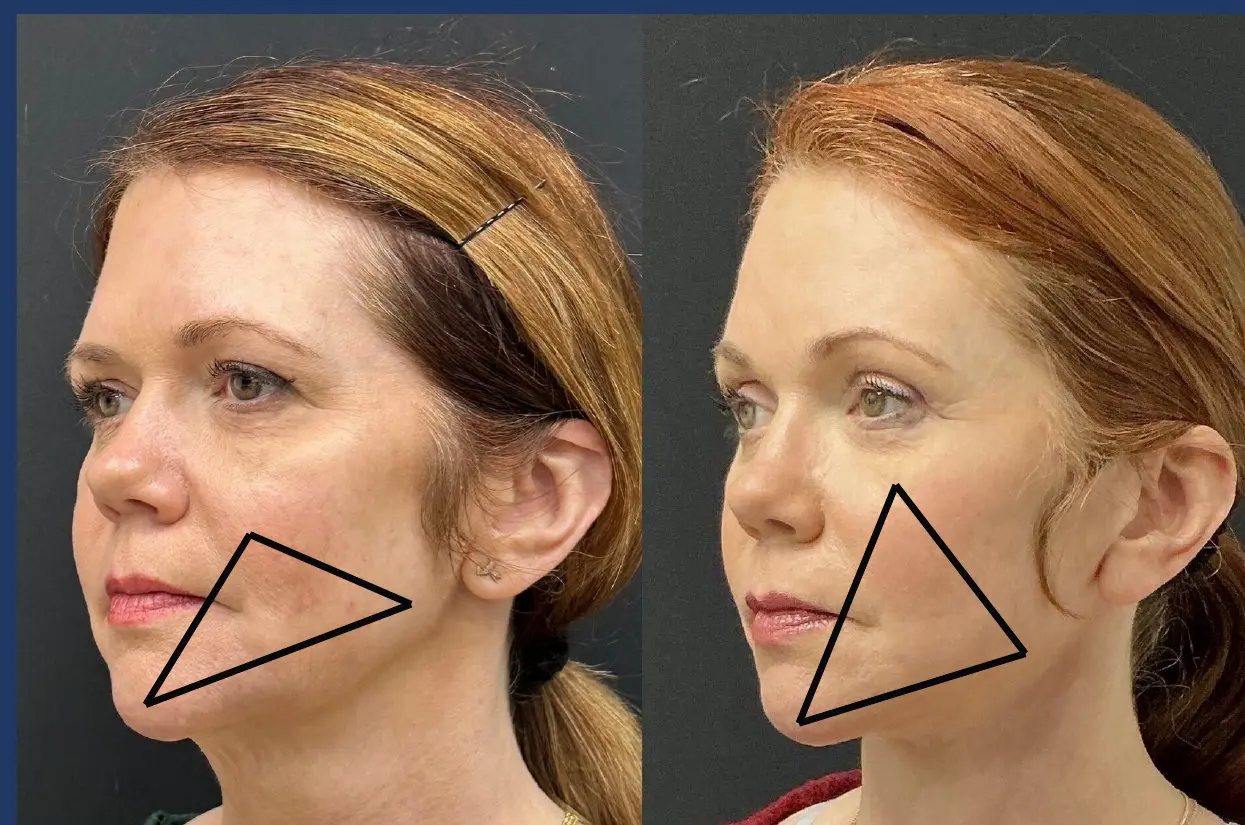
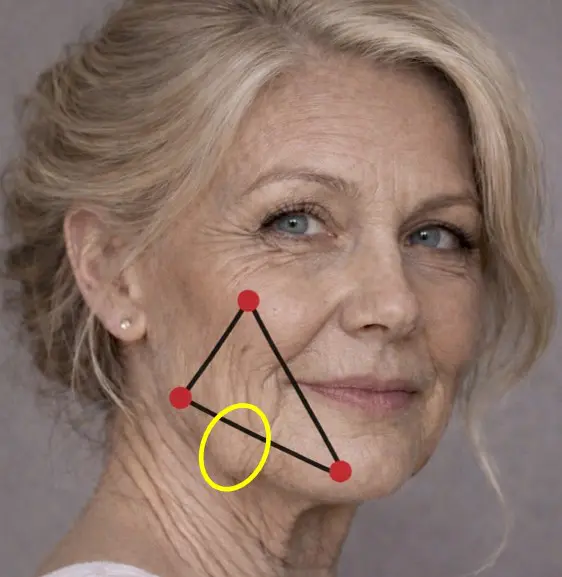
It’s my version of the extended deep plane facelift, where my goal is to optimize an important aesthetic triangle. For a very long time I’ve been observing faces, and I noted that there’s an important aesthetic triangle in the face: the malar-genial-gonial triangle. Those areas of emphasis, and the lines that go between them, make an important aesthetic triangle.
I’m trying to maximize that triangle in my deep plane facelift. TriMax: triangle maximizing.
TriMax is part of my Light Touch TriMax Three-Dimensional Deep Plane Facelift, where Light Touch refers to preserving the anatomy of the ear and a tension-free closure.
What is the malar-genial-gonial triangle?
It’s a triangle with three points. There’s the malar eminence: that’s the cheek, essentially. There’s the gonial angle, at the back of the jaw. And there’s the genial area, which is the front of the jaw, the chin.
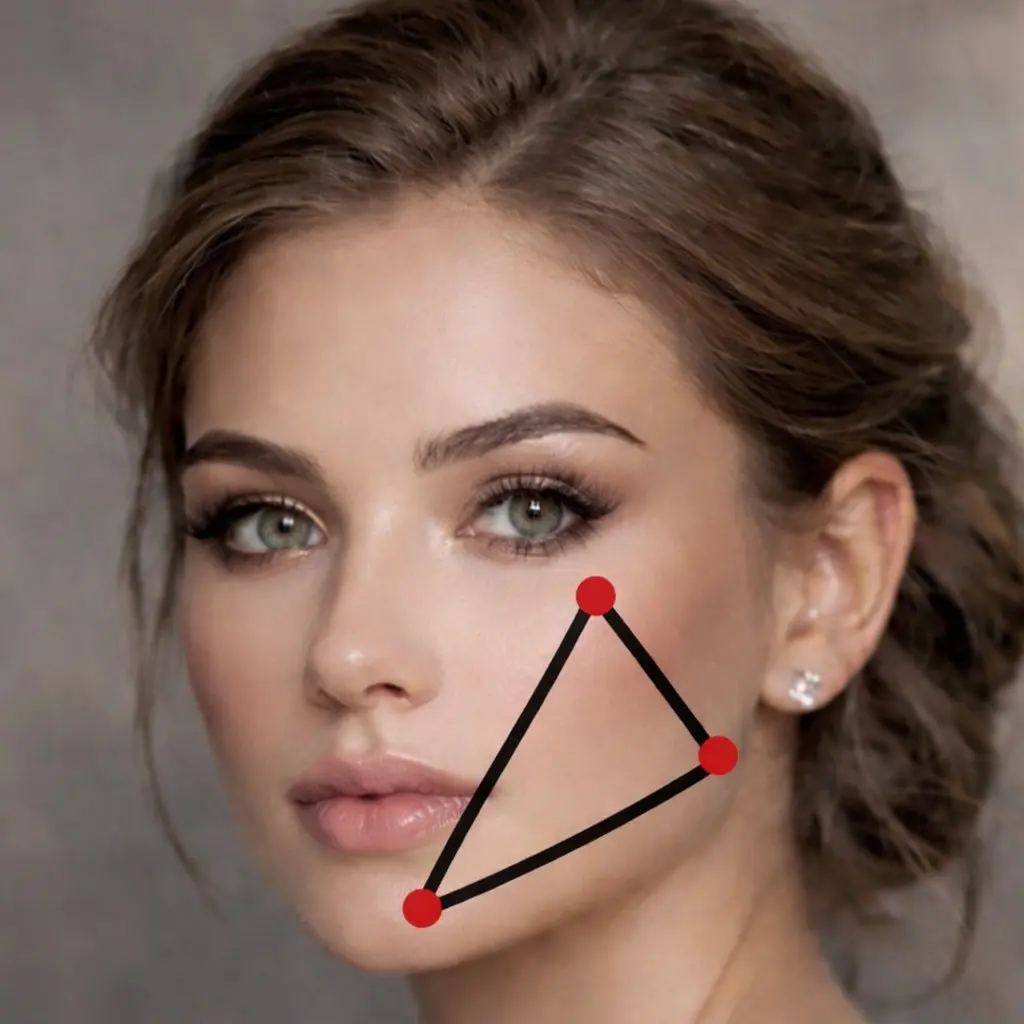
The lines that connect them are important to pay attention to as well:
- Between the malar eminence and the genial region, we have the nasolabial fold and the nasolabial crease.
- From the chin back to the gonial region, we come across the jowl. It’s the jawline, really important in a face and neck lift.
- Between the malar eminence and the gonial angle, the line is a little more vague, but we often like to see a subtle hollow in that region.
And we shouldn’t forget the center. The center of the triangle is an important part of the face too, and we need to maximize it as well.
I go deeper into this framework in how I think about the central face in every facelift. Here’s how each part of the triangle can be addressed:
| Part of the triangle | What it can show | What may help |
|---|---|---|
| Cheek (malar eminence) | Flattened or descended cheek | Five special sutures to elevate, support and recruit tissue onto the cheekbone; fat grafting when that isn’t enough |
| Chin (genial region) | Chin too big | Contouring the bone |
| Chin (genial region) | Chin 1 to 2 mm deficient | Fat grafting |
| Chin (genial region) | Chin more deficient | Porous polyethylene chin implant, or a genioplasty |
| Jaw angle (gonial angle) | Angle needs definition | Folded-over SMAS and platysma flap, fat grafting, stair-step suture |
| Cheek to chin line | Heavy nasolabial fold | Micro-liposuction in the fold, subcision and fat grafting into the crease |
| Chin to jaw angle line | Jowl, or big heavy jowls | Deep plane lift plus micro-liposuction of the lower jowl |
| Center of the triangle | Mid-lower cheek fullness, flat upper cheek | Buccal fat pad release and suspension (or leave alone or reduce) |
How does a TriMax facelift enhance the cheek, chin and jaw angle?
By tailoring what each point of the triangle needs. When I’m doing the TriMax deep plane facelift, I aim to maximize that triangle, and that can be different things for different locations in different patients.
The cheek (malar eminence)
For many patients, it means my standard approach: my five special sutures, to elevate, support and recruit soft tissue back onto the malar bone, the cheekbone. But when I detect that’s not going to be enough augmentation or repositioning of tissue in that area, especially in women, I do fat grafting to create a little more volume and a little more support.
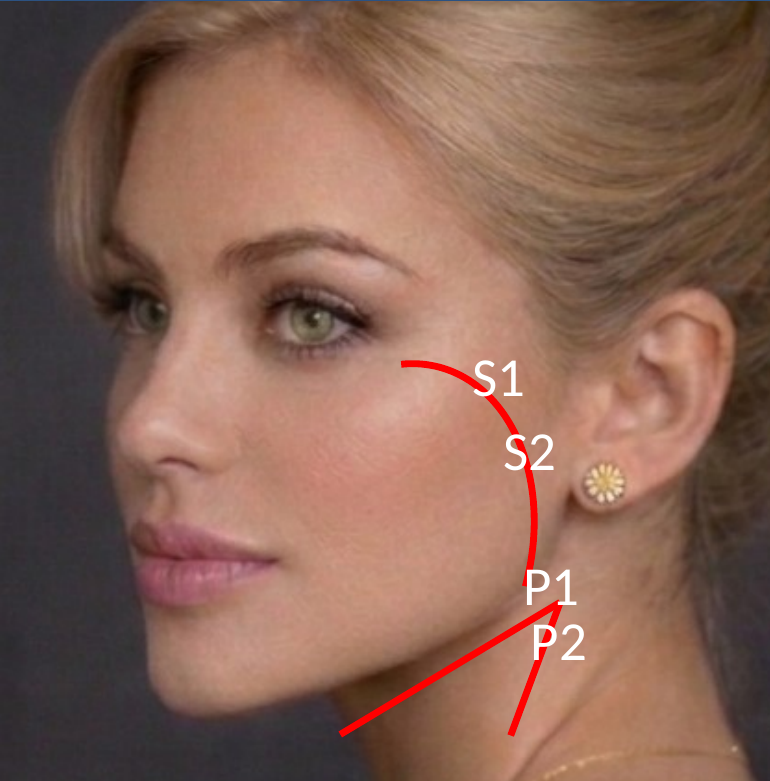
I walk through the sutures one by one in my suspension suture sequence for the deep plane facelift. My suspension starts with the cheek, not the neck. The one exception is a midline platysmaplasty, a tightening of the neck muscle in the middle of the neck.
The chin (genial region)
The chin, in some patients, is actually too big, and we can reduce it by contouring the bone. That’s an important way of enhancing femininity in a woman who might not have felt as if she looked feminine from the very beginning.
When the chin is a little deficient, maybe 1 to 2 millimeters, I’ll do fat grafting, because that achieves everything I need it to. But if the chin is more deficient than that, and the neck lift alone isn’t going to create the definition I need in the chin and the jawline, I’ll either do a chin implant (I prefer porous polyethylene implants) or even a genioplasty, where I gently cut the bone, push it forward and hold it in place with a plate.
More on chin augmentation, your chin augmentation options and jawline surgery options.
The jaw angle (gonial angle)
The gonial angle often needs a little enhancement. I can bring that about with a folded-over SMAS and platysma flap (the SMAS is the deep layer lifted in a facelift; the platysma is the thin muscle of the neck), which adds a little volume in that area. I can also fat graft right onto the gonial angle, which can be extremely effective, in addition to the fat grafting I do along the body of the mandible when more neck definition is required.
Then I do a special suture: either the mastoid crevasse suture described by Dr. Ben Talei in Los Angeles, or my version of it, the stair-step suture. It harnesses the mastoid fascia, the firm tissue over the bone behind the ear, supporting not only the platysma and the SMAS to define the gonial angle, but also the earlobe, which helps prevent a pixie ear (an earlobe pulled down onto the cheek). I explain the ear side of this in hidden scars and ear anatomy in the deep plane facelift.
How are heavy nasolabial folds and jowls treated during a facelift?
With micro-liposuction as an insurance policy, plus subcision and fat grafting where the crease needs it. These lines between the points are where the power of the TriMax deep plane facelift really shines.
Heavy nasolabial folds
Those of us who do a lot of facelifts know that it can be really difficult to address someone with a heavy nasolabial fold. They can be hard. The way I like to tackle that, to create a little bit of an insurance policy, is to do micro-liposuction directly in the fold. That helps deflate it. Sometimes I can remove as much as 1 to 3 cc of fat. That’s a lot.
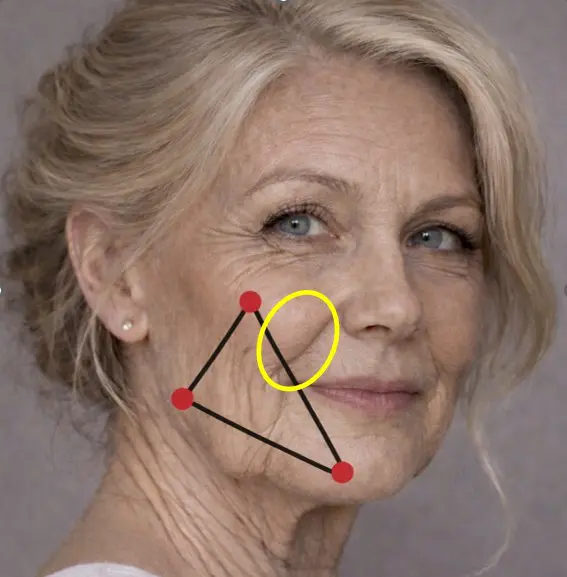
But I don’t stop there. I’ll also do some subcision, a dissection underneath the deep dermal attachments of the nasolabial crease, and inject some of the fat into the crease itself. We’re decreasing the fold and raising the crease, creating a smoother transition from the cheek to the lip.
Jowls
The line from the chin to the gonial angle, along the jawline, is disrupted by the jowl. A deep plane facelift lifts and supports that jowl right off the jawline. But we all know there can be a little recurrence, and some patients have big, heavy jowls that we know are more likely to recur.
So in most of my patients, I also do micro-liposuction to that area, and sometimes I can remove as much as 3 to 5 cc of fat from the lower part of the jowl. Can you imagine what an insurance policy that is against a recurrence of the jowl? It can be really potent, and I love to do it.
What does buccal fat pad suspension do in a facelift?
It fills the upper cheek and creates a natural hollow in the mid-cheek, which maximizes the center of the triangle. We talked about the three points and the lines that connect them, but the center is an important part of the face. That’s where the buccal fat pad, a deep fat pad in the cheek, comes into play.
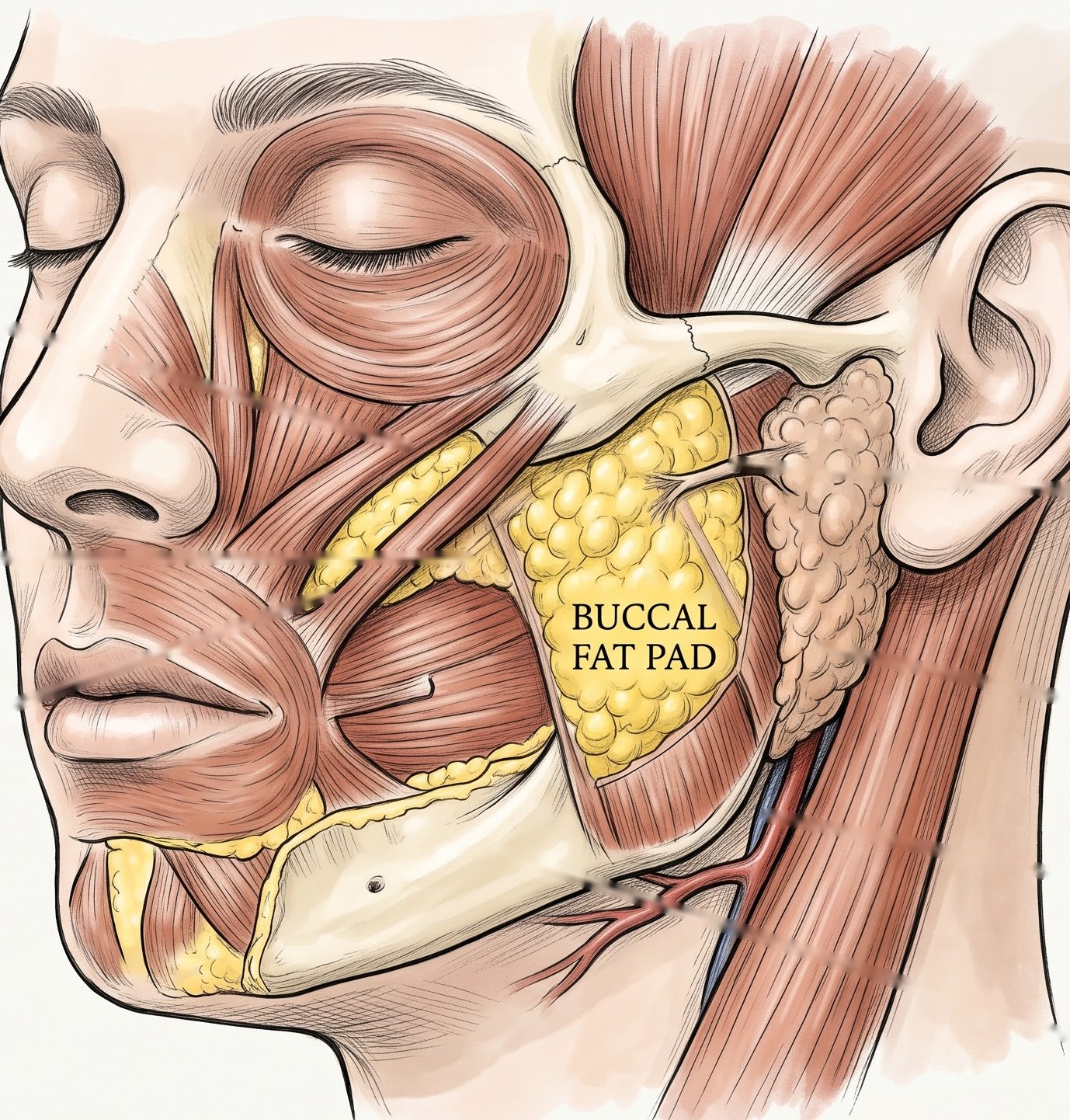
Many people will either leave it alone or reduce it. Sometimes I leave it alone, and sometimes I’ll reduce it.
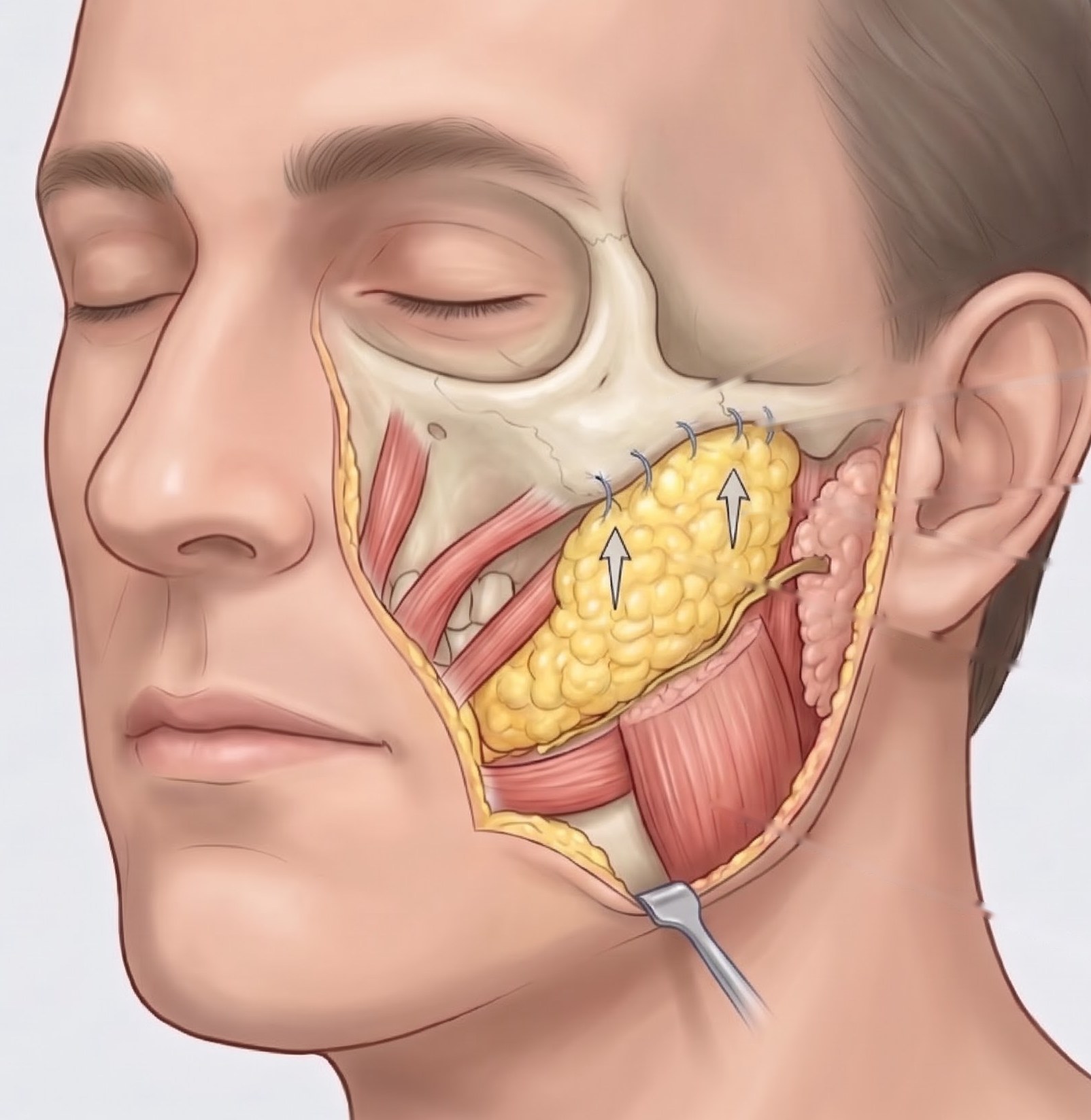
But here’s a pro tip. In patients who have a little fullness in the mid-lower cheek and lack a little definition and fullness in the upper cheek, I love to release the buccal fat pad and suspend it, resupporting it at the malar eminence. I suture it down to some of the tissues in that area, then drape the deep plane tissue over it. It creates a beautiful little hollow in the mid-cheek that extends up to the line between the malar eminence and the gonial angle, and it enhances the cheek in a very natural way.
Who isn’t a candidate for buccal fat pad suspension?
People who have really full upper cheeks and full central cheeks. Those may be better candidates for buccal fat pad reduction. It’s also not for someone who doesn’t have a lot of lower face fullness, because they don’t have a big buccal fat pad. You wouldn’t want to remove it and make them look hollow.
Why is the TriMax deep plane facelift called shape surgery?
Because it’s designed to enhance shape, not just to lift. What I love about the TriMax deep plane facelift is that it goes beyond an extended deep plane facelift. It truly enters the realm of Shape Surgery. We’re focusing on shapes in the face. We’re not just lifting and supporting, and we’re not just repositioning. We’re truly shaping an important aesthetic triangle in the face.
Most facelifts are designed to create a natural lifted result. This procedure isn’t designed exclusively for that. It’s designed to enhance shape, to actually make you look more like you. That’s always the goal of facelifts in my hands, and I love providing this as an option to my patients. You can read more about my facelift approach in Austin.
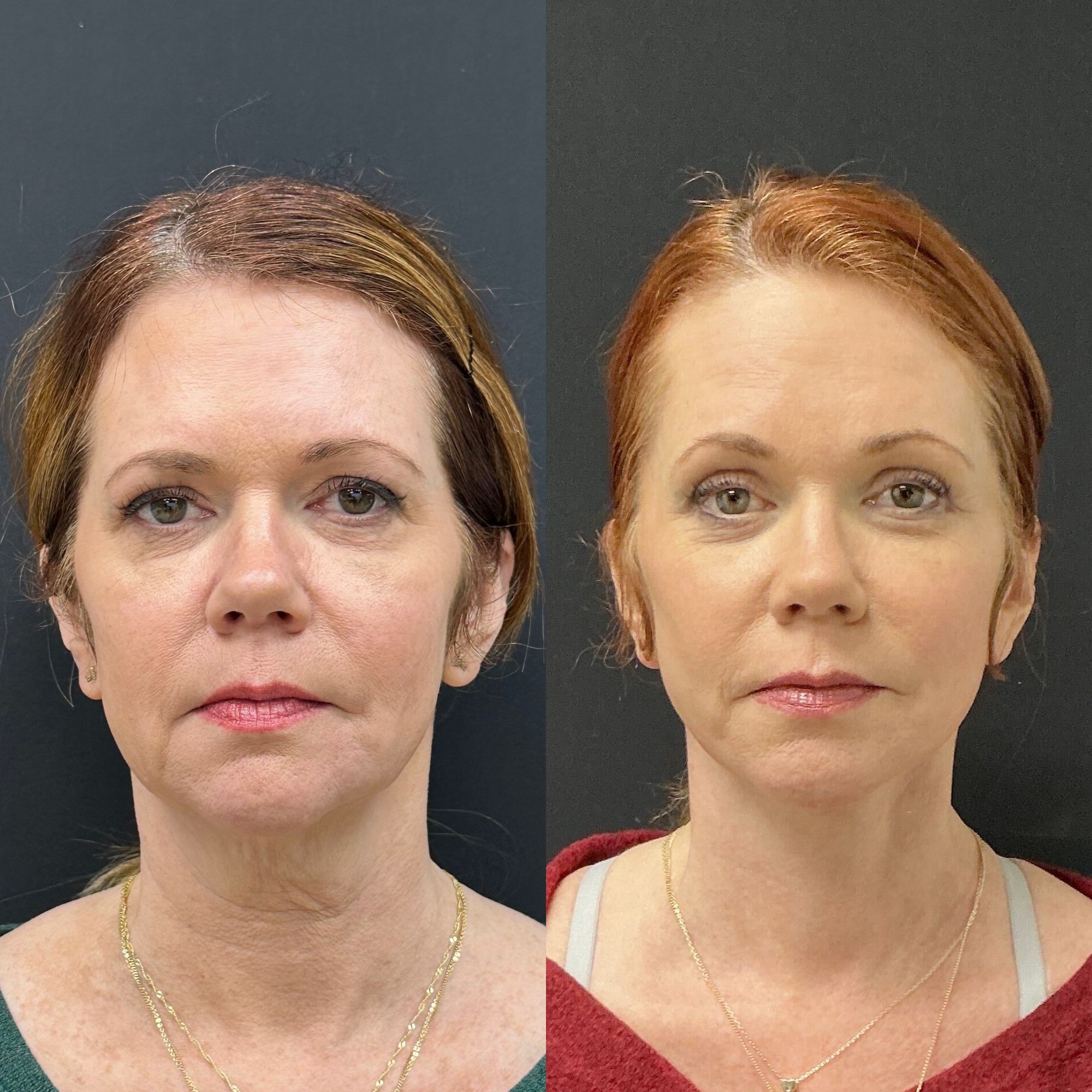
What does a facelift result look like 1 year later?
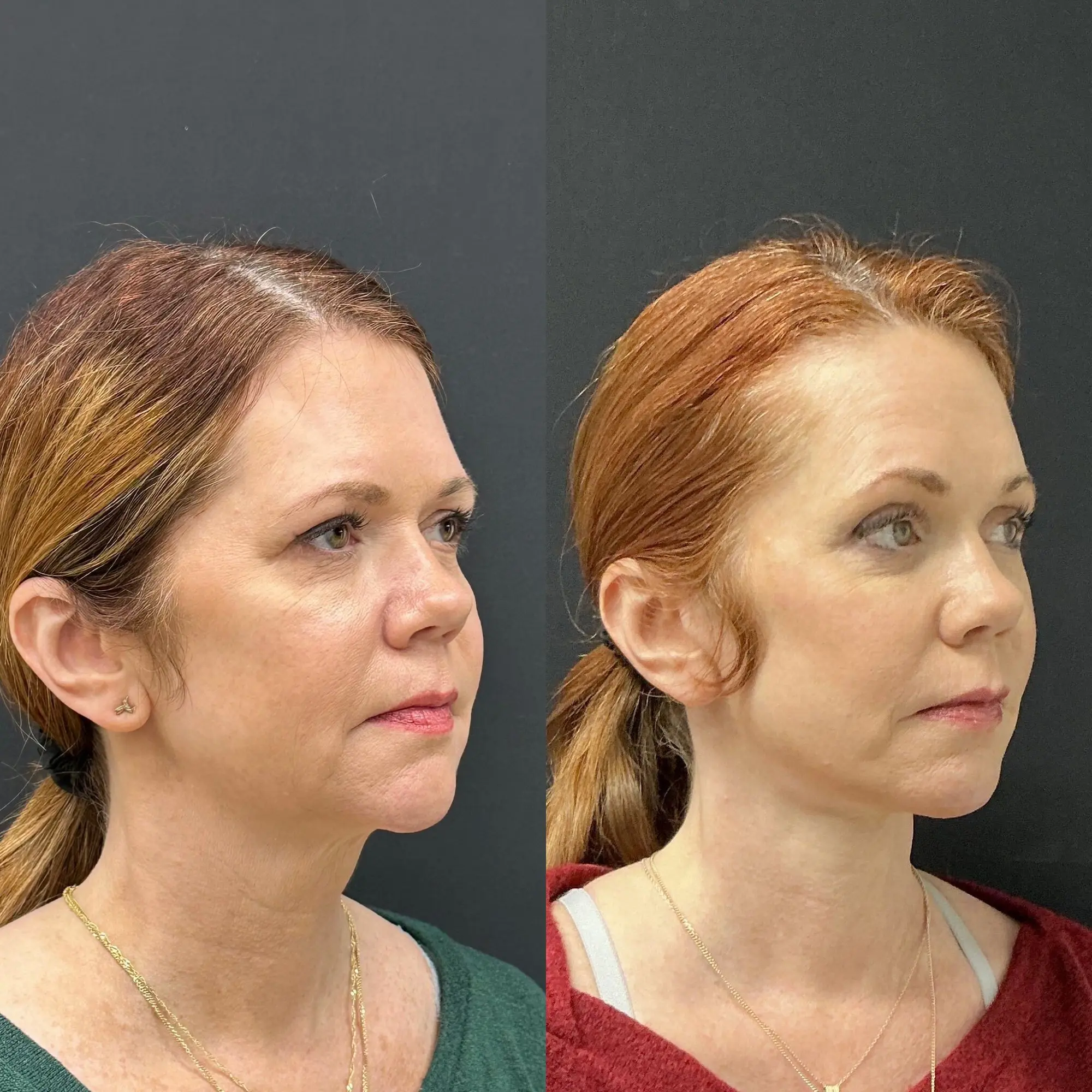
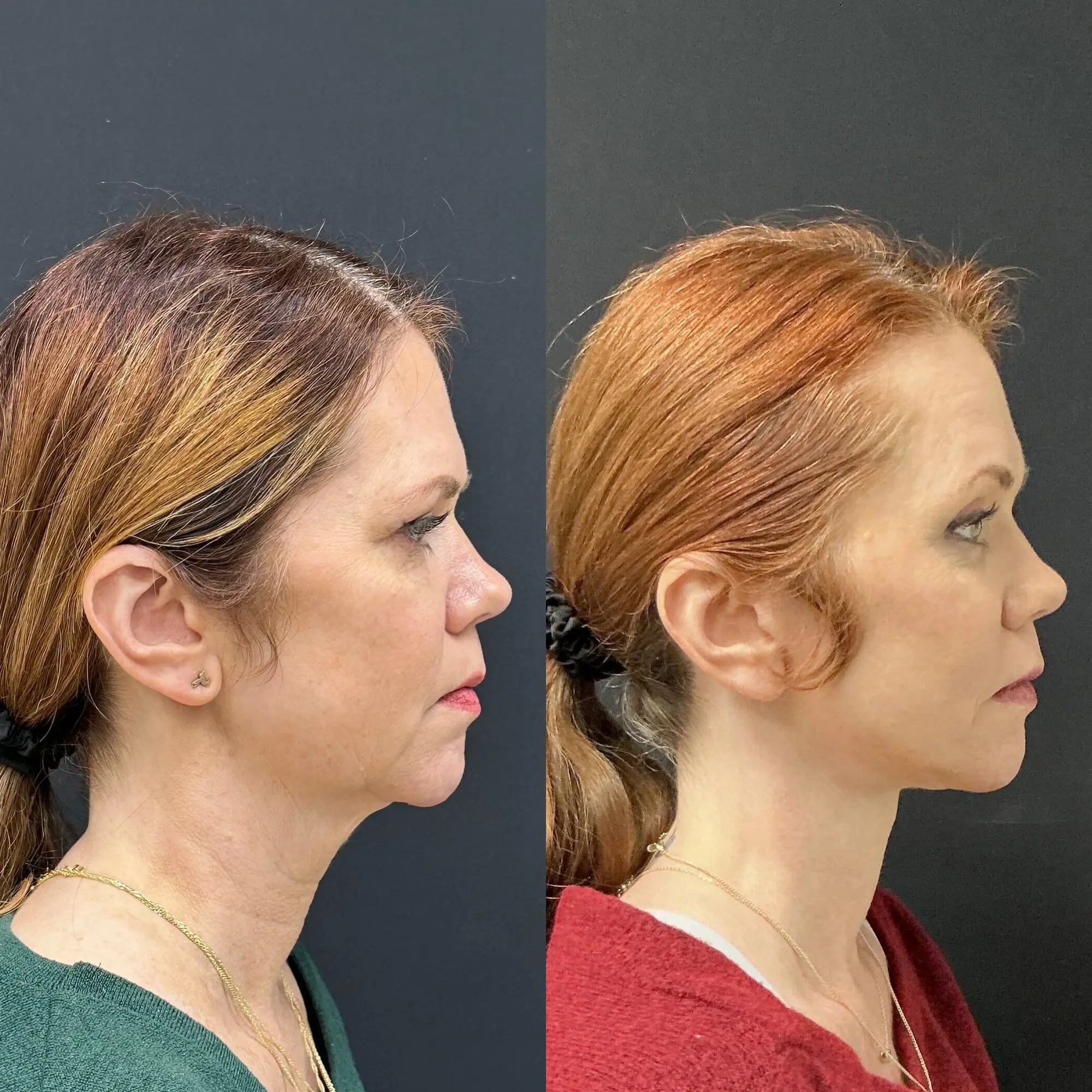
Here’s the patient from the video, 1 year after surgery. She had a deep plane facelift, a hybrid deep plane neck lift, an endoscopic brow lift, an upper blepharoplasty and fat grafting (the brow lift and blepharoplasty together are what I call a hidden scar upper facelift). Her photos are taken with her hair back to show the ear anatomy.
Frequently asked questions
Does the TriMax approach make facelift recovery longer?
No. The TriMax facelift really does not increase recovery at all. Patients may have a small amount of additional bruising along the jawline or in the nasolabial fold, and sometimes a little firmness in that area for about a month, but nothing that can actually be seen. It’s more of a sensation to the finger.
How long do TriMax deep plane facelift results last?
Results generally last about 15 years, though every face keeps aging. In my view, which can’t be medically proven, a facelift not only treats aging but may slow it, because sutures hold the deep tissues rather than relying only on the natural ligaments. Micro-liposuction of a heavy jowl adds an insurance policy against the jowl coming back.
How much fat is removed from the nasolabial fold or the jowl?
In a heavy nasolabial fold, micro-liposuction directly in the fold sometimes removes as much as 1 to 3 cc of fat. That’s a lot. From the lower part of the jowl, I can sometimes remove as much as 3 to 5 cc. Some of the fat goes back into the nasolabial crease as a graft, so we decrease the fold and raise the crease.
Does every patient get every part of the TriMax facelift?
Not all of them in every facelift. I use some of these strategies in almost every facelift, most of them in most of my facelifts, and some of them in almost all. Maximizing the triangle can be different things for different locations in different patients. For many patients, it means my standard approach with five special sutures to support the cheek. Sometimes I leave the buccal fat pad alone.
For what to expect with bruising after facial surgery in general, see bruising after a facelift or rhinoplasty.
Related reading
About the author
Adam Bryce Weinfeld, MD, is a board-certified plastic surgeon in Austin, Texas, double fellowship-trained in facial aesthetic surgery and oculoplastic surgery, with 19 years in practice. He is a Clinical Associate Professor at Dell Medical School, has written 33+ peer-reviewed publications and multiple book chapters, and gives international lectures on facelifts. His practice is exclusively aesthetic, with an emphasis on the face.
Considering a deep plane facelift in Austin?
Book a consultation with Dr. Adam Weinfeld, board-certified plastic surgeon in Austin, Texas.
Request a consultation512-559-1376 · drweinfeld.com
This article is for education only and is not medical advice. Individual results vary. Patient photos are shown with permission and are unretouched. Diagrams are illustrations. Written by Dr. Adam Weinfeld from his video; edited and formatted with AI assistance.
Full video transcript
What Is an Extended Deep Plane Facelift? Off camera: Hey Dr. Weinfeld, tell me about extended deep plane facelifts. Dr. Weinfeld: Boring. Off camera: Hey Dr. Weinfeld, tell me about your TriMax deep plane facelift. Dr. Weinfeld: I thought you would never ask. The extended deep plane facelift is a perfectly fine facelift. In fact, my facelift, the TriMax deep plane facelift, is an extended deep plane facelift. But I developed the TriMax deep plane facelift to essentially take over where the extended deep plane facelift left off. The extended deep plane facelift releases ligaments deep into the facial tissues, suspends, repositions those tissues higher up to the outer upper portions of the face, to deeper strong tissues to lift the tissues. But I noticed that in extended deep plane facelift patients, sometimes important features go untouched.
What Is the TriMax Deep Plane Facelift? That had been my observation. And that's why I developed my TriMax version of that deep plane facelift, where my goal is to optimize an important aesthetic triangle. You see, for a very long time I've been observing faces, and I noted that there's an important aesthetic triangle in the face, the malar-gonial-genial triangle. Those areas of emphasis and the lines that go between them, that makes an important aesthetic triangle. I'm trying to maximize that triangle in my deep plane facelift. TriMax. Triangle maximizing.
What Is the Malar-Genial-Gonial Triangle? Let's go over those regions, those points of the triangle, in a little bit more detail. There's the malar eminence. That's the cheek essentially. There's the gonial angle at the back of the jaw. And then there's the genial area, which is the front of the jaw, the chin. The lines that connect them are important to pay attention to as well. Between the malar eminence and the genial region, we have the nasolabial fold, nasolabial crease. When we go from the chin back to the gonial region, we come across the jowl. It's the jawline. Really important in a face and neck lift. And then the line between the malar eminence and the gonial angle is a little bit more vague, but we often like to see a subtle hollow in that region. So when I'm doing my version of the extended deep plane
How Are the Cheek, Chin and Jaw Enhanced? facelift, the TriMax deep plane facelift, I aim to maximize that triangle. And that can be different things for different locations in different patients. For many patients, it means my standard approach with my five special sutures to elevate, support, and recruit soft tissue back on to the malar bone, to the cheekbone. But when I detect that that's not going to be enough augmentation or repositioning of tissue in that area, especially in women, I do fat grafting in order to create a little bit more volume, a little bit more support. The chin, the genial region, in some patients actually is too big, and we can actually reduce that by contouring the bone. That's an important way of enhancing femininity in a woman who might not have felt as if she looked feminine from the very beginning. When the chin is a little bit deficient, maybe one to two millimeters, I'll do fat grafting because that achieves everything I need it to. But if the chin is more deficient than that, and the neck lift alone is not gonna create the definition that I need in the chin and the jawline, then I will either do a chin implant, and I prefer porous polyethylene implants, or even a genioplasty where I gently cut the bone, push it forward and hold it in place with a plate. The gonial angle often needs a little bit of enhancement. I can bring that about by doing a folded over SMAS and platysma flap that enhances a little bit of volume in that area. Furthermore, I can fat graft right onto the gonial angle, and that can be extremely effective in addition to the fat grafting I do along the body of the mandible at times when more neck definition is required. And then I do a special suture, either the mastoid crevasse suture described by Ben Talei in Los Angeles, or a version of that, which is my stair-step suture, where I harness the power of the mastoid fascia, come through that crevasse and back up again, thus supporting not only the platysma and the SMAS and defining that gonial angle, but also supporting the ear lobe, making it almost impossible to develop
How Are Nasolabial Folds and Jowls Treated? a pixie ear. Those are the three prominences that I enhance. We've got the malar eminence, we've got the chin, the genial region, and the gonial region. What about the lines that connect them? That's where the power of the TriMax deep plane facelift really shines. We all know, those of us who do a lot of facelifts, that sometimes it can be really difficult to address someone with a heavy nasolabial fold. They can be hard. The way I like to tackle that, to create a little bit of an insurance policy, is to do micro-liposuction directly in that fold. That helps deflate it. Sometimes I can remove as much as one to three cc's of fat. That's a lot. But I don't stop there. I'll also do some subcision, some dissection underneath the deep dermal attachments of that nasolabial crease and inject some of the fat into the crease itself. We're decreasing the fold and raising the crease, creating a smoother transition from the cheek to the lip. What about the line from the genial region to the gonial angle along that jawline? That's disrupted by the jowl of course, a deep plane facelift, it lifts and supports that jowl right off of the jawline. But we all know that there can be a little bit of recurrence. And there's some patients who have big, heavy jowls that we know are more likely to have a recurrence. And most of my patients, I'm also doing micro-liposuction to that area as well and sometimes I can remove as much as three to five cc's of fat from the lower part of the jowl. Can you imagine what an insurance policy that is against having a recurrence of a jowl? It can be really, really, really potent, and I love to do
What Does Buccal Fat Do in a Facelift? it. Now, what about enhancing the malar eminence beyond what we can do with fat grafting? And then, how do we also address the center of the triangle? We shouldn't forget the center, right? We talked about the three points and the lines that connect them. But the center is an important part of the face. We need to maximize the center of the triangle too. Well, that's where the buccal fat pad comes into play. Now many people will either leave it alone or they'll reduce it. And sometimes I leave it alone and sometimes I'll reduce it. But here's a secret pro tip: something I love to do in patients who have a little bit of fullness in the mid-lower cheek and lack a little definition and fullness in the upper cheek. I love to release that buccal fat pad and suspend it, resupport it. Resupport at that malar eminence, suture it down to some of the tissues in that area, and then drape that deep plane tissue over it. It creates a beautiful little hollow in the mid-cheek that extends up to that line between the malar eminence and the gonial angle, and it definitely enhances the cheek in a very natural, natural way.
Why Is TriMax Called Shape Surgery? What do I love about the TriMax deep plane facelift? I love that it goes beyond an extended deep plane facelift. It truly enters the realm of shape surgery. We're focusing on shapes in the face. We're not just lifting and supporting, we're not just repositioning. We're actually truly shaping an important aesthetic triangle in the face this is a procedure not designed exclusively to create a natural lifted result. Most facelifts do that, but to enhance shape, to actually make you look more like you. And that's always the goal of facelifts in my hand. And I love providing this as an option to my patients.
How Do I Book a Facelift Consultation? If you're interested in a consultation, you can go to drweinfeld.com. I have a contact form there that'll come to the practice, comes to me. Sometimes I like to answer it myself. And follow my YouTube channel. If you're interested in more content like this, I think the next in the series is gonna be my five suture technique. A way that I use five predictable sutures to create reliable results, but I customize them for each patient, of course, to bring out a beautiful shape that's truly their face. Thanks again for your attention.