
Three-Dimensional Hidden Scar Upper Facelift: An Exciting Alternative to the Ponytail Lift
June 28, 2026 | Facelift, oculoplastic surgery
Facial Shaping & Rejuvenation · Austin, Texas
The three-dimensional hidden scar upper facelift is an endoscopic approach to reshaping the upper face through deep structural release, multi-vector repositioning, and targeted fat grafting — with every incision concealed within the hair. For patients drawn to the idea of the ponytail lift, this is worth understanding as a compelling alternative.
The ponytail lift has captured a lot of attention, and it is easy to understand why. The name conjures something effortless and youthful — a light, natural-looking elevation without a long recovery. Those are genuinely appealing ideas, and the interest patients bring to that conversation is completely valid.
What I want to offer here is a different way of thinking about upper facial rejuvenation and shaping — one that goes a step further in terms of what it can accomplish structurally. I call it the three-dimensional hidden scar upper facelift, and every word in that name means something.
A Patient’s Perspective at Four Months
Before getting into the technical detail, I think the most useful thing is to hear directly from a patient. The video below is an interview I did at four months with a patient who had a three-dimensional hidden scar upper facelift combined with upper and lower blepharoplasty. She talks through recovery, return to activities, what surprised her, and how she feels about the result.
Why “Three-Dimensional”
Most people think of facial surgery in two dimensions — lift up, pull back. But the upper face is a three-dimensional structure, and restoring or reshaping it requires thinking about it that way.
The three-dimensional approach means three things working in concert. First, it means releasing the deep tissue attachments that tether the face in a descended or flattened position — not simply pulling the surface over them. Second, it means repositioning tissue along different vectors simultaneously, so the result is shaped rather than just elevated. Third, it means restoring volume where it has been lost — or building structure where it was never quite what the patient wanted — through precise fat grafting to the cheeks and, when appropriate, the temples.
Pulling the face back without addressing these deeper planes can produce a result that looks operated on. Releasing, repositioning, and restoring volume produces a result that simply looks better.
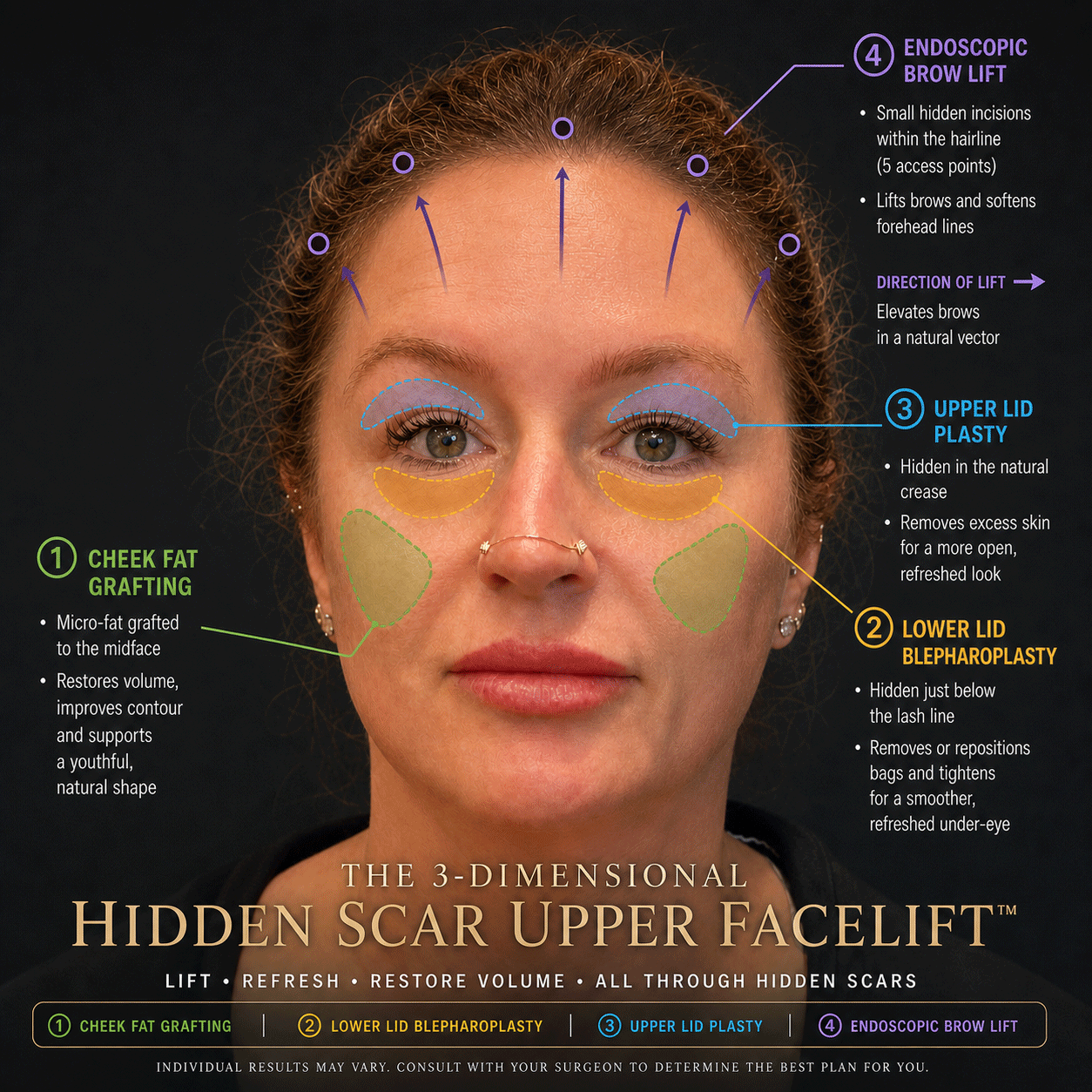
The Fixation Architecture
The precision of this procedure comes from how and where the repositioned tissues are anchored. I use five fixation points, each placed with a specific vector and a specific structural target.
Vertical oblique vector. Elevation and repositioning of the lateral temple and upper lateral cheek tissue. Fixed to the deep temporal fascia for durable structural anchorage.
True vertical vector. Shapes the lateral brow into a gentle, natural arch. Fixed directly to bone — the most stable anchorage available in this region.
Access point only — used for visualization, not fixation. Keeps the incision count purposeful and the approach clean.
The combination of bone-anchored vertical fixation at points two and four with fascia-anchored oblique fixation at points one and five is what produces a shaped result rather than a simply lifted one. The brow gets an arch. The lateral cheek gets elevation. The temple gets fullness. These are distinct aesthetic events happening simultaneously, through an approach that leaves no visible scars.
Surgery Through a Camera on a Wand
This procedure is performed entirely endoscopically. The endoscope is a thin, lighted camera — roughly the diameter of a pencil — mounted on a slender rod. It is inserted through one of the small scalp incisions, and the image it captures is transmitted to a monitor in real time. I operate watching that monitor, using the endoscope for clear, magnified visualization while specialized instruments do the work through the other incisions.
The practical effect is that the entire procedure is completed through incisions of roughly three-quarters of an inch each — all of them tucked within the hair-bearing scalp — without the long coronal incision that older approaches required. There is no exposed scar at the hairline. There is no trade-off between result quality and concealment.
For patients with a receding hairline — most commonly men — alternative incision placement strategies can make those marks equally discreet. This is always part of the preoperative conversation.
How This Compares to the Ponytail Lift
The ponytail lift generally describes an approach that creates upward lateral tension — producing a lifted appearance through pull rather than through deep structural repositioning. For some patients and some goals, that can be an appropriate option, and there are surgeons who perform it well.
Where the three-dimensional hidden scar upper facelift offers something different is in the mechanism. Because tissue is released from its deep attachments before it is repositioned, and because the fixation goes to bone and deep fascia rather than relying on skin tension, the result has a different quality — more shaped, more three-dimensional, and anchored to structures that hold well over time. The addition of fat grafting when indicated addresses volume and position in a single procedure.
For patients who want not just a lift but a genuine reshaping of the upper face, that distinction matters. This is shape surgery — and that is a different thing than a tension-based lift.
Who Is This For?
One of the things I appreciate most about this procedure is the range of patients it serves well. At the younger end, I have operated on patients in their mid-twenties who simply want a change in their upper facial shape — more brow arch, better cheekbone projection, a more defined lateral face. This has nothing to do with aging. It is about proportion and structure, and surgery is the only approach that actually moves tissue into a different position and keeps it there.
Through the middle years — patients in their thirties, forties, and fifties — the three-dimensional hidden scar upper facelift addresses early upper facial changes that injectables and energy devices cannot fully correct. Brow descent, flattening of the lateral cheek, and loss of temporal volume are structural changes. They respond to structural solutions.
At the upper end of the age spectrum, this procedure pairs naturally with a complete central facelift and neck lift. My approach to those procedures follows the same philosophy — light-touch, three-dimensional, deep plane technique — and combining them allows for comprehensive facial rejuvenation in a single setting.
Combined with Periorbital Rejuvenation
Because the endoscope gives excellent access to the brow and lateral orbital rim, this procedure combines naturally with upper and lower blepharoplasty. The case featured on this page is a good example: upper and lower lid blepharoplasty performed simultaneously with the endoscopic upper facelift produces complete periorbital rejuvenation. The eye area ages as a unit. Treating it as a unit produces the most cohesive and natural result.
I am double fellowship-trained, with a fellowship specifically focused on oculoplastic surgery in addition to my facial aesthetic surgery fellowship under two of the leading facelift surgeons in the country. Periorbital work — the lids, the brow, the orbital frame — is genuinely in my wheelhouse, and that dual expertise shows in how these combined cases turn out. This procedure can also be combined with a lip lift for patients wanting more complete upper facial rejuvenation.
A Reframe Worth Considering
The endoscopic brow lift has long been presented as a forehead procedure — something you do when your brows are low. But that framing significantly undersells what it can accomplish. When performed with multi-vector fixation, deep structural release, fat grafting, and periorbital integration, this is not a brow lift in the traditional sense. It is an upper facelift. It reshapes the entire upper third of the face, not just the position of the brow.
Reframing it that way changes who considers it and when. A patient in their late twenties who would never think to ask about a brow lift might be genuinely interested in upper facial shaping. A patient in their forties who has been told they “just need some filler” might benefit far more from a structural approach. The procedure has always been capable of these things. The language just never quite said so.
What Recovery Actually Looks Like
The most common question patients have going into this procedure is about recovery — and it is the right question to ask. The patient featured on this page was kind enough to walk through her experience in detail at her four-month visit. What follows is drawn directly from that conversation.
Her biggest challenge in the first week was not pain. It was screens. She describes herself as a “screenager” — and not being able to use her phone or watch television for the first week due to temporary blurry vision was the most disruptive part of the recovery. This is an extremely common observation I hear from patients who have had periorbital work combined with their upper facelift. The blurry vision resolved within a couple of weeks. For a full overview of what to expect around surgery, including medications prescribed before, during, and after, that post covers it in detail.
“Putting on makeup takes five minutes. I’m not trying to camouflage anything anymore.”
On driving: she felt she could have driven comfortably at two weeks, though she waited a bit longer. She had strategically timed the procedure between jobs and took a full month off — her word was “strategic” — but she felt confident she could have returned to work at two weeks. For public-facing situations, she felt comfortable around others at about two weeks. For something truly important — she used the example of a close friend’s daughter’s wedding — she said she would have wanted four to six weeks just to feel perfect.
When asked what surprised her in a good way, she said the healing process itself. Her frame of reference was a mommy makeover two years prior — a much larger procedure — and she was genuinely surprised by how manageable this recovery was by comparison. The main physical inconvenience was sleeping on her back rather than in her preferred fetal position.
On pain, she described it as minimal. It barely came up in conversation because there was little to report. Surgery was clearly the right decision — and at four months she estimated she looks five to six years younger.
“I don’t look like my mom right now. Surgery was the right thing to do. Absolutely.”
Her framing of the one thing that surprised her in a less positive way is worth sharing because it is honest and human: she had a mental image of what everything would look like, and the process of coming to terms with the fact that she would not look 35 again was a feeling she had to work through. Her words were that this was “an aging thing, not a surgery thing.” I thought that was a wise and accurate distinction.
Rest, head elevation. Pain described as minimal — manageable without significant concern. Beginning of temporary blurry vision from periorbital work.
Blurry vision made phone and TV use uncomfortable. “I’m a screenager — that was my biggest thing.” Sleeping on back rather than side was the main physical inconvenience.
Felt comfortable around other people. Could have returned to work. Could have driven. Most patients reach this milestone by two weeks.
Vision normalized within a couple of weeks — a very common pattern following combined blepharoplasty and upper facelift.
“Less than a month for sure — probably between two and three weeks.”
“Within three or four weeks I was able to hide any bruising with makeup. There was still swelling I noticed, but nobody else did.”
Would have felt perfect going to a wedding or important occasion at four to six weeks.
“I don’t look like my mom right now… I would say five or six years younger, at least.” Makeup routine down to five minutes.
Patient Results: Four-Month Photographs
The photographs below show this patient at four months following her three-dimensional hidden scar upper facelift with upper and lower blepharoplasty — front, oblique, and side views.
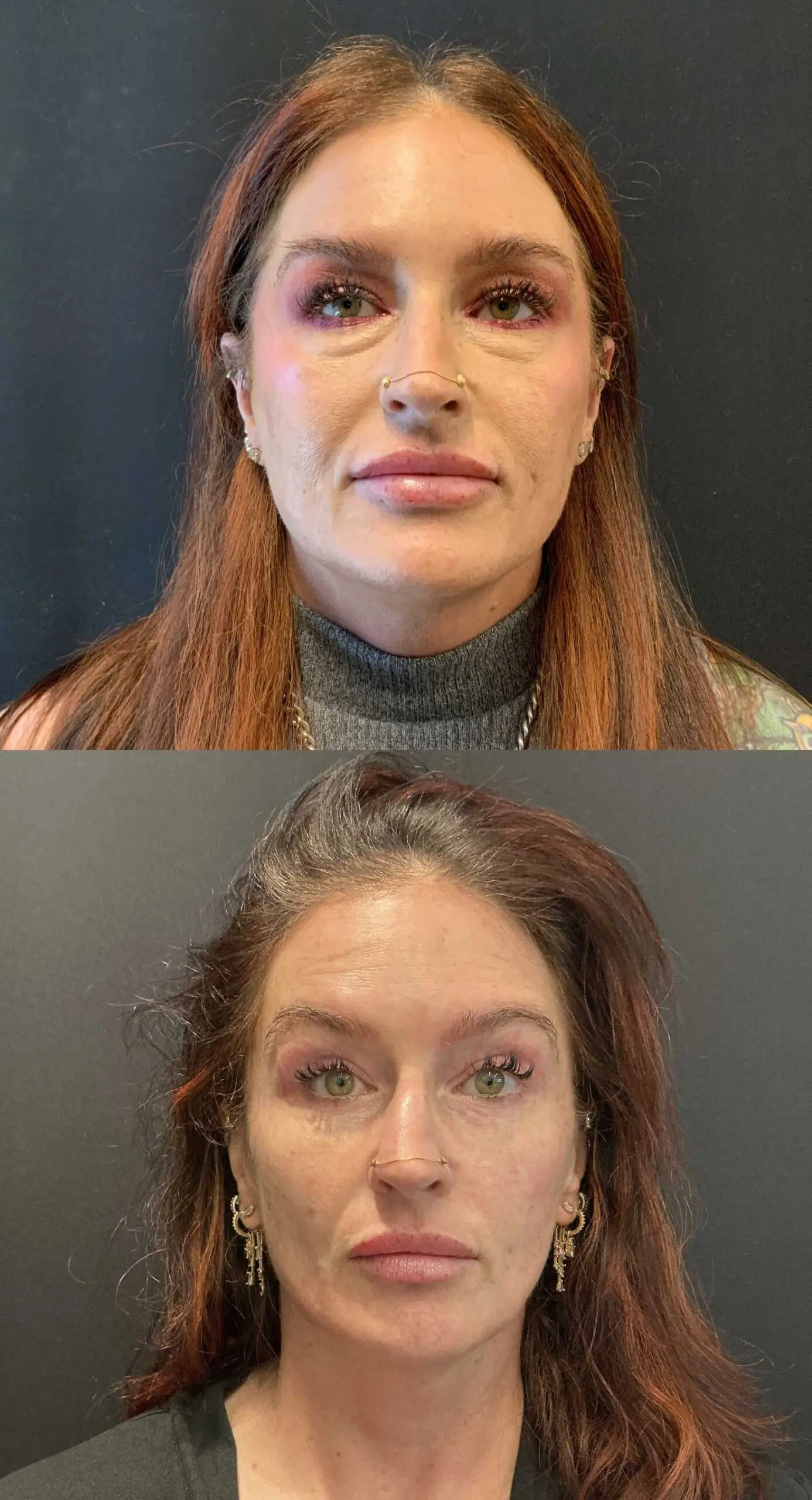
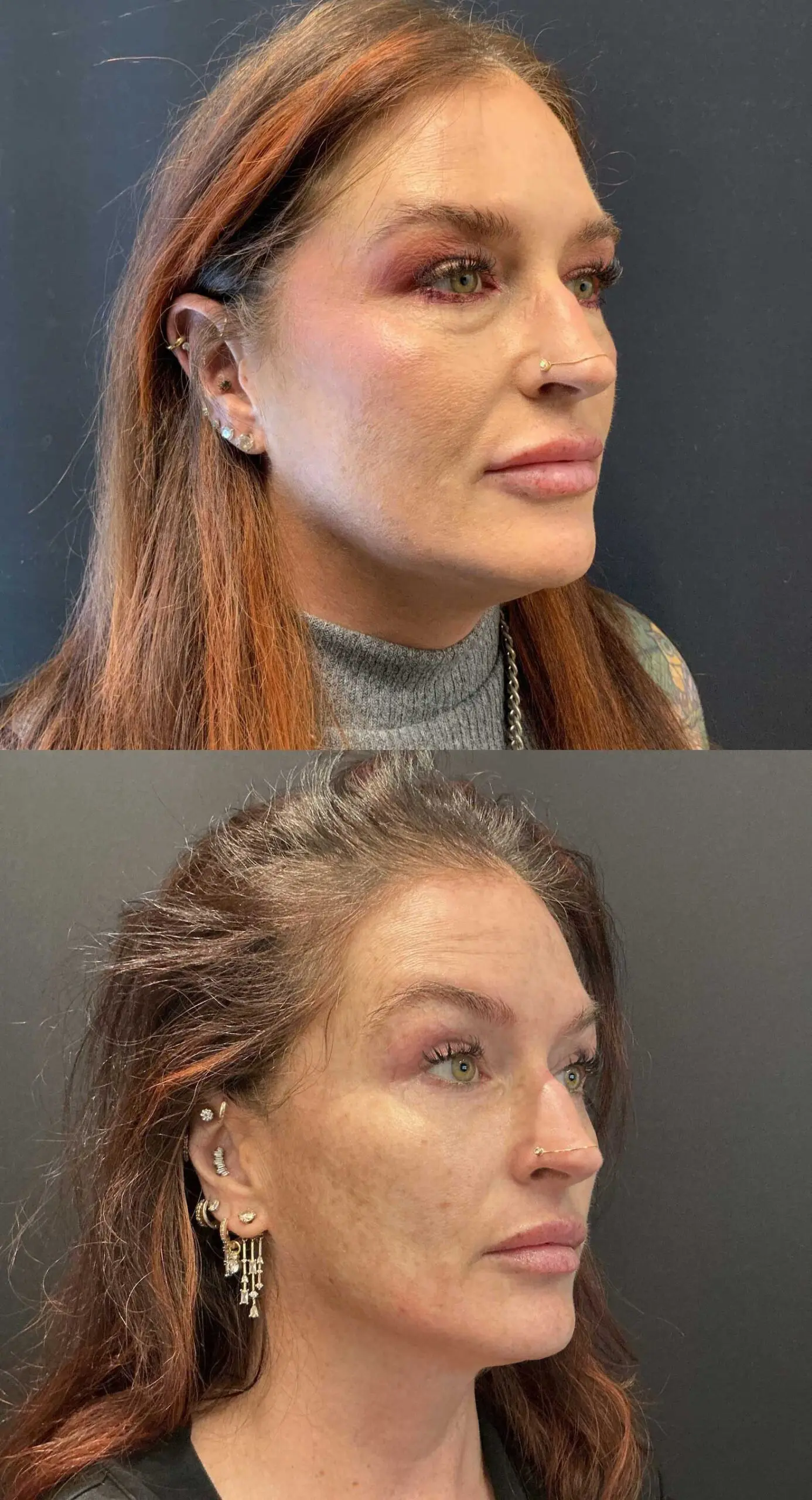
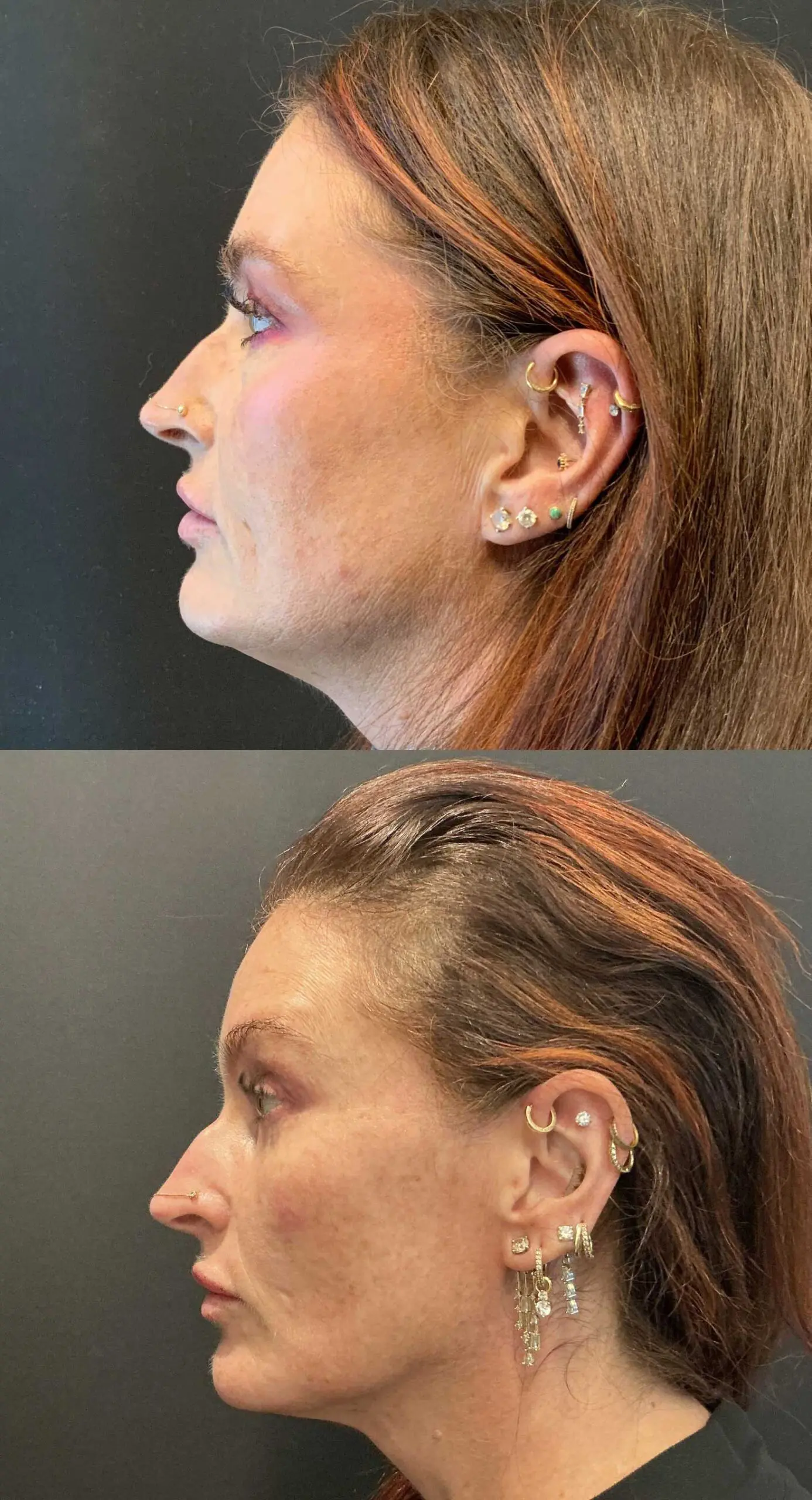
My practice is in West Lake Hills, just west of downtown Austin, and I see patients from across Central Texas — Westlake, Lakeway, the Hill Country — along with people who travel in from out of state for facial surgery specifically. Wherever you’re coming from, if you want to understand whether the three-dimensional hidden scar upper facelift fits your goals, I’d be glad to walk through it with you in a consultation. You may also want to read about facelift anesthesia options as part of your research. Patients looking for the best facelift Austin has to offer deserve an honest, complete conversation about what different approaches actually accomplish — and what they don’t.
Ready to explore what upper facial reshaping could look like for you?
4613 Bee Cave Rd (RM-2244), West Lake Hills, TX 78746
Phone: 512-334-9917
Serving Austin, West Lake Hills, Westlake, Lakeway, and the surrounding Texas Hill Country.
The written content of this article was authored by Dr. Adam B. Weinfeld, MD. AI tools were used only to assist with editing and formatting, and to render the procedure infographic under Dr. Weinfeld’s direction and content specifications. The before-and-after photographs are unaltered and unretouched; they have been resized only to load efficiently. Individual results vary, and the outcomes shown are specific to this patient. As with any surgical procedure, complications can occur. Nothing in this article constitutes medical advice or a guarantee of results. Always consult directly with a qualified surgeon to determine the right plan for you.